
Bangkok governor expects 90% of main roads dry in 2 days as city prioritises Khlong Chan and Rom Klao relief
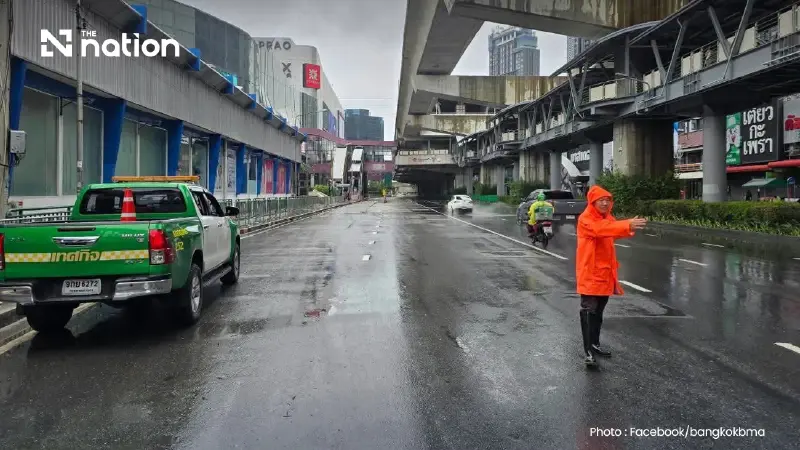


Bangkok is prioritising drainage in Khlong Chan and Rom Klao, while large low-lying communities could take about seven days to clear, Chadchart says
- Bangkok's governor expects 90% of the city's main roads to be dry and open to traffic within two days, but this is a working target, not a guarantee.
- The city is prioritizing flood relief and drainage efforts in the low-lying areas of Khlong Chan and Rom Klao–Lat Krabang, where it plans to install more water pumps.
- While main roads are expected to clear quickly, secondary roads will take longer, and some low-lying communities may need up to a week for floodwaters to drain.
- Authorities are actively managing the situation by operating three major drainage tunnels and using boats to push water through key canals toward the Chao Phraya River.
Bangkok Governor Chadchart Sittipunt said on September 29, 2026, that he expected about 90% of the capital’s main roads to be dry and open to normal traffic within two days. The governor stressed that the timeframe was a working target, dependent on water levels and local conditions.
Bangkok’s secondary roads could take longer, while large communities in bowl-shaped, low-lying areas might need about seven days to drain, Chadchart said. The seven-day estimate was also a target rather than a guaranteed deadline.
Speaking alongside deputy governors at the Flood Control Centre at Bangkok City Hall in Din Daeng, Chadchart said conditions were improving after the rain stopped. Water levels were falling across several areas, with a noticeable decline along Khlong Saen Saep from its upper stretch to near Wat Thep Lila.
Chadchart said parts of inner Bangkok and several main roads, including Vibhavadi Rangsit Road, were becoming passable again. Many sections of the Chin Khet housing estate and Lat Phrao Soi 80 were also beginning to dry.

Bangkok prioritises drainage in Khlong Chan and Rom Klao
The Bangkok Metropolitan Administration (BMA) is prioritising the low-lying areas of Khlong Chan and Rom Klao–Lat Krabang, with officials planning where to install pumps. Faster pumping from those communities will depend on lower water levels in Bangkok’s main canals, allowing the surrounding areas to drain.
Eastern Bangkok still requires monitoring, particularly Lat Krabang, where the lengthy Khlong Prawet Burirom continues to hold a large volume of water, Chadchart said. Conditions in Min Buri were improving.
Sai Mai remains under watch for water spilling across Khlong Hok Wa Sai Lang from Pathum Thani, according to the governor’s update.
Chadchart attributed water rising through drains in areas such as Phra Khanong to temporary backpressure as large volumes were pumped and diverted towards the Chao Phraya River while main canal levels remained high. The governor urged residents not to panic, saying the backflow should subside as canal levels fell.

Bangkok operates three drainage tunnels and monitors tides
Bangkok is operating its three main drainage tunnels at a combined rate of about 150 cubic metres per second: Bueng Makkasan at 45 cubic metres per second, Bang Sue at 45 and Phra Khanong at 60. The BMA is also using boats to push water through Khlong Saen Saep and Khlong Prawet Burirom.
Chadchart said upstream flows through the Chao Phraya River were about 2,000 cubic metres per second, still within the capacity of Bangkok’s flood defences.
Bangkok’s highest tide on September 29 was expected at 7pm, with the water level forecast to reach about 2.0 metres above mean sea level, Chadchart said. With flood barriers standing nearly 3.0 metres above mean sea level, the governor expected tidal impacts to be confined to communities outside the defences.
The BMA is maintaining coordination with the Royal Irrigation Department to manage water diversions.

Bangkok sends food directly to hard-to-reach communities
Bangkok has revised its food distribution arrangements to reach small communities and buildings deep inside narrow sois, where access remains difficult despite improving relief coverage at larger locations. District offices will prepare most meals, with schools under the BMA’s Education Department providing additional food when needed and delivering it directly to affected areas to reduce reliance on central distribution.
The BMA has requested six additional high-clearance vehicles and is coordinating the use of small boats and jet skis, alongside private-sector support, to deliver meals, relief bags, infant formula, nappies and other essentials through narrow sois.
Bangkok is tracking requests for help through social media monitoring and its 1555 hotline, with particular attention to bedridden patients. Officials have already acted on more than 300 such cases, and Chadchart instructed teams to follow every request through until assistance reaches those in need.
Bangkok prepares clean-ups and school adjustments
Bangkok will progressively clean roads and remove bulky flood waste, including cupboards, beds and other furniture, from areas where the water has receded. Under a district “Buddy” pairing scheme, unaffected districts will provide personnel and machinery to support the work.
The BMA’s Health Department will distribute medication for floodwater-related foot conditions, mosquito repellent and other hygiene supplies. Bangkok is also preparing adequate stocks of essentials for children and older people, including infant formula and nappies.
BMA-run schools are considering changes to teaching and examinations according to local conditions, with many campuses serving as shelters and communal kitchens as the end of term approaches.
Chadchart thanked all sectors supporting the flood response and instructed city teams to ensure assistance reaches every affected area.
/////////////////////////
For those who wish to help our fellow citizens suffering and affected by the floods, you can make a donation through the following accounts:
Nation Foundation
Bank of Ayudhya (Krungsri): Account No. 333-0-01399-6
Kasikorn Bank: Account No. 192-3-59782-0
"We will get through this crisis together."
