
Bangkok and 10 provinces warned of rising Chao Phraya water levels
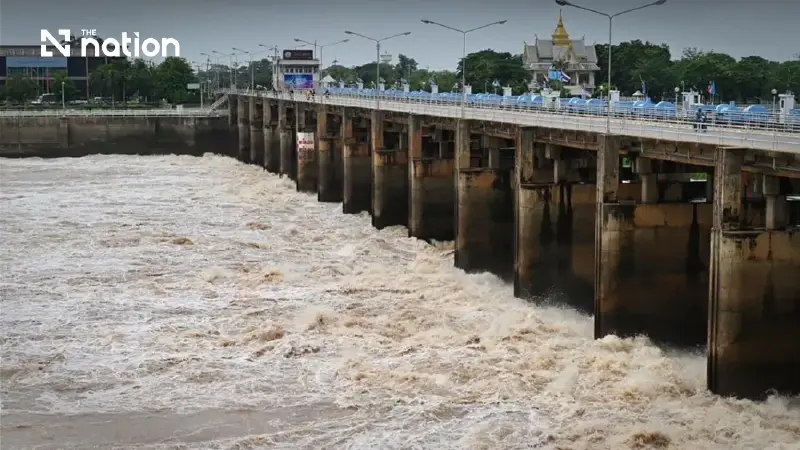


Planned Chao Phraya Dam releases of 2,200–2,500 cubic metres per second are expected to raise water levels by about 0.40–0.70 metres in low-lying areas outside flood barriers.
- The warning was issued because the Royal Irrigation Department is releasing 2,200–2,500 cubic metres of water per second from the Chao Phraya Dam.
- This release is expected to raise water levels by 0.40 to 0.70 metres, specifically impacting low-lying areas outside of flood barriers.
- The Department of Disaster Prevention and Mitigation has instructed the 10 provinces and Bangkok to monitor conditions, warn residents, and prepare personnel and machinery for 24-hour assistance.
The Department of Disaster Prevention and Mitigation (DDPM) warned 10 provinces in the Chao Phraya basin and Bangkok on Friday (October 2, 2026) to watch for rising water levels, particularly in low-lying areas outside flood barriers.
The Royal Irrigation Department is preparing to release 2,200–2,500 cubic metres of water per second downstream from Chao Phraya Dam, with levels expected to rise by about 0.40–0.70 metres from their current levels.
Regional DDPM centres have been instructed to prepare personnel, machinery and response vehicles to help residents around the clock.
Nirat Pongsitthaworn, the DDPM’s director-general, said the department, acting as the Central Disaster Prevention and Mitigation Command, had received water alert No. 7 for the Chao Phraya basin from the Royal Irrigation Department.
The notice, dated Wednesday (September 30, 2026), forecast a peak flow of about 3,010 cubic metres per second at the C.2 monitoring station in Mueang Nakhon Sawan district, Nakhon Sawan, on Friday.
Additional inflows from tributaries are increasing water volumes upstream of Chao Phraya Dam, making it necessary to release 2,200–2,500 cubic metres per second downstream from the dam.
The releases are expected to raise water levels by about 0.40–0.70 metres in low-lying areas outside flood barriers.

Water levels need to be monitored in the following districts:
Phra Nakhon Si Ayutthaya province
- Sena
- Phak Hai
- Bang Ban
- Phra Nakhon Si Ayutthaya
- Bang Pa-in
- Bang Sai
Ang Thong province
- Wiset Chai Chan
- Pa Mok
- Chaiyo
- Mueang Ang Thong
Sing Buri province
- In Buri
- Phrom Buri
- Mueang Sing Buri
Chai Nat province
- Sapphaya

The releases will not affect communities inside flood barriers.
However, the command has coordinated with the 10 provinces of Uthai Thani, Chai Nat, Sing Buri, Ang Thong, Suphan Buri, Phra Nakhon Si Ayutthaya, Lop Buri, Pathum Thani, Nonthaburi and Samut Prakan, as well as Bangkok.
They have been asked to monitor conditions closely and warn residents and businesses along the Chao Phraya and Noi rivers, particularly those in low-lying areas and areas outside flood barriers, to prepare for rising water levels.
DDPM regional centres No. 1 in Pathum Thani, No. 2 in Suphan Buri and No. 16 in Chai Nat have also been ordered to monitor conditions 24 hours a day.
They must prepare personnel, disaster response machinery, response vehicles and emergency response teams (ERTs) for deployment if the situation is severe or affects a wider area, and support efforts to set up temporary shelters and assist residents.
In Bangkok, the command has asked the city to alert relevant agencies, businesses operating on the Chao Phraya River and residents along both banks, urging them to monitor water levels and prepare for the situation.
Residents in low-lying areas and areas outside flood barriers have been urged to continue monitoring water levels and official announcements, move belongings to higher ground, and take particular care of children, older people, patients and other vulnerable groups.
Alerts are available through the “THAI DISASTER ALERT” app, while incidents can be reported through the 1784 disaster hotline, which operates 24 hours a day.
