
Thai finance ministry backs 1,000-baht departure tax plan



Thailand is consulting until October 29 on a proposed 1,000-baht departure tax for Thai and foreign travellers, to be collected with airfares.
- Thailand's Finance Ministry has endorsed a proposed 1,000-baht departure tax that would apply to both Thai and foreign travelers.
- The plan is to collect the tax by including it directly in the price of airline tickets for efficiency.
- Revenue generated from the tax is intended to support and promote domestic tourism, reducing reliance on the state budget.
- The measure is still a proposal undergoing public consultation and is being coordinated with a separate tourist entry fee to avoid double-charging travelers.
Thailand’s Finance Ministry favours a 1,000-baht departure tax collected through airline tickets and covering both Thai and foreign travellers, permanent secretary Lavaron Sangsnit said, as the proposal undergoes public consultation. The Revenue Department is accepting comments on the proposed Departure Tax Act from September 30 to October 29, 2026. The measure remains a proposal, with legislation required before the new charge can be introduced.
1,000-baht proposal below the statutory ceiling
Lavaron said 1,000 baht would be an appropriate rate in current economic conditions, addressing public concern over the proposed legislation’s maximum charge of 5,000 baht per departure.
The proposed framework would require travellers to pay the tax each time they leave Thailand, at a rate prescribed by ministerial regulation and subject to the statutory ceiling.
Lavaron explained that the 5,000-baht figure would provide flexibility while preventing the Finance Ministry from imposing a charge above the limit established by law. The ceiling would not represent the proposed initial rate.
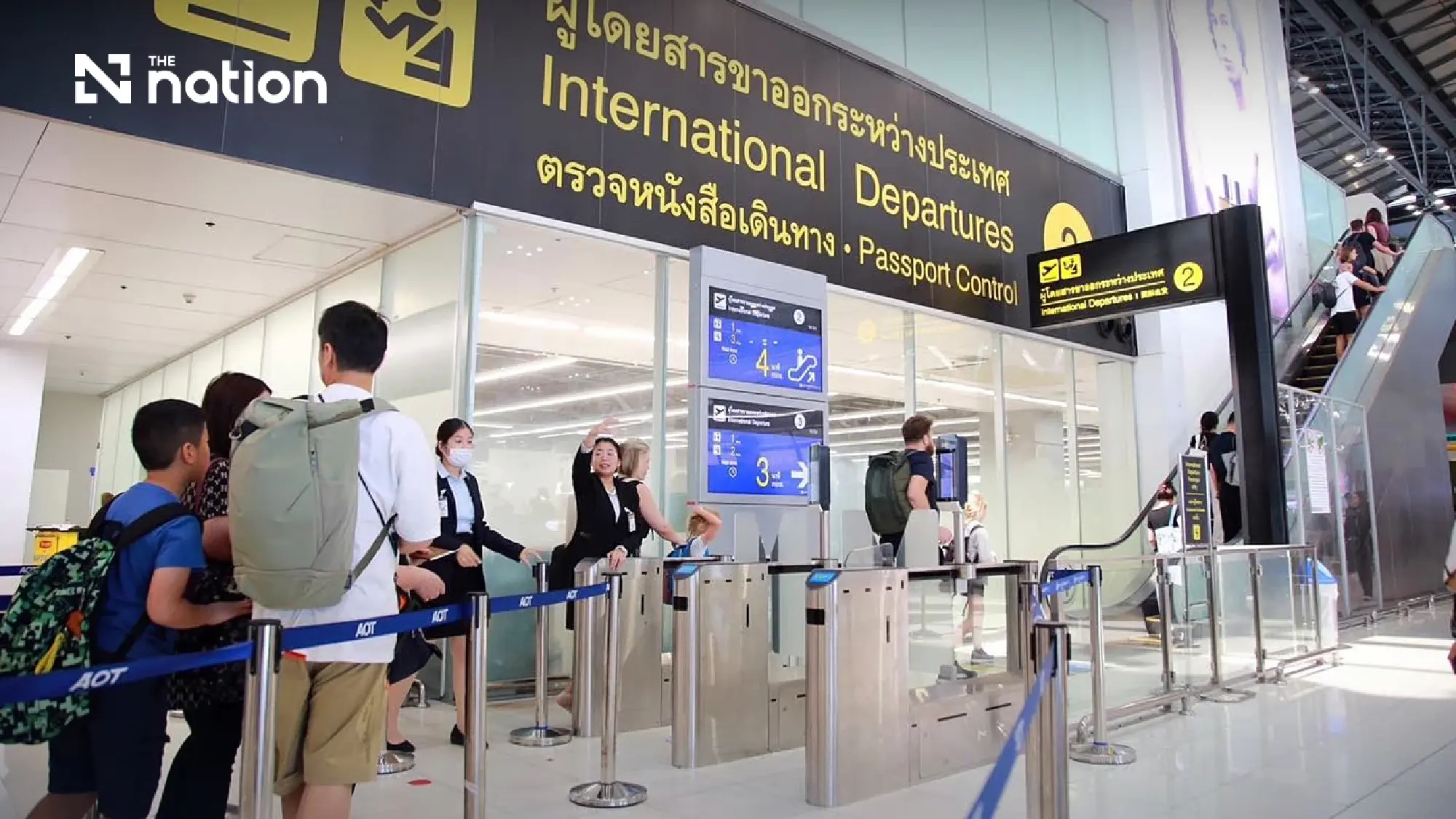

Airline tickets proposed as collection channel
Lavaron said the tax should cover both Thai and foreign travellers in line with international principles, arguing that everyone uses the country’s resources. Extending collection to foreign travellers would require legislation to provide the necessary legal basis.
Lavaron favoured incorporating the charge directly into airline ticket prices, comparing the approach to collecting value-added tax, or VAT. Collection through ticketing systems would be more convenient and efficient than the kiosks used in the past, he said.
“The Finance Ministry believes a charge of 1,000 baht would be appropriate because, more than 20 years ago, we used to charge 500 baht. Travellers would obtain a slip from a machine, and when immigration officers asked to see their passports, they would tear off the slip. But today, if we are going to charge everyone, collecting it through airline tickets, as with VAT, might be easier,” Lavaron said.
Revenue intended to support domestic tourism
Lavaron said the main objective was to collect revenue from people with sufficient financial means to travel abroad for holidays and use the proceeds to support domestic tourism, reducing reliance on existing state budget resources.
Lavaron said the approach would also demonstrate strict fiscal discipline, an important consideration for credit rating agencies assessing the country’s fiscal stability.
The proposed legislation’s stated objectives include making the best use of available resources within the fiscal discipline framework and improving the government’s flexibility to respond to emergencies.
Revenue from the departure tax would enter the central government’s accounts before being allocated to domestic tourism through the normal budget process. The tax would not operate as an earmarked levy whose proceeds automatically flow directly to a particular agency.

The Finance Ministry is also considering how the departure tax could work alongside the Tourism and Sports Ministry’s proposed tourist entry fee to avoid overlapping charges.
The approach under consideration would involve charging travellers on only one leg of their journey, such as departure. Part of the revenue could also be considered for insurance protection for foreign visitors, with the aim of simplifying administration and avoiding an additional burden on travellers.
The departure tax proposal remains subject to public consultation under constitutional procedures. Further assessment would cover collection systems, the readiness of implementing agencies, and data and statistics on outbound travellers to support clear, transparent implementation and maximise the economic benefit.
