
Global smartphone shipments fall 20% to 14-year Q3 low


Smartphone market hits 14-year Q3 low as AI chip demand drives shortages
Global smartphone shipments fell 20% year on year in the third quarter as an AI-driven memory chip shortage pushed up costs and squeezed lower-priced devices.
Global smartphone shipments fell 20% year on year in the third quarter of 2026, marking the weakest third-quarter performance since 2012 as soaring memory-chip costs and component shortages forced manufacturers to cut shipments and prioritise more profitable devices.
Preliminary estimates from Counterpoint Research showed that competition for memory components has intensified as artificial intelligence infrastructure projects absorb increasing chip supplies, driving up production costs throughout the electronics industry.
Manufacturers have responded by raising prices, reducing shipment volumes and shifting their product mixes towards premium models, where margins are stronger and consumers have proved relatively more resilient to price increases.

Consumers keep phones for longer
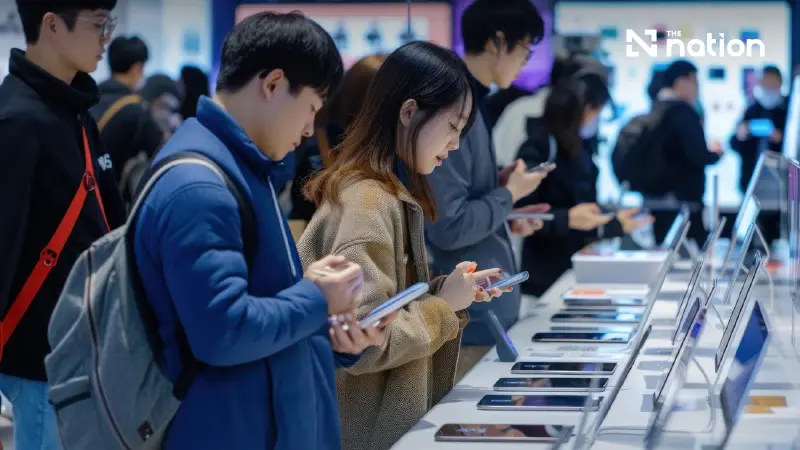
Shilpi Jain, senior analyst at Counterpoint Research, said the higher prices were changing buying behaviour, with consumers holding on to existing smartphones for longer and increasingly considering refurbished devices or models offering better value.
The pressure is particularly acute in entry-level and mid-range segments, where buyers tend to be more sensitive to price increases.
Counterpoint said the widening gap between premium and price-sensitive segments had become one of the defining trends of the market as memory shortages persisted.
Samsung leads with 23% market share
Samsung Electronics retained its position as the world’s largest smartphone vendor in the third quarter, with a 23% market share, despite shipments falling 3% from a year earlier.
The South Korean company benefited from relatively stable component supplies for its mid-range Galaxy A series and strong initial demand for its foldable models, led by the Galaxy Z Fold8.
Counterpoint said Samsung’s greater focus on higher average selling prices and premium devices helped support revenue even as overall shipment volumes declined.
Apple, meanwhile, increased its global market share to 22%, surpassing 20% in a third quarter for the first time, although its shipments also declined from a year earlier.
Counterpoint attributed part of the decline to the absence of a standard iPhone 18 during the launch period, resulting in fewer devices being shipped into sales channels than when the complete iPhone 17 range arrived a year earlier.
The iPhone 18 Pro models nevertheless recorded a stronger initial launch than their predecessors, particularly in China and India, according to Counterpoint.

Chinese brands face sharper declines
Chinese smartphone manufacturers experienced steeper falls.
Shipments from OPPO and vivo declined by more than 20% year on year, while Xiaomi recorded a drop of more than 30%.
Xiaomi’s market share fell to 10% as the company reduced its exposure to lower-priced devices and scaled back in some overseas markets to avoid selling products at uneconomical margins.
Counterpoint said Xiaomi had instead been strengthening its position in China’s upper mid-range and premium categories.
Memory shortage to keep pressure on market
The outlook for the remainder of 2026 remains challenging.
Smartphone makers are expected to continue limiting production, reducing the number of low-margin models and concentrating more heavily on premium products while memory components remain scarce.
Counterpoint previously warned that the global memory shortage could persist into 2027, with supply increasingly becoming a greater constraint than consumer demand.
The impact is expected to be greatest among price-sensitive consumers, who face higher handset prices and fewer lower-cost options.
The downturn illustrates how the rapid expansion of AI infrastructure is affecting industries beyond data centres, with competition for memory chips now feeding through into production decisions and prices in the global consumer electronics market.
