
Thailand considers national food reserves as NSC prepares for prolonged Middle East conflict
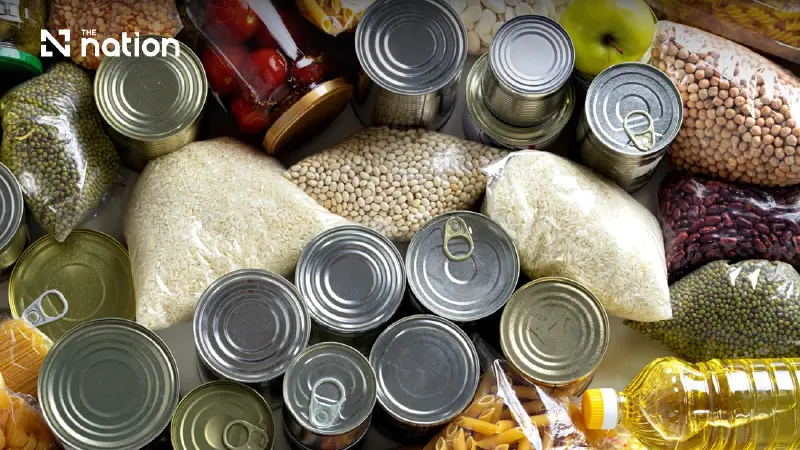


Thailand’s National Security Council is considering a national food reserve as it rates a prolonged but contained Middle East war the most likely of four scenarios.
Thailand's National Security Council (NSC) is considering establishing a national food reserve as part of contingency planning for a prolonged conflict in the Middle East, which it considers the most likely outcome among four possible scenarios.
The council believes fighting is more likely to remain geographically limited but continue for an extended period than to end quickly or escalate into a wider regional war. For Thailand, the duration of the conflict could be as significant as its geographical reach, with prolonged fighting adding pressure on energy prices and global supply chains.
NSC Secretary-General General Chaipruak Doungprapat explained that although Thailand remains outside the immediate conflict zone, it must prepare for potential disruption to the economy, energy supplies, food security and cybersecurity.
The assessment was developed through discussions involving relevant government agencies and academics, including Assistant Professor Dr Manoch Aree of Srinakharinwirot University, who contributed analysis of possible developments in the conflict.

Four scenarios for the Middle East conflict
The NSC has identified four possible outcomes, assigning different levels of likelihood to each based on political and security developments.
The first scenario involves a swift negotiated settlement. If the parties reach an agreement within a short period, energy prices and the global economy could return towards normal conditions. However, the council considers this outcome unlikely.
The second scenario involves a short, geographically limited conflict. Fighting could temporarily disrupt freight transport and cause fluctuations in energy prices, but the economic consequences would be relatively short-lived. The NSC assigns this scenario a moderate likelihood.
The third scenario involves a prolonged conflict that remains geographically contained. This carries the highest likelihood in the council's assessment.
Domestic political considerations among major powers and obstacles to negotiations could make an agreement difficult to achieve, potentially extending the fighting. The council also identified risks from covert operations and cyberattacks that could intensify the consequences of a prolonged conflict.
The fourth scenario involves a wider regional war. An escalation beyond the existing conflict could trigger a severe global energy and economic crisis, with supply chains potentially facing major disruption.
The NSC considers this the second most likely outcome, behind a prolonged but limited conflict.
Cyberattacks raise concerns over essential supplies
Manoch highlighted the potential vulnerability of essential infrastructure to cyberattacks, citing an incident in Europe in which hackers altered the control settings of refrigerated facilities storing food ingredients, causing damage to supplies.
He presented the incident as an example of how a conflict could cause serious disruption even without spreading geographically.
According to Manoch, Europe is already experiencing direct consequences from the Russia–Ukraine war and indirect effects from the Middle East conflict, particularly through higher energy costs, economic pressures and migration-related challenges.
For Thailand, academics have recommended that security agencies prepare for the possibility of simultaneous failures affecting communications networks and digital infrastructure.
Such an emergency could render existing contingency procedures unusable, requiring authorities to develop alternative response arrangements.

Thailand has sufficient food, officials advise against stockpiling
Despite concerns about a prolonged conflict, security officials stressed that Thailand currently has sufficient food supplies and that there is no need for households to stockpile essential goods.
Domestic production of rice and chicken eggs exceeds national consumption requirements, while milk and vegetable oil supplies also remain adequate.
Nevertheless, the NSC is considering a longer-term proposal to establish a national food reserve to strengthen preparedness against future disruptions.
The council has also emphasised the importance of communicating risks without creating unnecessary public anxiety.
Its approach is to encourage people to remain "aware but not alarmed", reducing the possibility that concerns about the conflict could trigger panic buying or simultaneous withdrawals of money from banks.
Officials believe clear communication will be essential to maintaining public confidence while government agencies prepare for possible economic and security consequences.
NSC to update emergency plans with public and private sectors
The NSC Operations Centre will continue monitoring the Middle East conflict and coordinating contingency preparations with government agencies and private-sector organisations.
Its work will follow the Crisis Management Plan 2023–2027 and the National Preparedness Plan, which provide frameworks for responding to different levels of national security emergencies.
Authorities will continue assessing developments and adjusting their plans to address both prolonged fighting within the existing conflict zone and the possibility of a wider regional escalation.
The council's preparations aim to ensure that Thailand can respond to disruptions in essential services, energy supplies, food distribution and digital infrastructure while minimising the effects on the public.
