
US Embassy concerned over new law affecting Facebook operations
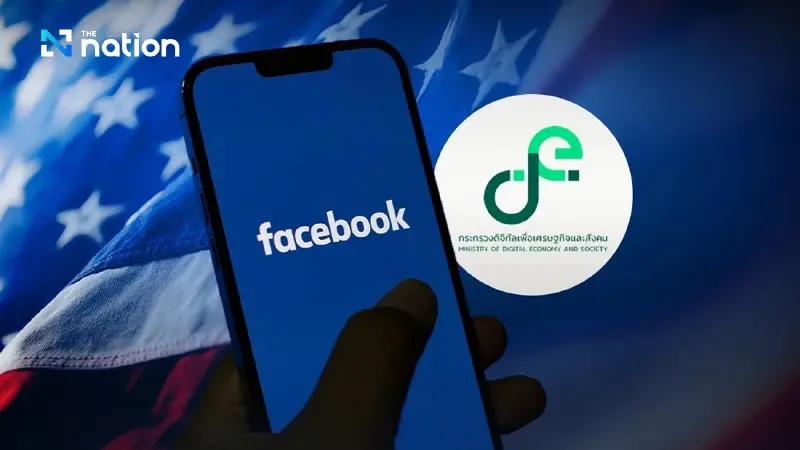


The US Embassy has raised concerns over Thailand’s new law holding Facebook accountable for online scams. Despite objections, the government insists the decree will protect consumers without disrupting business operations.
Digital Economy and Society (DES) Minister Prasert Chantararuangthong revealed on Thursday that the US Embassy had expressed concerns regarding a new executive decree that would require social media platforms, such as Facebook, to share responsibility for damages caused by online scams.
Prasert stated that the embassy had sent a letter voicing its apprehensions over the draft decree, which aims to amend the online crime suppression law. The letter highlighted concerns about the potential impact on a "giant technology platform servicing Thais," an apparent reference to Facebook.
Government Stands Firm on the Draft Decree
According to Prasert, the letter was sent to the DES Ministry in late January after the Cabinet had approved the draft decree. However, he emphasised that the concerns raised by the US Embassy would not influence the legislation.
"I affirm here that the letter will not affect the draft, and the government does not need to amend it," Prasert stated. "The government has the authority to enforce measures to suppress technological crimes and minimise their impact on the people."
Legislative Process and Expected Implementation
Prasert noted that the draft decree is currently under review by the Office of the Council of State. While there has been a delay in its enforcement, initially scheduled for last month, it is expected to come into effect within this month.
He dismissed concerns that the Council of State was deliberately delaying the process and assured that scrutiny of the draft was proceeding as planned.
New Responsibilities for Banks, Telecom Firms, and Digital Platforms
Prasert explained that, among other provisions, the decree would require banks, telecom operators, and digital platforms to take responsibility for financial losses incurred by victims if they are deemed to have failed in implementing adequate preventive measures against online scams.
While the details of the decree have not been publicly disclosed, Prasert reassured businesses that the law would not have a severe impact on their operations. He added that many of the required measures—such as sharing information on mule accounts and online fraudsters—are already being implemented by banks and telecom operators.
Facebook's Role in Online Scams in Thailand
Facebook remains the most popular social media platform among Thais, but it has also become a hotspot for online scams. Many victims have been lured into fraudulent schemes through Facebook advertisements.
Among the most common scams are call-centre frauds, where criminals use Facebook ads to pose as police officers or government officials to deceive victims.
Additionally, fraudulent online shopping pages have been set up to trick consumers into making payments without receiving their ordered goods. These pages frequently change names after a period of operation to continue deceiving new victims. Pet food and product scams are among the most notorious cases.
Facebook’s Ineffective Fraud Prevention Measures
Many Facebook users who have reported fraudulent pages often receive automated responses stating that no wrongdoing was detected. Recently, Facebook even disabled its scam report button, with automated replies stating that it could not be used due to technical issues.
As a result, Thai consumers have had to rely on warnings from the Thailand Consumers Council and consumer protection groups to verify whether a page is fraudulent before making purchases.
The new decree aims to address these issues by holding social media platforms accountable for their role in enabling online scams and ensuring greater protection for Thai consumers.
