
‘Hia’ water monitors can be legally farmed for skins, says DNP
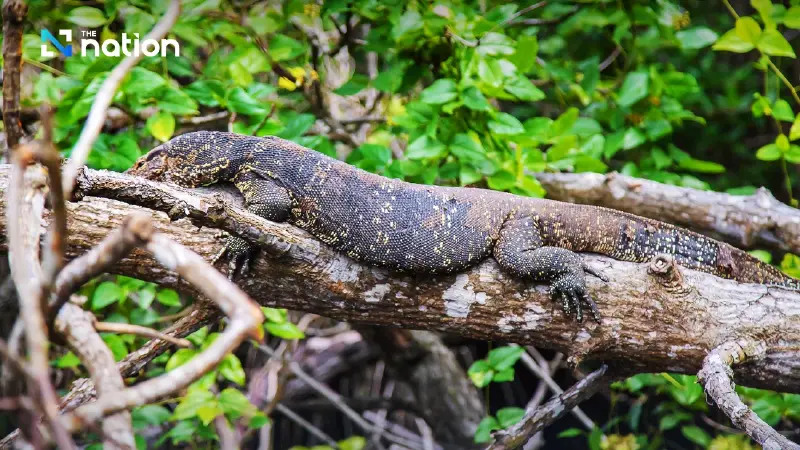


DNP sets 500-baht breeder price for farming hia water monitors as legal skin trade grows; wild capture remains banned under Thai wildlife law.
Controlled breeding price set at 500 baht
The Department of National Parks, Wildlife and Plant Conservation (DNP) has officially set a controlled price for breeding Asian water monitors—commonly known in Thai as hia—to support legal farming for their skins, the DNP announced this week.
Chalerm Pummai, director of the DNP’s Wildlife Conservation Office, said the department has fixed the price of each water monitor (Varanus salvator) breeder at 500 baht.
The pricing was announced in an official DNP directive issued on July 2, as part of efforts to promote water monitor farming as a legal and sustainable economic activity in response to growing demand for their skins.
Legal farming framework published
The announcement follows the publication of a DNP directive in the Royal Gazette late last year, which classified water monitors as protected wildlife that may be bred for commercial purposes.
Chalerm said the set price is based on the cost of care and maintenance at the Khao Son Wildlife Breeding Station in Ratchaburi, where 290 water monitors are currently housed. The station will serve as the initial distribution centre for breeders.
In addition to the base price, buyers must pay an extra 100 baht per animal for the cost of microchipping.
Private sector shows interest in legal farming
Chalerm revealed that a private company has expressed interest in purchasing 30 to 40 breeders from the station to establish a licensed water monitor farm.

He added that the DNP plans to include water monitors in its official list of protected wildlife with set market prices and service fees. This listing will be published in the Royal Gazette to formalise the pricing structure.
No impact on wild populations, DNP assures
Chalerm stressed that the farming of hia will not threaten wild populations, as the animals at the breeding station were originally captured from communities where they were reported as a nuisance.
“These animals could either be released back into the wild or cause further disturbances in the community. Farming them offers a viable alternative,” he explained.
Capturing wild hia remains illegal
Meanwhile, DNP director-general Atthapol Charoenchansa cautioned the public that while hia can be legally farmed, capturing wild ones for farming or killing remains strictly prohibited.
He emphasised that all breeders must be sourced from DNP wildlife stations or licensed farms. Those caught capturing wild hia face penalties of up to 1 million baht in fines, a prison term of up to ten years, or both.
Criteria for legal water monitor farming
Atthapol added that only qualified individuals will be granted permission to start hia farms. Applicants must meet the following criteria:
- Hold a valid licence for breeding protected wildlife in accordance with Thai law
- Own the land used for farming or have written consent from the landowner
- Have no criminal record under the Wildlife Preservation and Protection Act B.E. 2562 (2019)
- Obtain breeding stock only from authorised breeding stations—wild capture is strictly prohibited
