
Transport Ministry fast-tracks Bt1.96tn mega-project pipeline
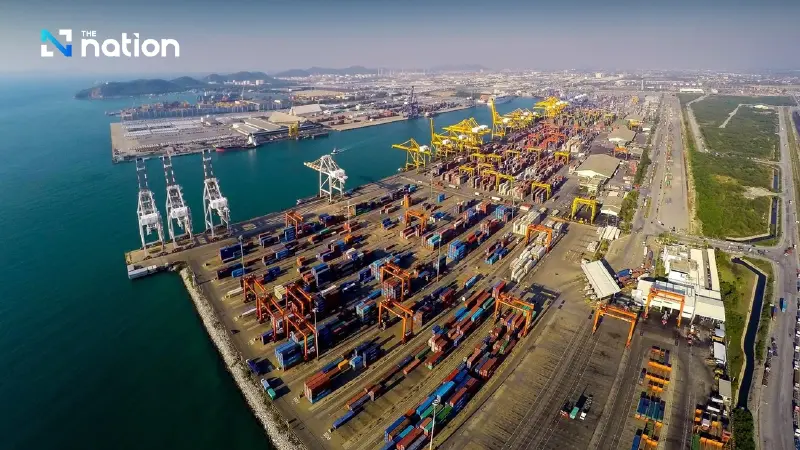


The Transport Ministry is pushing ahead with six major projects worth nearly 1.96 trillion baht, led by the Land Bridge and Bangkok-Nong Khai high-speed rail.
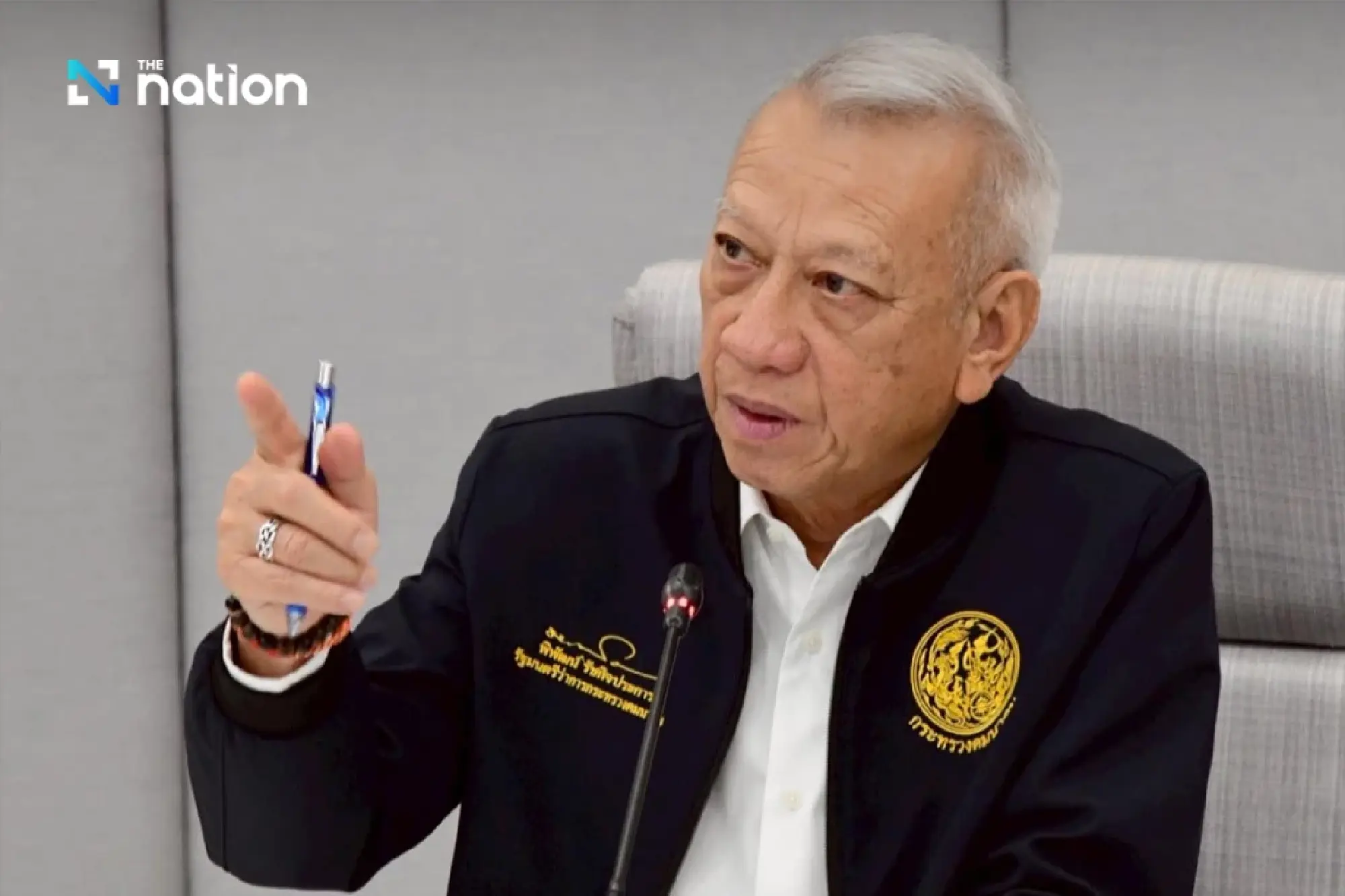
Transport Minister Phiphat Ratchakitprakarn said the ministry is accelerating six major infrastructure projects worth around 1.96 trillion baht under the Anutin II administration, with the Land Bridge remaining a flagship policy and major rail schemes also moving ahead.
He said the investment pipeline was aimed at strengthening Thailand’s transport network, boosting logistics efficiency and supporting long-term economic expansion, while also helping attract new investment into strategic growth areas such as the Eastern Economic Corridor (EEC).
Land Bridge remains flagship project
Phiphat said the Land Bridge project, officially the transport infrastructure development scheme linking the Gulf of Thailand and the Andaman Sea under the Southern Economic Corridor, remains a core government priority.
Valued at 997 billion baht, the project has been carried over from the previous administration and is expected to create more than 100,000 jobs.
He said the project would be worth the investment, arguing that the time used to move cargo across Thailand’s Land Bridge would not be a major disadvantage when compared with Singapore’s high-volume transhipment system, and would instead offer an opportunity to connect the Indian and Pacific Oceans more directly.
Jiraroj Sukolrat, director of the Office of Transport and Traffic Policy and Planning (OTP), said tender documents were already being prepared. The process is expected to take around six months, with bidding likely to open in late 2027. After document checks and contract signing, first-phase construction is expected to begin in 2028 and take four years to complete.

High-speed rail and double-track projects advance
The second major project is Phase 2 of the Thai-Chinese high-speed rail scheme linking Bangkok and Nong Khai, specifically the Nakhon Ratchasima-Nong Khai section, with an investment value of 340 billion baht.
Phiphat said the Cabinet had already approved the project, while the State Railway of Thailand is now preparing the terms of reference, median pricing and contract details ahead of bidding for civil works.
The ministry is also advancing Phase 2 of the southern double-track railway programme, which includes three sections:
- Chumphon-Surat Thani, 168 kilometres, worth 30.422 billion baht
- Surat Thani-Hat Yai Junction-Songkhla, 321 kilometres, worth 66.27 billion baht
- Hat Yai Junction-Padang Besar, 45 kilometres, worth 7.772 billion baht
No contract change for three-airport high-speed rail
Phiphat said the government would not amend the contract for the 224-billion-baht high-speed rail project linking three airports, despite efforts to stimulate fresh investment in the EEC.
He said changing the contract could expose the government to legal action from other bidders and insisted that, in fairness to all parties, the project must continue under the original agreement.
While acknowledging that passenger numbers and earlier projections may have shifted after the Covid-19 pandemic, he said the government would instead focus on increasing usage of both the high-speed rail service and U-tapao airport rather than revising the deal.
Entertainment and tourism projects planned for EEC
To help drive traffic into the area, the ministry is also backing an entertainment complex focused on sport, along with a large-scale theme park project, with combined investment estimated at 300 billion baht.
Phiphat said the emphasis would be on world-class tourism projects capable of drawing more travellers to U-tapao airport, with current plans including invitations to investors to develop a compact, fully integrated sports complex without a casino.
Investor drive to follow policy statement
Phiphat said that once Prime Minister Anutin Charnvirakul has delivered the government’s policy statement to the House of Representatives, the ministry will hold discussions with the Eastern Economic Corridor Office and the deputy prime minister in charge to formally move ahead with investor outreach.
The main objective, he said, is to bring more users into the EEC area and build confidence among operators so that planned construction can begin on schedule.
