
Govt plans 3-baht cap for first 200 household power units
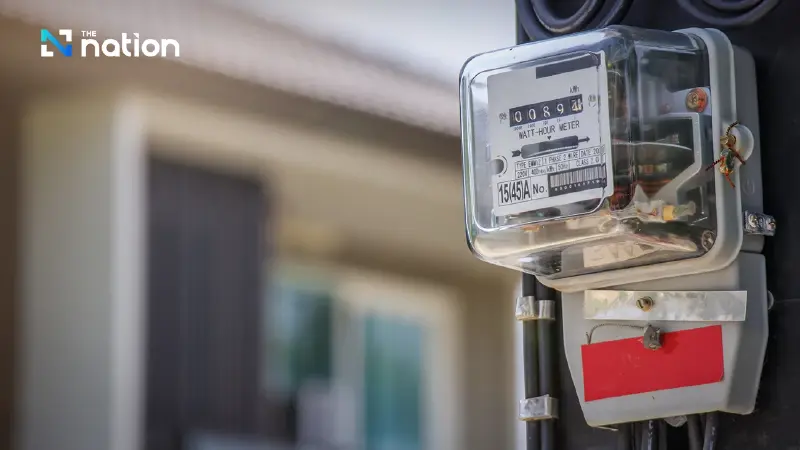


The Cabinet has approved in principle a National Energy Agenda to cap the tariff for the first 200 units of household electricity use at no more than 3 baht per unit from June, covering more than 20 million households.
First 200 units targeted under cost-of-living relief plan
The Cabinet has approved in principle a plan to cap the tariff for the first 200 units of household electricity use at no more than 3 baht per unit, with the measure expected to take effect by June 2026.
The move, announced on Tuesday (April 28), forms part of the government’s “National Energy Agenda” aimed at easing the cost-of-living burden as global energy prices remain volatile.
Rachada Dhnadirek, spokeswoman for the Prime Minister’s Office, said the measure would cover more than 20 million households, or around 90% of residential electricity users.
Cabinet responds to energy price volatility
Rachada said the Cabinet had approved the National Energy Agenda in principle to address fluctuations in oil and natural gas prices caused by the conflict in the Middle East.
She said the government understood public concern over rising living costs and wanted to strengthen the country’s economic foundation while reducing long-term dependence on imported energy.
“The government understands people’s concerns over rising living costs. Cutting electricity charges to 3 baht and setting up this committee are measures to strengthen the economic foundations and reduce long-term dependence on external energy sources,” Rachada said.
Solar rooftops and energy savings to be pushed
Alongside the tariff cut, the government will promote household solar rooftop installation through low-interest loans. The repayment instalments are expected to be designed so they remain lower than monthly electricity bills.
The government will also review the feed-in tariff system for buying back electricity from households to make it more suitable.
Other measures include a target for state agencies to cut energy use by 20%, the nationwide replacement of public lighting with LED systems, promotion of electric vehicles and charging stations, and support for bioenergy made from agricultural waste.
New economic panel chaired by PM
The Cabinet also approved the creation of a new Economic Policy Committee chaired by the prime minister.
The panel will screen and drive proactive measures on finance, fiscal policy, investment and tourism to deal with external shocks, especially the impact of the Middle East crisis.
Its members will include deputy prime ministers, key economic ministers, the Bank of Thailand governor, and representatives from the Federation of Thai Industries, the Thai Chamber of Commerce and the Thai Bankers’ Association.
Energy council to discuss next steps
The committee will also monitor the government’s economic policies announced to Parliament to ensure they produce concrete results.
A meeting of the National Energy Policy Council is scheduled for Wednesday (April 29) to set out the next stage of implementation for the energy agenda.
