
Energy minister outlines 10,000MW Thai rooftop solar plan on September 19
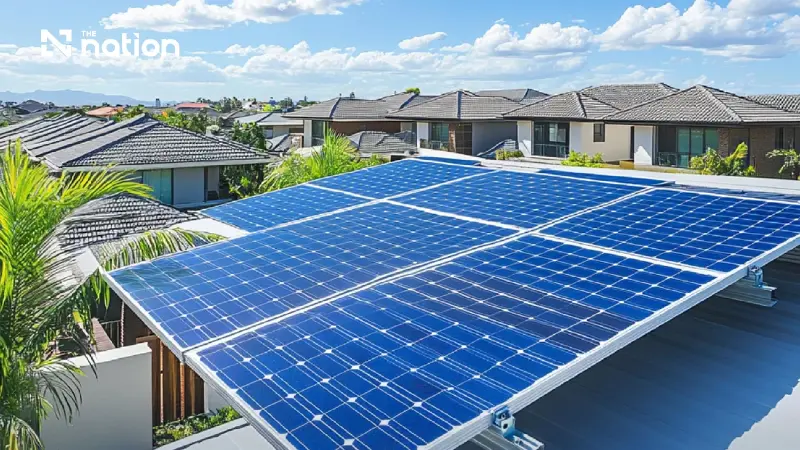


Thailand’s proposed rooftop solar scheme would cap household systems at about 5kW and offer bill credits, financing and simpler approvals
Energy Minister Akanat Promphan outlined plans on Saturday (September 19, 2026) to reserve 10,000 megawatts of rooftop solar capacity for Thai households as part of a wider overhaul under the forthcoming Power Development Plan 2026 (PDP2026). Individual systems would be limited to about 5 kilowatts to spread participation across the country.
Speaking on the programme “Talking with Anutin’s Cabinet”, Akanat said the household allocation would shift the focus of solar development beyond the large operators and solar farms traditionally associated with the sector. The proposed size limit would prevent a small number of households or investors from taking up a disproportionate share of the capacity.

Household solar plan would credit surplus power against bills
Akanat said the proposed arrangements would address a common concern among people who are away from home during daylight hours: how to use the electricity their panels produce. The state would buy surplus output and credit its value against electricity charges within the same billing period, allowing households to benefit from unused power and reducing the immediate need to buy expensive batteries.
In an example outlined by Akanat, a 5-kilowatt system could generate around 600–700 kilowatt-hours, or electricity units, a month, worth a little over 2,000 baht. Households with bills at a similar level could therefore see a substantial reduction in monthly costs, although actual results would depend on generation and electricity-use patterns.
The Energy Ministry is also considering ways to ease installation costs. Akanat said options ranged from partial financial assistance to loans supported by revenue from electricity generation and power-purchase contracts.
Under the financing example Akanat described, households could finish paying for the equipment in approximately seven to ten years, leaving them with fully paid-off solar panels.

Utilities would handle solar applications and safety checks
Akanat said the proposed approval process would allow households to coordinate through electricity distribution utilities rather than approach several agencies. Online forms would also be developed, while utilities would remain responsible for checking installations before connection.
“For installations used solely by the household, without selling electricity back, we aim to complete inspection and acceptance in about one week. For those selling electricity back, we will try to complete the process within one month,” Akanat said.
Before a system could connect to the grid, the utility would inspect equipment, wiring, installation work and smart meters. Akanat stressed the importance of installation standards to prevent fires and risks associated with substandard equipment.
The solar programme would also create work for electricians, installers and maintenance providers across Thailand, according to Akanat.
Akanat says public-lighting costs removed from tariffs
Akanat said the government had already removed public-lighting costs from the electricity tariff structure and implemented a household rate of 3 baht per unit for the first 200 units consumed.
According to Akanat, the cost of public and street lighting had been embedded in electricity tariffs for 30–40 years, imposing a burden of about 18 billion baht annually without appearing as a separate item on household bills. He argued that households should not continue bearing those costs through their electricity charges.
PDP2026 aims for nearly 50% clean power within ten years
Akanat said the forthcoming PDP2026 would aim to increase clean energy’s share of the power mix from about 20% to nearly 50% within ten years, and to at least 65% over the longer term. The plan’s three objectives would be the cleanest possible energy supply, the greatest security and the fairest arrangements for producers and consumers.
For energy security, Akanat said planned gas-fired generating capacity would be aligned with supplies from the Gulf of Thailand, onshore production, new fields and neighbouring countries.
The Energy Ministry also intends to reduce reliance on liquefied natural gas (LNG) bought on the spot market, where prices can fluctuate sharply during wars. Akanat said longer-term contracts would be pursued to make costs lower and more stable.
“The power plan must not be left solely to big business,” Akanat said, explaining the decision to reserve solar capacity for households.
Akanat said the government also intended to open the clean-electricity market so industrial users could buy directly from generators offering suitable quality and prices, easing restrictions that had previously capped the market.
“The plan must be fair to those who want to generate electricity for sale and fair to consumers, because they can choose which producer offers the best quality and the lowest price, and buy from that producer,” Akanat said.
The new power plan would also leave room for future technologies, including hydrogen, geothermal energy, solid oxide fuel cells and small modular nuclear reactors (SMRs). Akanat said the ministry wanted to prepare rules, safety requirements and supporting systems in advance so Thailand would not have to start from scratch when those technologies became ready.
Akanat acknowledged that restructuring would affect established interests, but said the government would prioritise the public interest, particularly households’ monthly electricity costs.
“Allocating 10,000 megawatts to the public will certainly have an impact. But we are putting the public interest first and will continue,” Akanat said.
