
‘Outsider ministers’ spark online debate amid political uncertainty
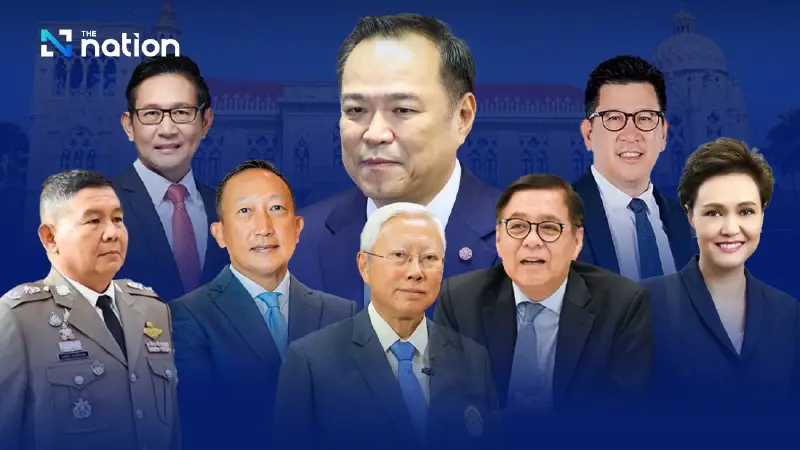


“Outsider ministers” spark huge buzz on social media with over 3.8m engagements, led by Foreign Minister Sihasak and Commerce Minister Suphajee.
In an era of ongoing political uncertainty, the phenomenon of “outsider ministers”, politicians appointed to cabinet positions without direct election, has drawn significant attention on social media. The trend reflects both the growing influence of personal branding and the powerful role of digital communication in shaping public opinion.
According to data collected by Wisesight (Thailand) between September 13 and October 2, 2025 using its Zocial Eye tool, political topics generated as many as 3,828,850 engagements across 7,559 posts, highlighting the high level of public interest and participation online.
Platforms driving political conversation
- Facebook remains the dominant platform, with 1,479,553 engagements from 1,646 posts, underscoring its reach and role as the main hub for political discussion.
- TikTok ranked second with 907,026 engagements from just 312 posts, reflecting its strength in delivering fast, emotionally engaging, and viral content.
- YouTube followed in third place, with 177,606 engagements from 437 posts, showing its continuing relevance in longer-form political content.
Public sentiment mixed but leaning positive
Overall, sentiment around the outsider minister phenomenon was moderate. Positive engagement totalled 905,933 interactions, notably higher than negative responses at 541,633 engagements. The data suggests that the public holds a degree of expectation and even admiration for outsider ministers, signalling cautious optimism about their potential role in Thai politics.
Foreign minister steals the spotlight
Foreign Minister Sihasak Phuangketkeow, a veteran diplomat, drew the largest wave of engagement, over 2.3 million interactions. His fiery address to the 80th UN General Assembly, in which he accused Cambodia of “distorting facts and repeatedly portraying itself as a victim,” went viral.
He emphasised that the real victims were Thai soldiers and civilians, urging genuine dialogue to resolve disputes. His sharp retort, “The village our Cambodian friends referred to is in Thai territory, full stop!” — became a viral meme, celebrated as a bold defence of national dignity. The hashtag #Sihasak Phuangketkeow alone generated 787,398 engagements.
Commerce minister earns praise for clarity
Commerce Minister Suphajee Suthumpun also attracted significant attention, with more than 1.8 million engagements. Her performance in Parliament, where she explained trade and economic policies with clarity, professionalism, and openness, drew praise from netizens.
Her key points included measures to manage trade relations with the United States, strengthen rules of origin to prevent fraud, assist SMEs through six support programmes, stabilise farm prices, reduce living costs, and promote exports, particularly through upcoming FTA negotiations with the EU and South Korea.
Other outsider ministers in the spotlight
Several others also trended online, though on a smaller scale:
Ekniti Nitithanprapas, Deputy PM and Finance Minister: Promoted the “Let’s Go Halves Plus” stimulus scheme, earning 155,240 engagements.
Borwornsak Uwanno, Deputy PM : Gained 257,915 engagements after outlining procedures for Parliament’s dissolution and legislative transition.
Vorapak Tanyavong, Deputy Finance Minister: Mentioned in cabinet line-up discussions, receiving 92,476 engagements.
Auttapol Rerkpiboon, Energy Minister: Also drew attention in the new cabinet context, with 84,609 engagements.
Chanchai Phongphichitkul, Justice Minister: Recorded 13,827 engagements, largely linked to his nomination.
Social media as the first battleground
The outsider minister phenomenon underlines the influence of digital platforms in politics. While social media engagement reflects rising public expectations and early approval, analysts note that the true test lies ahead: translating momentum into concrete achievements that benefit the country.
