
Battle of the blocs: Bhumjaithai, Pheu Thai gear up for the 2026 election showdown
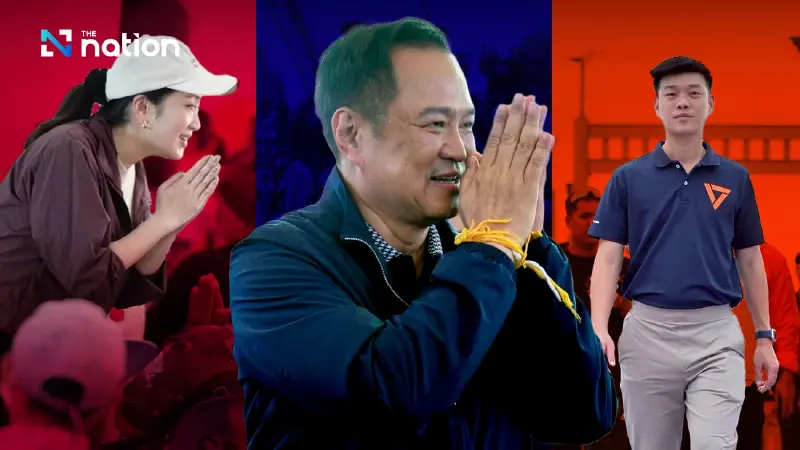


Bhumjaithai aims to lead the next government with over 100 MPs under its “Sam Niyom” strategy, while Pheu Thai continues its political course under the enduring shadow of the Shinawatra family.
The drums of politics are beginning to sound, signalling the countdown to Thailand’s next election season. As the atmosphere shifts toward campaign mode, political parties across the spectrum are already sharpening their strategies to capture public support.
Among them, the Bhumjaithai Party is moving assertively. After successfully engineering the formation of the current coalition and fulfilling its long-held ambition to make Anutin Charnvirakul prime minister, the party is now executing what insiders call the "Sam Niyom", a political blueprint designed not merely to survive as a short-term caretaker government but to secure a majority administration in the next term.
The momentum echoes the spirit of Newin Chidchob, the party’s influential mentor, who famously blessed Anutin last year during his birthday elephant ritual in Buri Ram, chanting for him to “become prime minister”, a wish that came true.

This year, during his 67th birthday ceremony on October 4, Newin repeated his incantation: “May you remain prime minister for another four years.”
The message was unmistakable: Bhumjaithai is gearing up for a full-scale election battle, eyeing more than 100 parliamentary seats and a return as the ruling party.
Bhumjaithai Party Strategy
1. Nationalism:
The party is leveraging sovereignty and border security issues, especially along the Thai–Cambodian frontier, to stir patriotic sentiment.
This resonates strongly in its strongholds across the Lower Northeast, including Buri Ram, Surin, Si Sa Ket and Ubon Ratchathani, all considered Bhumjaithai’s political fortresses.
2. Populism:
The government, under Anutin’s leadership, has ramped up populist policies such as the “Let’s Go Halves Plus” scheme, which builds on the popular co-payment programme from the Prayut Chan-o-cha era and is set to launch this October.
Further stimulus measures are expected to follow as part of the run-up to the polls, reinforced by a mobile Cabinet meeting scheduled in the Thai–Cambodian border provinces of the Lower Northeast, a move seen as strategic vote-building ahead of the election.

3. patronage-based politics:
In Bhumjaithai’s political equation, the bid to become a “100+ seats” party capable of leading the next government lies in what insiders call its patronage-based politics.
In a political landscape where Bhumjaithai’s momentum may not match the surge of the Move Forward Party, the support of powerful local political clans, or Big House, from the North to the South has become the party’s most coveted asset.
The Northeast remains the key strategic battleground where the Bhumjaithai aims to capture as many constituencies as possible, while the South has become the new frontier. This time, Bhumjaithai is seeking to boost its representation from 12 MPs in the last election to 30, a critical step toward achieving its “Bhumjaithai 100+ equation.”
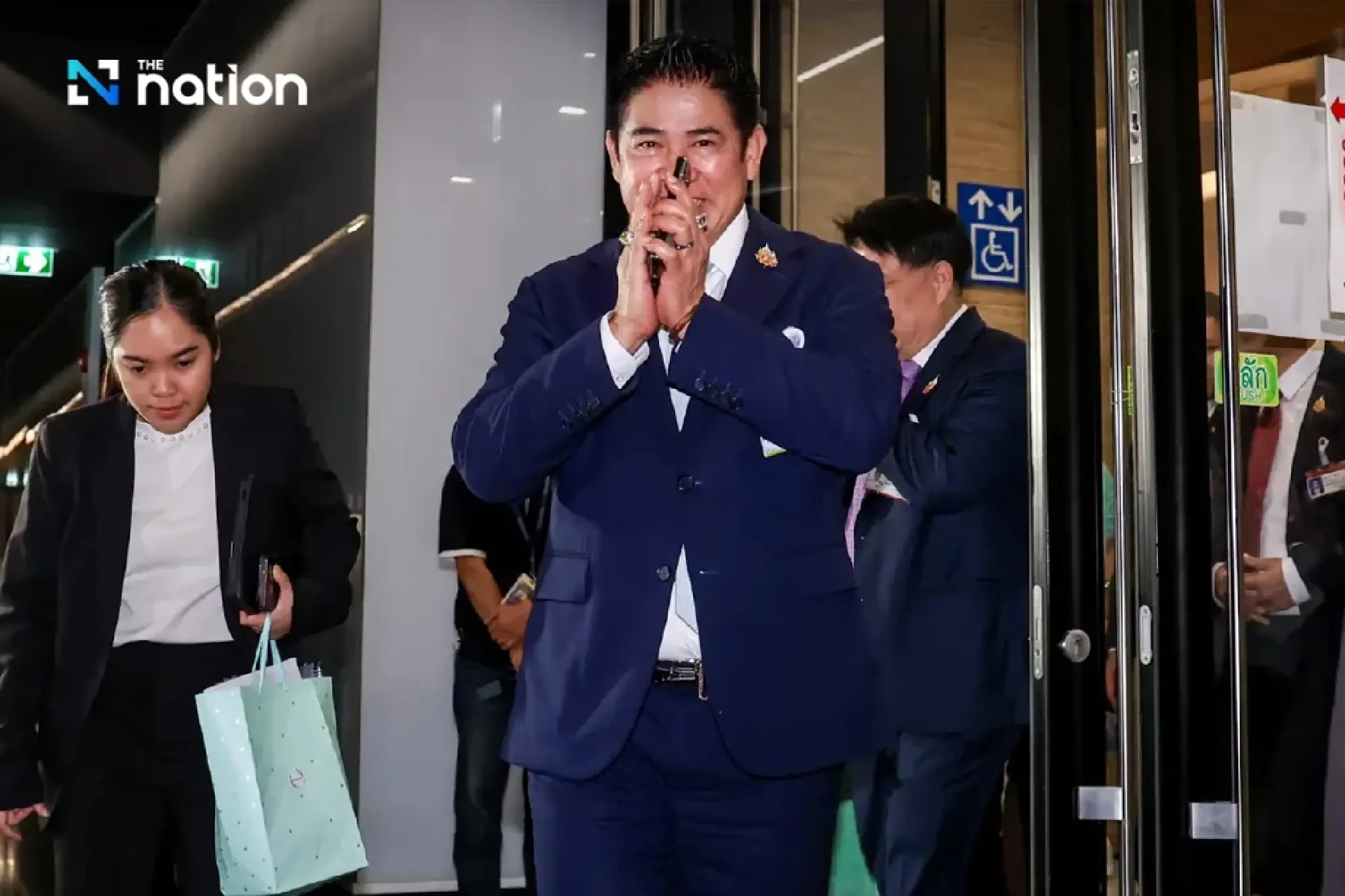

Capt Thammanat’s 70-seat Strategy gains Traction
The Klatham Party has emerged as another political force adopting a playbook similar to Bhumjaithai’s, aggressively pursuing a “deal–recruit–pull” strategy to expand its base and strengthen its bargaining power ahead of the next general election.
The party’s equation, according to Capt Thammanat Prompao, deputy prime minister and agriculture minister who serves as the party’s chief adviser, is clear: Klatham aims to win 70 parliamentary seats in the national election expected in early 2026.
A recent political signal came from Chuwit “Kui” Pitakpornpanlop, a veteran MP from Ubon Ratchathani and head of the big house of Trakan Phuetphon district. Once a dominant figure in the Northeast, Chuwit lost his seat in the last election to Phimpakan Ponsamak of the Thai Ruam Phalang Party.
Amid growing rifts within the Pheu Thai Party, Chuwit has now switched allegiance to Thammanat’s camp, reportedly rewarded with a position as adviser to the Minister of Agriculture and Cooperatives.
Political observers say the Northeast is witnessing a “political market shake-up” under what insiders call the “Klatham 70+ formula.” In addition to Chuwit, several other MPs from the region are said to be preparing to defect and join the Klatham ranks.
Meanwhile, the South has also drawn attention, with Thammanat’s network, often referred to as “the Captain’s faction”, moving assertively. One notable example is Dech-it Khaothong, acting secretary-general of the Democrat Party and a key political figure in Songkhla. His future direction is expected to become clearer after the Democrats elect their new party leader on October 18.

Pheu Thai seeks to turn Sympathy into Support
On the opposition side, the Pheu Thai Party is entering a critical phase as its patriarch Thaksin Shinawatra remains behind bars, stripped of his freedom but not his political influence.
Recent political moves suggest that the party is working to transform public sympathy into electoral momentum.
A key signal came on September 16, when Khunying Potjaman Damapong, Thaksin’s wife, made a rare public appearance at the party headquarters to offer moral support to MPs, a moment widely interpreted as a shift from “woman behind the curtain” to “spiritual leader” of the movement.
The party’s inner circle is also reportedly exploring the idea of fielding Nuttaphong Kunakornwong, Thaksin’s son-in-law, as a potential prime ministerial candidate in the next election, a move that underscores the enduring “Shinawatra brand DNA” that has defined Pheu Thai since its Thai Rak Thai origins.
Beyond family symbolism, the party is gearing up to channel public empathy into political capital, launching its campaign theme “Reboot Pheu Thai, Reboot Thailand” on October 7, signalling readiness for the electoral battlefield ahead.
At the same time, Paetongtarn Shinawatra, the party’s leader, has been actively projecting her leadership image, unveiling new candidates and engaging voters to counter ongoing internal rifts and defections.
Her recent decision to cancel a campaign trip to Kanchanaburi and instead visit flood-hit communities in Uttaradit and Sukhothai was seen as a calculated contrast to rival camps, who were busy celebrating the birthday of Newin Chidchob, the “mentor” of Bhumjaithai.
The timing was no coincidence; it drew a sharp contrast between symbolic festivities and hands-on empathy, reinforcing Pheu Thai’s message that its focus remains on people, not parties.

People’s Party learns from past Defeat
The People’s Party, reconstituted from the dissolved Move Forward Party, continues to enjoy strong popularity in opinion polls. Yet, lessons from its recent political downfall weigh heavily as it prepares for the next general election.
The most significant setback came from its proposal to amend Section 112 of the Criminal Code (the lèse majesté law), which ultimately led to the Constitutional Court’s ruling to dissolve the party. Adding to the pressure, 44 former Move Forward MPs now face ongoing ethics investigations by the National Anti-Corruption Commission (NACC), a lingering issue that could again undermine the party’s credibility.
Another hard lesson came from the party’s decision to nominate only Pita Limjaroenrat as its sole prime ministerial candidate in the last election.
When the political equation shifted unexpectedly, the party was left without an alternative nominee, a critical weakness that forced it into a reluctant tactical move: joining hands with the Bhumjaithai Party to vote for Anutin Charnvirakul as prime minister under the condition of not joining the coalition.
The move, while pragmatic, drew criticism that the party had become a “support bloc” rather than a true opposition force.
These experiences have shaped the party’s strategy for the upcoming election, which analysts call a “lesson learned election” for the orange camp.
This time, sources say, the People’s Party plans to nominate three prime ministerial candidates: Natthaphong Rueangpanyawut, party leader, Veerayooth Kanchoochat, deputy leader and Sirikanya Tansakul, deputy leader, with Woraphop Viriyaroj, list-MP, also among those expected to be shortlisted in the party’s formal selection process.
The party is also revisiting its campaign message. The iconic slogan “With us, without uncles”, which fuelled its landslide support in the previous election, has since proven a double-edged sword, isolating potential allies and limiting the party’s ability to form a government.
As Thailand moves closer to another election cycle, the People’s Party’s challenge is clear: to maintain its reformist spirit while avoiding the missteps that once cost it power.

‘Two Uncles’ camp faces Turbulence as political allies Defect
The so-called “Two Uncles” bloc, long viewed as a pivotal swing force in Thailand’s political equation, is now facing what analysts call a “market shake-up phenomenon” as defections ripple through its ranks.
On one side, the Palang Pracharath Party (PPRP) under its leader General Prawit Wongsuwan, was once seen as a magnet for political heavyweights. Several political groups and local factions, from top-tier to provincial-level players, had aligned with the party earlier this year.
However, momentum has since shifted. The “Tamarind Group” from Phetchabun, led by the Phromphat family and Akkaradet Thongchaisod, has now defected en masse to the Bhumjaithai Party.
Similarly, some southern factions are reportedly preparing to move to Bhumjaithai, while the “Chakungrao Group” led by Warathep Rattanakorn is rumoured to be returning to the Pheu Thai fold, a pre-emptive “deal before a political shift,” as insiders put it.
These moves have fuelled speculation over whether Prawit’s political power and personal charisma, once considered central to the PPRP’s survival, are now in decline.
This comes despite his earlier attempt to consolidate loyalty by declining any Cabinet position in the current administration to maintain moral authority and unity among his supporters.
Still, political observers warn against underestimating the veteran general. Known as the “political tiger”, Prawit may appear to be lying low like a crouching tiger, but behind the calm exterior could still lurk sharp claws ready to strike when the next political opening appears.
Ex-PM Prayut’s Party in disarray as Factions Defect
The turmoil extends to the party of the “former Uncle No.1”, the United Thai Nation Party (UTN), which is now showing signs of internal fracture and defection.
The faction led by Suchart Chomklin, deputy prime minister and minister of natural resources and environment, has already made its destination clear: it is moving toward the Bhumjaithai Party.
Meanwhile, the group associated with Akanat Promphan, the party’s former secretary-general, has been left adrift since his resignation from the post.
The departure of Akanat, once Prayut’s trusted political lieutenant, has triggered growing fragmentation among MPs and local political factions aligned with his network.
Political sources say the Democratic Party has also been active behind the scenes. A powerful senior figure within the party, who still commands significant influence, has been working to negotiate returns and revive old alliances, using former intermediaries to lure ex-members back into the Democrat fold.
However, those efforts have met mixed success, as several groups, including the Chumphon faction, have already finalised their deals with Bhumjaithai, officially enrolling as members earlier this year.
Observers are also watching other strongholds closely, such as the “big shell town” faction of Chumpol Karnchana in Nakhon Si Thammarat, to see which political route they will ultimately choose.
Beyond the constituency MPs, the “influential Democrat Party figure” has reportedly hosted private gatherings with current and former Democrat members, many of whom were previously affiliated with UTN, to encourage them to “return home.”
Those courted include veteran politicians such as Trirong Suwankhiri and Siriwan Prasajaksatru, both long-time figures in the Democrat establishment.
Still, not everyone is being welcomed back. Some names, insiders say, have been crossed off the list by the party’s senior patron, due to lingering rifts from past internal conflicts during their earlier tenure in the party.
Democrats watch Abhisit’s possible Comeback
Amid the ongoing wave of political deal-making and defections shaking the Democratic Party, all eyes are now on October 18, when the party will elect a new leader and executive committee.
Unless an unexpected twist occurs, Abhisit Vejjajiva, the former prime minister and one-time party leader, is seen as the strongest contender to reclaim the leadership post.
Party insiders view Abhisit as a magnet for veteran Democrats who have drifted away in recent years, as well as a potential catalyst to restore the party’s dwindling popularity after successive electoral setbacks.
Political observers note that the timing of Abhisit’s possible return coincides with a broader pre-election frenzy, as political parties across the spectrum, from government to opposition, step up their manoeuvres, policy offensives, and coalition strategies ahead of the next general election.
As the election drums grow louder, one thing is clear: Thailand’s political battlefield is becoming more intense, with every major party sharpening its tactics in a fight where no one is willing to back down.
