
People’s Party unveils ‘people’s government’ team, outlines 12 missions
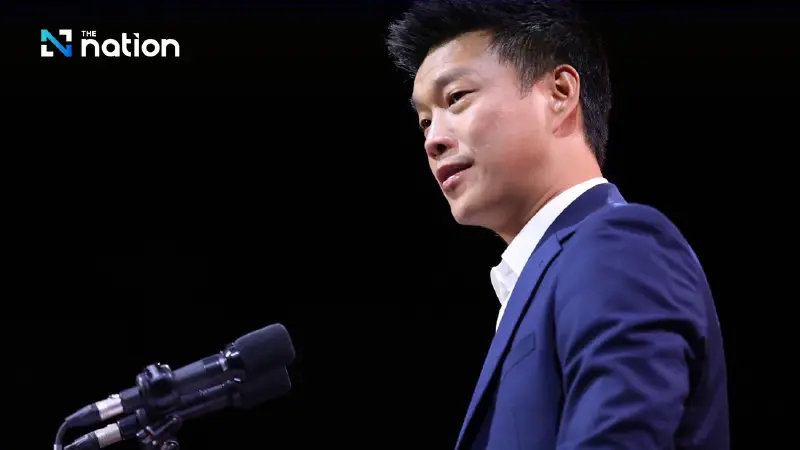


The People’s Party announced a proposed “people’s government” structure and named four deputy PM roles, alongside 12 priority missions, ahead of the Feb 8 election.
The People’s Party on Sunday unveiled its would-be cabinet line-up and set out a “people’s government” vision that it said would change Thailand, expand equality, raise incomes and reduce living costs.
People’s Party leader and prime ministerial candidate Natthaphong Ruengpanyawut announced the team and the party’s key platforms at a press conference at Samyan Mitrtown Hall, on the fifth floor of the Samyan Mitrtown shopping complex, ahead of the February 8 general election.
Natthaphong said the party wanted to prove wrong the long-held view that voting for any party makes no difference. He said a landslide victory for the People’s Party would enable it to deliver what he described as 12 urgent missions to “drastically” change the country.


‘Strong leadership team’ model for a “people’s government”
Natthaphong said the people’s government would run the country through a “strong leadership team” approach, with responsibilities clearly divided around the nation’s key challenges. The structure would comprise: (1) a Government House team and (2) ministerial teams.
Government House team
He described the Government House team as the centre of operations—setting goals, prioritising actions, and coordinating the work of ministries and agencies.
The team, he said, would be led by Natthaphong as prime minister, supported by four deputy prime ministers:
- Deputy PM for Democracy and New Security: Phicharn Chaowapattanawong
- Deputy PM for Economy: Veerayuth Kanchuchat
- Deputy PM for Quality of Life: Decharat Sukkhumnerd
- Deputy PM for Public Sector Reform: Sirikanya Tansakul

Natthaphong said the design was intended to tackle long-standing “silo” problems in government, with deputy prime ministers overseeing cross-ministry and cross-agency work by mission, while the prime minister would oversee the overall picture.
He added that deputy prime ministers would not hold line-ministry portfolios, to ensure they can focus on mission delivery rather than day-to-day ministerial administration.
Ministerial teams under deputy prime minister supervision
Natthaphong said each ministry would continue to handle its core responsibilities, while also working on mission-based tasks that require coordination with other agencies, under the supervision of the relevant deputy prime minister.
He said ministers and executive teams would be appointed based on expertise and suitability for the role, with clear missions and the ability to work effectively with civil servants and earn public trust.


Names of would-be cabinet members listed in party booklet
In a booklet distributed earlier on Sunday, the party listed members of its management and advisory teams across four main areas:
People’s government management team
- Natthaphong Ruengpanyawut — Prime Minister
Public sector reform
- Sirikanya Tansakul — Deputy Prime Minister
- Isriya Pairipaayrit
- Waraphop Wiriya-roj
- Wisut Tantinun
- Teera Suthee-warangkool
- Phiangphanon Boonklam
Democracy and new security
- Phicharn Chaowapattanawong — Deputy Prime Minister
- Rangsiman Rome
- Wiroj Lakkhanaadisorn
- Parit Wacharasindhu
- Munin Phongsapan
- Phattharaphong Leelaphat
- Kittichai Techakunwanich
- Kittipong Piyawanno
- Lalita Hanwong — Adviser
- Air Chief Marshal Phurithet Chan-kaew — Adviser
- Lt Gen Phongsakorn Rodchomphu — External adviser
Economy
- Veerayuth Kanchuchat — Deputy Prime Minister
- Phisan Manawaphat
- Surachet Praweenwongwut
- Pawoot Pongwittayapan
- Sitthiphon Wiboonthanakul
- Sia Champathong
- Chaiwat Sathawijit
- Manisara Baramichai
- Pramuan Sutheecharuwat
- Naiwut Wongkhomet — Adviser
- Anusorn Thammajai — Adviser
- Sarasak Somkraisasrikit
Quality of life
- Decharat Sukkhumnerd — Deputy Prime Minister
- Anuchat Puangsamlī
- Bowonsom Leeraphan
- Natcha Boonchai-insawat
- Natthaya Boonphakdi
- Punsak Chan-jampi
- Narongdet Ularakul
- Wayo Aswarungrueng
- Dr Suphat Hasuwannakit
- Ratchaporn Chuchuay — Adviser on arts and culture
- Natthaphong criticises economy, living costs and governance

Natthaphong said Thailand has remained stuck as a developing country for decades, with old problems worsening and new problems emerging.
He said the economy has failed to regain momentum, with old industries “left to die” while new industries are not emerging. He said small businesses see no future, larger firms cannot compete globally, and domestic spending increasingly flows out of the country rather than into Thai businesses.
He also cited high electricity costs, low wages, stagnant incomes and rising living costs, while warning that rural communities remain trapped in an old agricultural model, with farmers falling deeper into debt. He said environmental problems and disasters—floods and droughts—have intensified year after year.
Natthaphong also criticised what he called an outdated bureaucracy and a justice system that fails to serve the public, while warning about corruption and “grey capital” influencing politics.
He said Thailand needs a “people’s government” to break the constraints of siloed administration and quota-based cabinet allocations, which he argued undermine coordination and mission delivery.
Natthaphong ended by urging voters to reject the view that “it doesn’t matter who you vote for”, calling the election an opportunity to form what he described as a government of change.
