
Health Ministry reassures on Kok River safety as arsenic tests meet standards
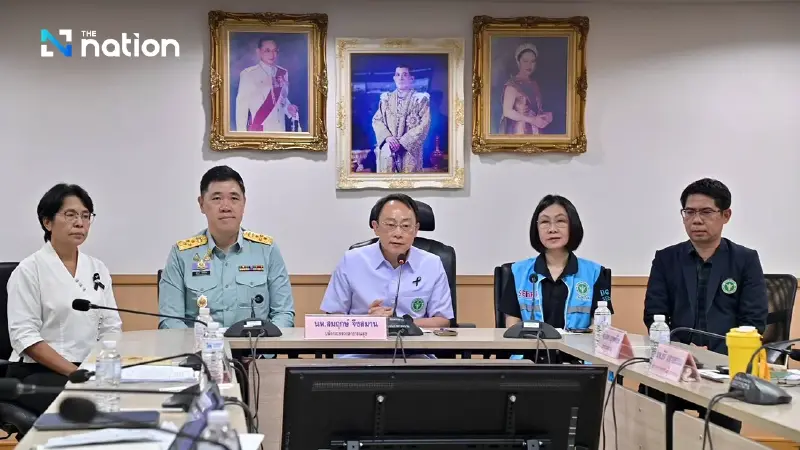


Health Ministry confirms Kok River remains safe but calls for ongoing surveillance of water supply, food contamination, and health checks for at-risk groups.
The Ministry of Public Health has mobilised its affiliated agencies, together with local authorities, to intensify surveillance of arsenic contamination in the Kok River in Chiang Rai province.
Initial test results for contamination in river water and village water supply systems remain within standard limits.
The ministry said research data on arsenic in the environment and in residents’ bodies has helped strengthen surveillance of environmental risk factors that could affect public health.
The ministry is ready to provide support, and if any irregularities are detected, the public can immediately notify local public health agencies so they can work together to protect public health promptly.
Dr Somruek Chungsaman, Permanent Secretary of the Ministry of Public Health, held a meeting on Thursday (February 26) with relevant agencies following remarks by academics that arsenic had been found in the bodies of people living near the Kok River in Chiang Rai.
The issue has caused concern among residents and tourists, and has affected the province’s economy.
Dr Somruek said that, initially, local agencies across all sectors had reported the results of monitoring for arsenic contamination in the Kok River, as well as monitoring arsenic levels in village tap-water systems.
The results showed arsenic levels remained within standard limits, giving confidence that people can continue their daily lives as normal without health impacts.
He thanked researchers, academics and local agencies for paying close attention to, and tracking, health impacts on residents, raising awareness and leading to concrete measures and mechanisms to prepare for the situation.
The Ministry of Public Health is ready and willing to support operations that help care for public health in the area.
If there are any abnormalities or if pollutants are found in the environment that could affect health, people can immediately coordinate with local Ministry of Public Health agencies, including sub-district health-promoting hospitals, community hospitals and regional health promotion centres.
Dr Somruek added that although arsenic contamination in the environment has not exceeded standard limits and remains under officials’ control so that it does not reach levels affecting public health, along with continued implementation of surveillance measures and pollution risk-prevention actions by the province, as already explained by the Chiang Rai governor, the Ministry of Public Health will continue to monitor drinking-water quality, monitor contamination in food, and conduct health checks for at-risk groups to track the situation on an ongoing basis.
This is to protect public health so people can live as normally as possible without being affected by contamination, particularly among at-risk and vulnerable groups.
Dr Amporn Benjaponpitak, Director-General of the Department of Health, said the department continues to advise people to use water supplied by the Provincial Waterworks Authority or village waterworks systems with certified production standards, as these have been inspected, had their water sources improved, and are safe.
The SEhRT (Surveillance and Environmental Health Response Team) from the Regional Health Promotion Centre 1, Chiang Mai, continues to operate in the field with provincial-level agencies to conduct random preliminary water-quality tests and to continually strengthen public knowledge on self-care and prevention for safety.
