
Govt orders all provinces to prepare for 2026 drought, secure household water reserves
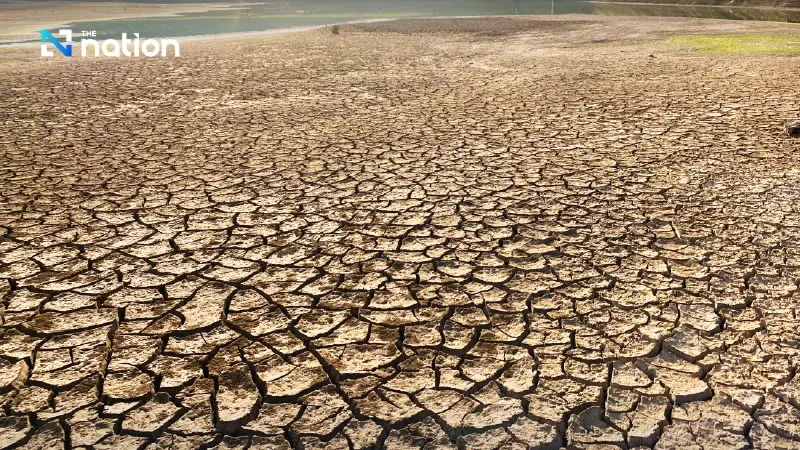


Thailand’s NDPMC has instructed all provinces to step up 2026 drought preparedness, prioritising household water reserves, contingency plans, and rapid-response support to minimise impacts.
The National Disaster Prevention and Mitigation Command (NDPMC) has ordered all provinces to step up preparedness to prevent and address drought in 2026, stressing efficient water management—especially securing reserves for household consumption. Provinces have been instructed to draw up contingency plans and survey backup water sources to minimise impacts on the public.

Prime Minister and Interior Minister Anutin Charnvirakul, in his capacity as NDPMC commander, said the Thai Meteorological Department and relevant agencies have reported that from mid-January to mid-May each year, much of the country experiences dry conditions. Many areas may face drought, shortages of water for daily use, and insufficient water for agriculture—particularly outside irrigated zones—potentially damaging agricultural output. Some areas also risk shortages of raw water for tap-water production, directly affecting daily life.
The government, he said, is concerned about livelihoods and has instructed all provinces to implement the following measures:
- Monitor and track water conditions by establishing a working group under provincial disaster prevention and mitigation operations centres to monitor weather data, runoff, rainfall, stored water levels, and water use across sectors, and to continuously analyse and assess local conditions.
- Prepare provincial drought contingency plans, setting clear risk-management measures aligned with local conditions, and conduct joint drills with relevant agencies.
- Integrate operational readiness across the military, administrative authorities, local administrations, the private sector, and charitable organisations—ensuring personnel, materials, equipment and disaster-response machinery (such as pumps and water trucks) are ready 24/7 to support water distribution.
- Inspect and repair communal water containers and village water-supply systems, ensuring they are functional, and draw up distribution plans to ensure adequate and equitable access to water.
- Strengthen public communications by issuing alerts and explaining government water-management measures across all channels, while promoting water-saving habits and encouraging low-water crops.
- When drought occurs or is expected, set up incident command centres at provincial and district levels, as well as local emergency operations centres—prioritising household water shortages first, preventing disease outbreaks common in the dry season, and strengthening public safety. Administrative authorities, together with the military and police, have been instructed to watch for dry-season crimes such as theft of water pumps and agricultural tools, and to engage communities to prevent conflicts over agricultural water use.
Anutin said the public should be assured that authorities are fully prepared to ensure sufficient water for drinking and daily use throughout the dry season.

Teerapat Katchamat, Director-General of the Department of Disaster Prevention and Mitigation (DDPM), said the department is ready to strictly follow the order and has directed all 18 regional disaster prevention and mitigation centres to prepare machinery to support drought responses, including long-distance water-pumping equipment, drinking-water production vehicles, and water trucks. If any province faces impacts beyond local capacity, it can request DDPM support for immediate coordination and assistance.
People affected by drought, or those who witness disasters, can report incidents via the THAI DISASTER ALERT application or the 1784 hotline, available 24 hours a day.
