
Water shortages and rising demand: WEF warns of global water crisis and the need for innovation
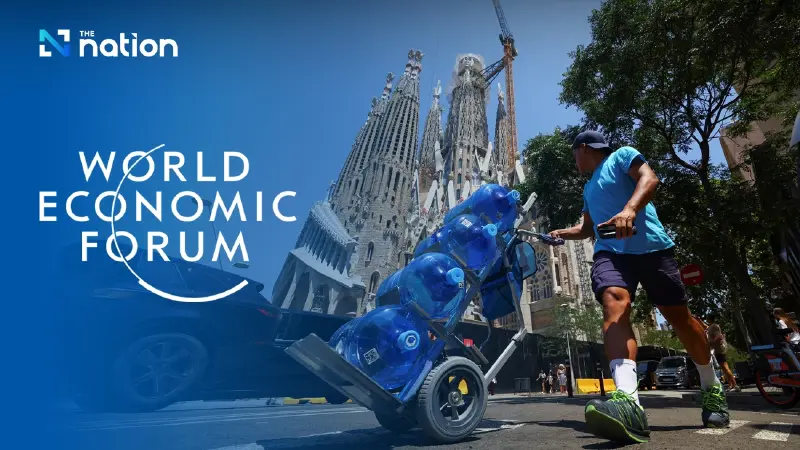


The World Economic Forum highlights the growing water crisis, calling for innovative solutions and collaboration to address the global shortage and protect future generations.
According to the latest World Economic Forum (WEF) report, global urban water demand is set to rise by nearly 80% by 2050, as urban populations are projected to account for nearly 70% of the global population. This presents a significant challenge, especially for rapidly expanding cities, and underlines the urgent need for strategic, sustainable solutions.
The report warns that cities worldwide are becoming the frontline in the battle against water scarcity. Urban areas, already facing major challenges with water availability, are heading towards a situation where demand exceeds the sustainable supply of water.
The WEF predicts that by 2050, the demand for water in urban areas will increase by almost 80%, while the global urban population will make up nearly 70% of the world’s total population. This means cities will need to manage vast amounts of water for millions of people, all while navigating climate constraints, ageing infrastructure, and complex water governance systems.
The WEF also notes that the water crisis is not limited to poorer or drought-prone regions but is now recognised as a global risk, affecting cities across Europe, the United States, and Asia. Many urban areas, particularly in developing regions, are already operating with unsustainable water use levels. Additionally, water-related disasters, including droughts, floods, and storms, are becoming more frequent and severe.
Since 1970, the frequency of water-related natural disasters has increased more than fivefold, accounting for over 70% of global disaster-related deaths. This underscores the systemic nature of the water crisis, which links human, economic, and urban security.
Beyond human security, the WEF report highlights the economic risks posed by the water crisis. If water management does not improve, it could risk 31% of global GDP, equating to over $70 trillion by 2050. This is particularly true for industrial cities and tourism hubs, which rely heavily on water for sectors such as food production, beverages, electricity generation, and service industries. The WEF argues that these cities are particularly vulnerable to the economic consequences of the water shortage, especially when coupled with outdated water infrastructure and fragmented management systems that fail to respond quickly to emergencies or climate volatility.
The WEF proposes the concept of Water-BOOST, stressing that addressing the water crisis requires more than just technological innovation. It also needs flexible governance systems, financial support mechanisms, and cross-sector cooperation. Cities must foster environments that allow start-ups and pilot projects to test new solutions in real-world settings. The cities that can create such an ecosystem will be the most successful in managing their water challenges sustainably.
Key examples of successful water management
- San Francisco has made water recycling mandatory for large new buildings, which has encouraged significant investment in building-level water recycling systems and laid the foundation for the water technology market.
- Valencia, Spain, has become a leader in data-driven water management, using millions of sensors to track water quality and usage, helping to reduce water loss and improve energy efficiency.
- Singapore has successfully centralised its water governance system under a single authority, creating a Living Lab for testing water technologies, enabling faster deployment of new solutions.
- In Accra, Ghana, despite budgetary and infrastructure challenges, grassroots innovation has flourished, including the production of ceramic water filters and solar-powered water systems, providing clean water to over 800,000 people.
The WEF concludes that cities need to build ecosystems that go beyond isolated projects or specific technologies. Tackling the water crisis requires designing systems that integrate technology, policy, investment, and collaboration across all sectors.
Ultimately, the WEF's report serves as a clear warning: water is the most strategic resource of the 21st century. Cities that innovate early will have a distinct advantage, while those that rely on outdated systems may face escalating economic costs and social risks. The water crisis is no longer a distant concern but an ongoing, growing reality that will intensify in the coming decades.
