
Drought: the silent threat creeping into Thailand and across the globe
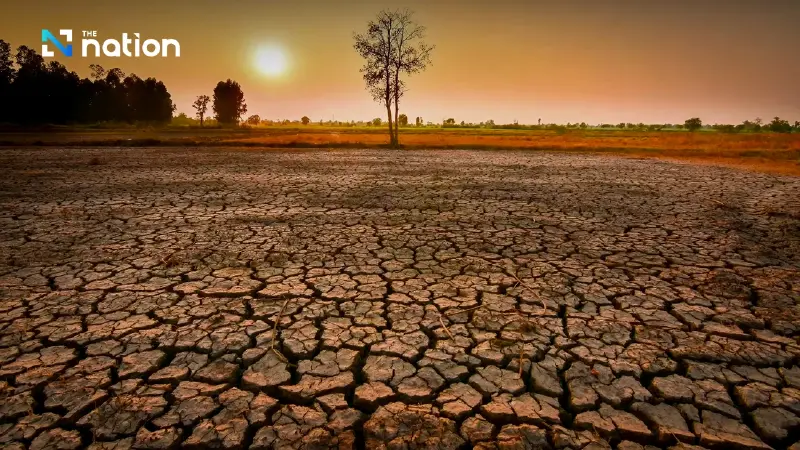


The global drought crisis is intensifying, particularly in critical regions such as Africa, Europe, and Asia, with severe consequences for human lives and agricultural production, according to Krungthep Turakij.
Thailand is directly affected in multiple sectors, especially agriculture, where crop losses are mounting, water levels in major dams are dropping, and social and health problems are emerging.
A report by the Organisation for Economic Co-operation and Development (OECD) noted that drought-affected areas worldwide have more than doubled since 1900. The most severe impacts are in Africa, where 23 million people faced extreme hunger in 2023 due to prolonged drought.
Mark Svoboda, Director of the US National Drought Mitigation Centre, warned: “Drought is no longer a distant threat but is intensifying and requires urgent global cooperation.”
Global drought crisis of concern
Between 2023 and 2025, the world has experienced one of the most severe drought episodes in modern history. The United Nations Convention to Combat Desertification (UNCCD) has identified several drought hotspots where climate change, mismanaged land use, and excessive water consumption have created a cycle of worsening scarcity.
- Horn of Africa: A five-year dry spell in Ethiopia, Somalia, and Kenya triggered the worst drought in 70 years in 2023. In Somalia alone, more than 43,000 people died in 2022, and over one million were displaced.
- Spain: Two consecutive years of drought and heatwaves in 2023 slashed olive production by 50%.
- Southeast Asia: Drought has disrupted the production and supply chains of key cash crops such as rice, coffee, and sugar.
Impact of drought in Thailand
Although Thailand lies in a tropical climate zone, it is not immune to drought. In early 2025, severe water shortages hit large parts of the north, northeast, and central regions, which rely heavily on reservoirs and major rivers.
- Agriculture: Crops such as rice, sugarcane, cassava, and maize have suffered devastating losses, directly reducing farmers’ incomes and threatening national food security.
- Reservoirs and dams: Major dams including Bhumibol and Sirikit have seen worrying declines in water levels. If the situation persists, stricter water management measures may be required.
- Health and sanitation: Scarcity of clean water has forced many to rely on unsafe sources, leading to gastrointestinal illnesses such as diarrhoea. The World Health Organisation (WHO) estimates over one million deaths per year globally from diarrhoeal diseases linked to unsafe water.
- Social impact: Competition for scarce water resources has sparked community-level conflicts. Farmers face stress and anxiety from income loss and livelihood insecurity.
Global economic consequences
Drought affects more than agriculture; it threatens the foundations of modern economies and infrastructure.
- Hydropower: Global hydropower revenues fell by more than US$28 billion between 2003 and 2020 due to reduced generation. In April 2024, water levels in Africa’s Zambezi River fell to just 20% of normal. At Zambia’s Kariba Dam—the region’s largest hydroelectric facility—output dropped to only 7% of capacity, causing blackouts lasting up to 21 hours a day.
- Global trade: Key waterways such as the Panama Canal and the Rhine River have also been disrupted by drought, delaying shipping and creating supply chain bottlenecks.
Altogether, global drought-related damages amount to around US$307 billion annually—evidence that this is not merely a farmers’ problem but one that affects all sectors of society.
The silent creeping disaster
Unlike storms or floods, drought strikes quietly yet persistently, eroding livelihoods, economies, and ecosystems. For Thailand and the wider international community, preparedness and proactive action against drought are no longer optional—they are an urgent necessity.
