
Govt. steps up measures to tackle heat, drought, and forest fires, aims to reduce PM2.5 levels
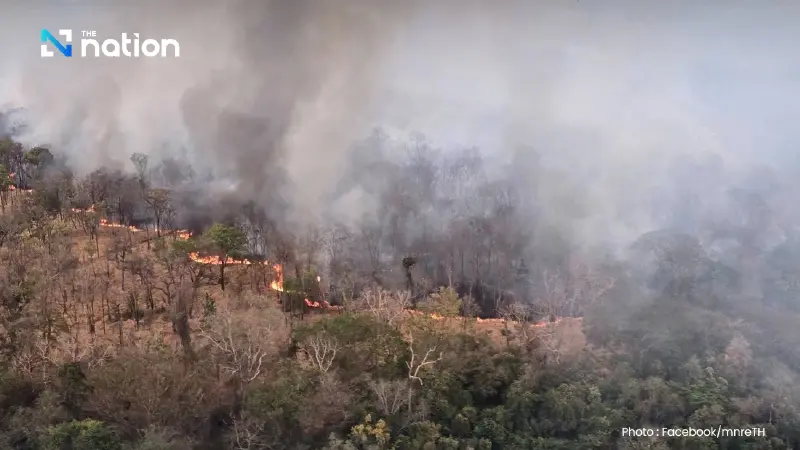


The government raises efforts to prevent forest fires and PM2.5 pollution, urging no burning in agricultural and forest areas from February 19-21, 2026
On February 17, 2026, Surin Worakijthamrong, Director-General of the Pollution Control Department (PCD), announced that Deputy Prime Minister and Minister of Natural Resources and Environment, Suchart Chomklin, has raised the level of measures to prevent forest fires and reduce the PM2.5 dust pollution levels. This is in response to the increasing risk of extreme heat and drought, as Thailand enters the official hot season by late February 2026, with rainfall expected to be 40% below normal in central Thailand, including Bangkok and its vicinity.
The National Oceanic and Atmospheric Administration (NOAA) reported that the global climate has entered a neutral phase since January 2026, leading to lower rainfall and an increase in dryness, heightening the potential for forest fires and the spread of fires due to the dry conditions.

In preparation for the hotter and drier months, the government has taken proactive measures to monitor and control forest fires 24 hours a day. Suchart has ordered relevant authorities to patrol areas prone to recurrent forest fires, set up high-altitude observation points for early detection, and deploy rapid response teams and helicopters to fight fires in hard-to-reach areas. There will also be tighter control over fire-starting activities, especially in agricultural areas, and an active public information campaign to raise awareness of potential fire hotspots and air quality issues.

From February 13-16, 2026, 2,806 fire hotspots were detected, with 62% of them in forested areas, totaling 1,730 hotspots. Similarly, fire activity in neighboring countries has also been increasing.
Between February 19 and 21, 2026, regions in central Thailand, the eastern provinces, and border areas will be closely monitored as winds could push pollution from neighboring countries into Thailand. The government is targeting a 10% reduction in burning in forested areas and a 10-15% reduction in agricultural burning, particularly in rice, maize, and sugarcane fields.
Citizens are urged to refrain from outdoor burning of any kind to reduce PM2.5 levels and prevent air pollution. The government's ongoing efforts focus on the long-term health and well-being of communities while combating the threat of forest fires and air pollution.

