
Democrats reject TDRI funding doubts, say pledges are costed over four years



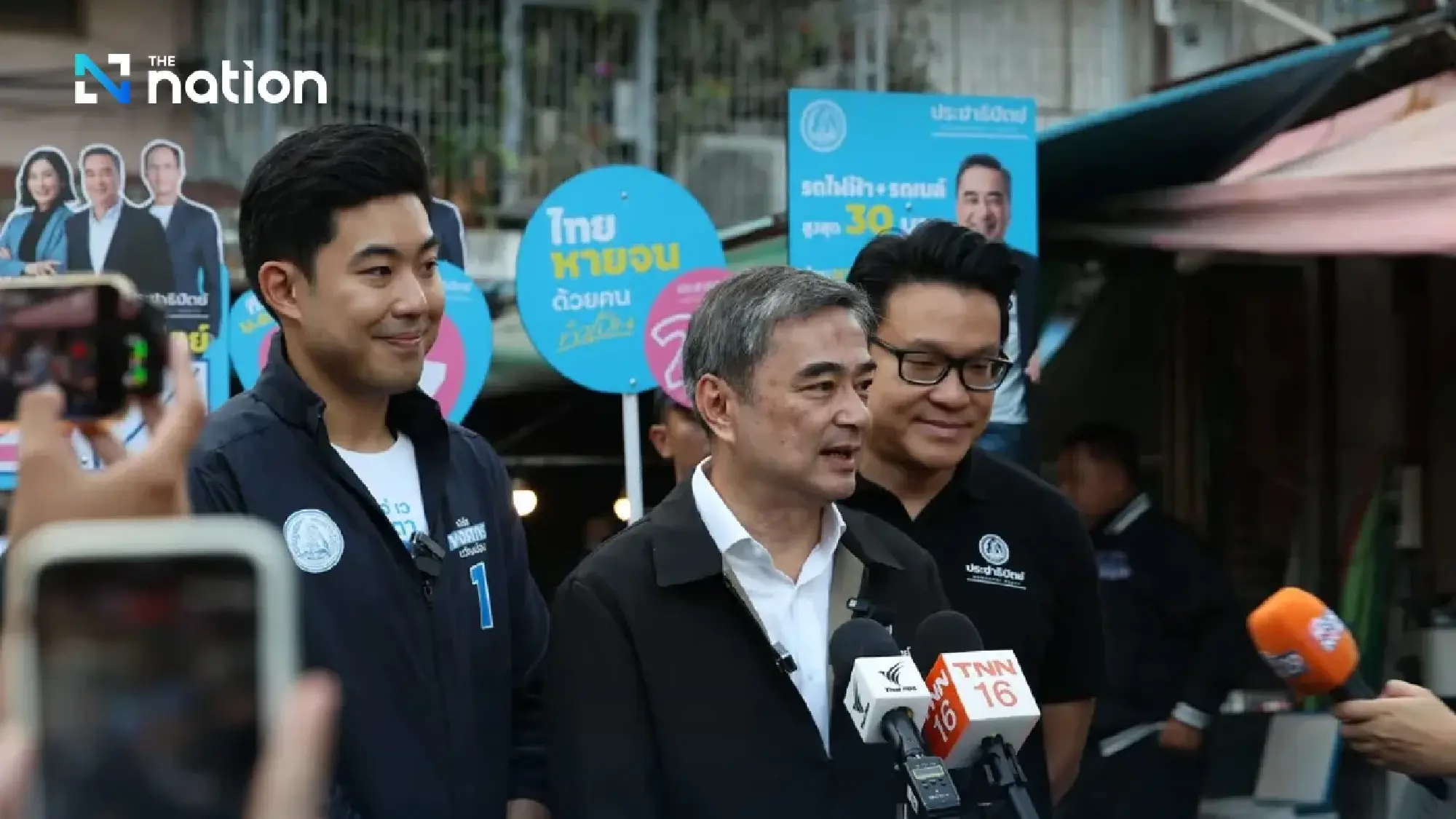
Democrat Party leaders reject Thailand Development Research Institute funding doubts, saying pledges are transparently costed over four years and won’t strain the budget.
Democrat Party leaders reject Thailand Development Research Institute funding doubts, saying pledges are transparently costed over four years and won’t strain the budget.
Thailand Development Research Institute has raised questions over how the Democrat Party would fund its election pledges, but party leaders insist the proposals would not create an undue fiscal burden, arguing that their costings are presented as a full four-year commitment rather than a single-year snapshot.
Abhisit Vejjajiva said the party submitted budget estimates in line with requirements set by the Election Commission of Thailand, stressing that many programmes build on existing allocations and therefore do not represent wholly new spending.


Four-year costings to show “true” fiscal commitments
Deputy party leader Korn Chatikavanij, who heads the party’s policy-drafting team, said the Democrats follow a transparency principle by presenting costs as the total over a full four-year government term, so voters can see the true scale of long-term fiscal commitments.
He argued that comparisons have become confusing because many parties submit only one-year figures, a discrepancy he attributed to unclear rules that allow different reporting standards.
Old-age allowance: THB670bn is a four-year total, Democrats say
On the old-age allowance, Korn said the THB670 billion figure submitted to the election authorities represents the four-year total for the programme and already includes existing spending of about THB100 billion per year.
On that basis, he said the additional budget required would be THB270 billion over four years, adding that the party chose to disclose the full fiscal exposure rather than only incremental costs.

Electricity bills: Democrats say focus is on structural reform, not subsidies
Korn also disputed TDRI’s assessment that the Democrats’ power-price policy would require subsidies of THB216 billion, saying the party is not proposing to use tax revenue to subsidise tariffs.
Instead, he said the policy aims to reduce costs through restructuring of the power sector, including:
- liberalising peer-to-peer trading of solar electricity;
- reducing reliance on gas-fired generation from 60% to 40%;
- purchasing lower-cost renewable electricity from neighbouring countries;
- revising private power purchase agreements to reduce capacity payments; and
- disclosing procurement data from Electricity Generating Authority of Thailand to strengthen public scrutiny and push costs lower.
Call for tougher checks on parties’ budget disclosures
Korn criticised TDRI’s review for relying too heavily on submitted documents rather than what parties say on the campaign trail, citing the example of the land bridge project being promoted in some areas despite not appearing in paperwork.
Abhisit said TDRI has assessed multiple parties and that overall budget figures are not far apart, including between the Democrats and the People's Party, though he suggested some parties remain questionable for listing projects without stating any costings. He urged the Election Commission to enforce stricter scrutiny of all submissions.
