
Anutin elevates anti-corruption to national agenda
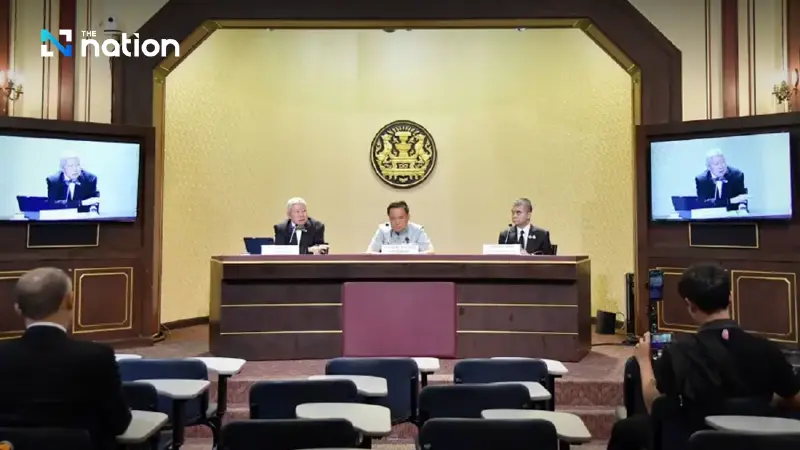


Caretaker PM Anutin says Thailand will treat anti-corruption as a national agenda, using the latest CPI setback to fast-track red-tape cuts and shift approvals online to reduce bribery risks.
Caretaker Prime Minister and Interior Minister Anutin Charnvirakul on February 12, 2026 said the government will elevate the fight against corruption to a national agenda, using Thailand’s latest setback in the Corruption Perceptions Index (CPI) as a trigger for urgent reforms.
Speaking after the CPI results were released, Anutin said the government would push ahead with measures aimed at reducing opportunities for bribery—particularly by cutting unnecessary rules and curbing discretionary approval powers through a stronger shift towards e-government.
Anti-corruption to become a national agenda
Anutin said tackling corruption must be treated as a top priority regardless of who forms the next government, and insisted every government agency must work quickly, transparently, fairly and without discrimination.
He said any officials who violate rules or engage in corrupt conduct must face firm administrative or disciplinary punishment.


Use CPI setback to drive urgent reforms
Anutin said the latest CPI result affects Thailand’s image and investor confidence, and should be used as a catalyst to overhaul how the country prevents and suppresses corruption.
He said the government had already sought detailed briefings from relevant agencies and instructed senior officials to prepare immediate improvements to anti-corruption methods.
‘Law guillotine’ to cut red tape and discretion
Deputy Prime Minister Borwornsak Uwanno said corruption remains deeply rooted partly because Thailand has too many laws and regulations, which create burdens for the public and businesses and expand points of contact where rent-seeking can occur.
He said the government would press ahead with a “law guillotine” approach—scrapping unnecessary rules and overlapping requirements that enable bribery and excessive discretion in licensing and approvals.


Move approvals online to reduce bribery risks
Borwornsak said shifting approvals and permits to fully online systems is key to breaking personal, face-to-face interactions that can lead to bribe demands.
Anutin said the government would push for serious enforcement of laws designed to facilitate doing business, alongside reforms to approval and licensing systems to restore confidence among investors and the private sector.
Agencies told to coordinate and enforce the law
Anutin said agencies including the Public Sector Anti-Corruption Commission (PACC), Anti-Money Laundering Office (AMLO), Office of the Public Sector Development Commission (OPDC) and the Board of Investment (BOI) had been tasked to coordinate and identify ways to raise transparency as much as possible.
He said enforcement agencies must act decisively against corruption and misuse of public funds, and urgently clean up corruption within the public sector.
OECD and OGP push to raise transparency standards
Anutin added that Thailand is accelerating efforts to join the Organisation for Economic Co-operation and Development (OECD) to raise transparency standards in transactions and strengthen international credibility. Borwornsak said Thailand has also applied to join the Open Government Partnership (OGP), framing these moves as a willingness to be scrutinised against international benchmarks.
