
Bhumjaithai pitches ‘Team Thailand’ plan to shield economy from global shocks
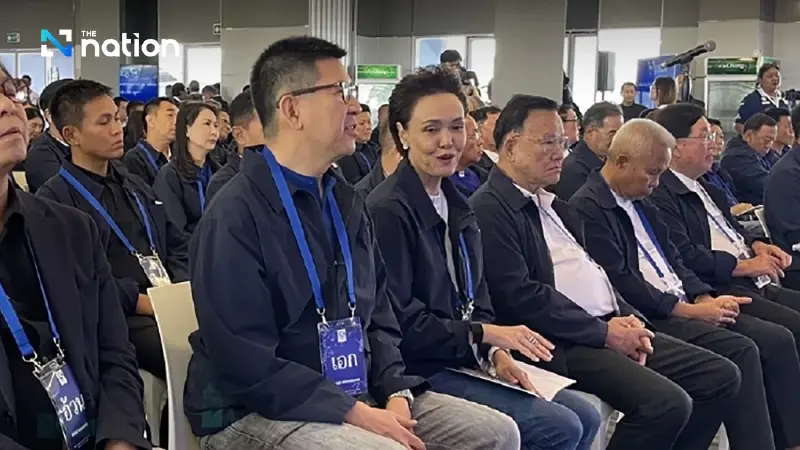


Senior Bhumjaithai ministers told party MPs that Thailand must act as a united “Team Thailand” to cope with external shocks, with a focus on the Middle East crisis, price controls, logistics, foreign policy and economic resilience.
Senior Bhumjaithai Party ministers have presented a coordinated “Team Thailand” approach to deal with mounting global turbulence, telling party MPs that the government must be ready to protect the economy, manage prices and defend national interests amid the fallout from the Middle East crisis and wider global uncertainty.
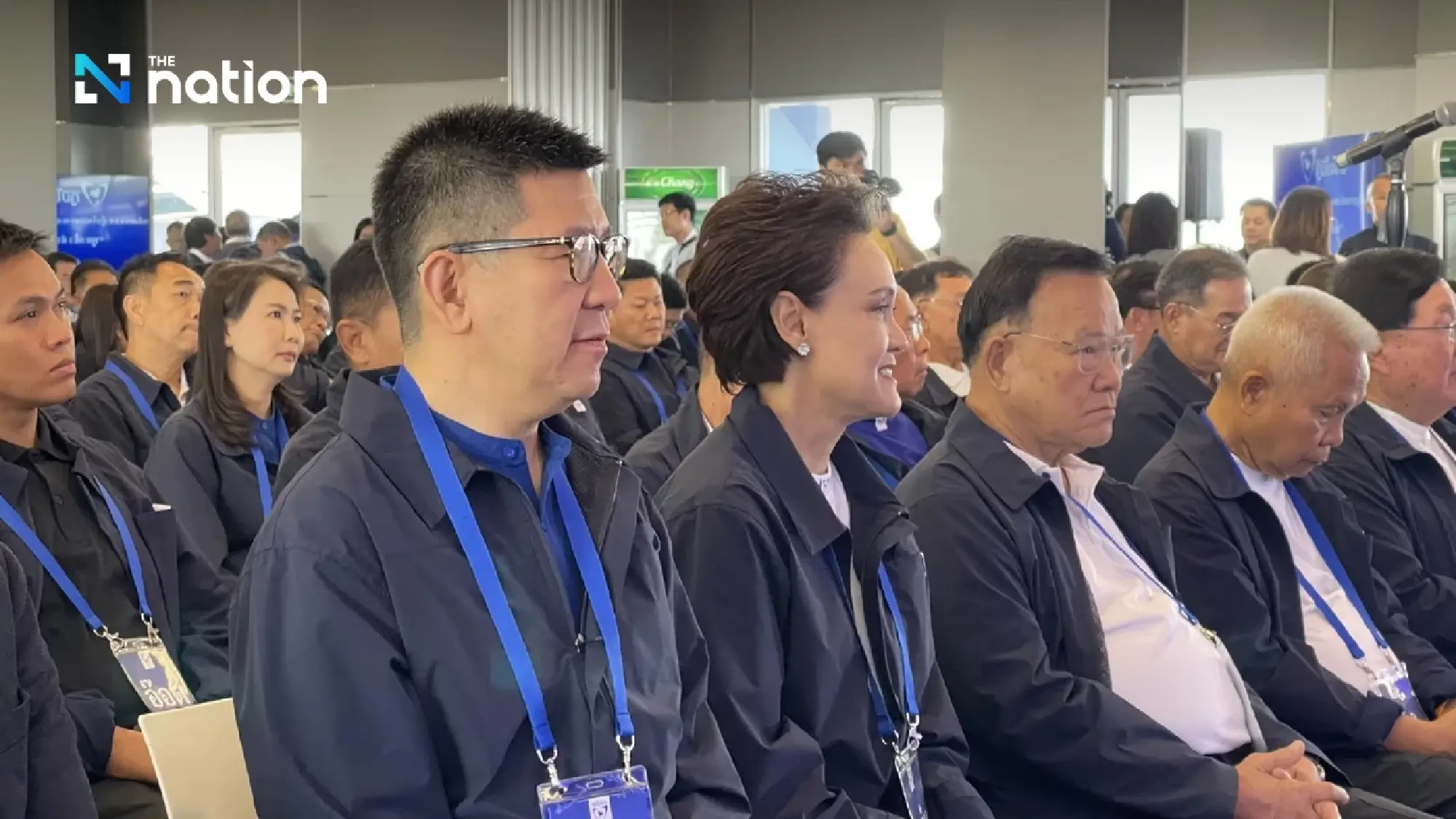
Speaking at the party’s MP seminar under the banner “Spoken and Done Plus” at Chang International Circuit in Buri Ram, Deputy Prime Minister and Finance Minister Ekniti Nitithanprapas, Commerce Minister Suphajee Suthumpun and Foreign Minister Sihasak Phuangketkeow outlined their priorities as members of the Bhumjaithai team.
Ministers tell MPs to help drive coordinated response to economic and geopolitical risks
Ekniti said he was pleased to be part of the Bhumjaithai family and pledged to use the party’s “10 Plus” economic policy to help move Thailand forward. He said the Prime Minister should be seen as the head of a racing team called Team Thailand, leading the country in global competition.
He said the government’s economic approach would focus on easing debt burdens for ordinary people, older people and small businesses, while overhauling parts of the economy to strengthen Thailand’s ability to compete internationally. That included promoting investment in green business, with the aim of ensuring the Thai economy grows steadily without leaving anyone behind.
Ekniti said Thailand was currently facing several storms, including the conflict in the Middle East, and that the government’s duty was to anticipate the impact and prepare countermeasures. He said the Prime Minister had convened daily meetings over the past week and that plans had already been designed on issues such as oil and product prices to prevent hardship for the public.
He said the long-term ambition was for Thailand to become a champion on the global stage within four years.

Middle East crisis, trade pressures and farm issues high on policy agenda
Suphajee said the key immediate task was to reassure the public that the government team could respond effectively to uncertainty, particularly over the Middle East conflict and its economic consequences.
She said her ministry would use available mechanisms to control goods prices as fully as possible, while coordinating with both small and large businesses. She warned that more than 60% of Thailand’s shipping routes pass through the Cape of Good Hope, meaning any rerouting could add 10 to 15 days to transport times and require urgent solutions to logistics bottlenecks.
On fertiliser, she said Thailand had enough supply until August, but added that the government would need to secure additional stocks if shortages emerged. She said she planned to hold talks with Malaysia and Brunei on the issue.
Suphajee also referred to US tariff policy, saying Thailand now had to move quickly to manage the cost burden after Washington decided to keep tariffs at 15% for 150 days. On agriculture, she said the government would need to manage the entire system, including shifting some areas towards cash crops, with a target of 1 million rai.
She also said efforts were under way to tackle low prices for aromatic coconuts and other crops, including looking at whether a central fruit-packing facility could be set up alongside broader action on fertiliser and agricultural management. She urged party MPs to help relay problems from the ground so the government could work towards a more sustainable farm sector.
Sihasak said Thailand also needed a stronger and more active foreign policy in response to a rapidly changing world. He said diplomacy had remained too static for too long and needed to be reshaped so that people could clearly see how it served national economic and public interests.
He said the world was now highly unstable and that Thailand needed a foreign policy strong enough to cope with that disorder. Among the urgent issues he raised was the Middle East crisis, particularly whether Thailand was fully prepared to evacuate its people and respond quickly if conditions worsened.
Sihasak said Thailand needed a broader strategy to handle global change while safeguarding both its interests and its dignity. He urged MPs to play a role in strengthening foreign policy through parliamentary committees and legislative work, saying the country’s response to external challenges could not be left to the executive alone.
