
Anutin government faces twin constitutional tests over emergency borrowing and ballot secrecy
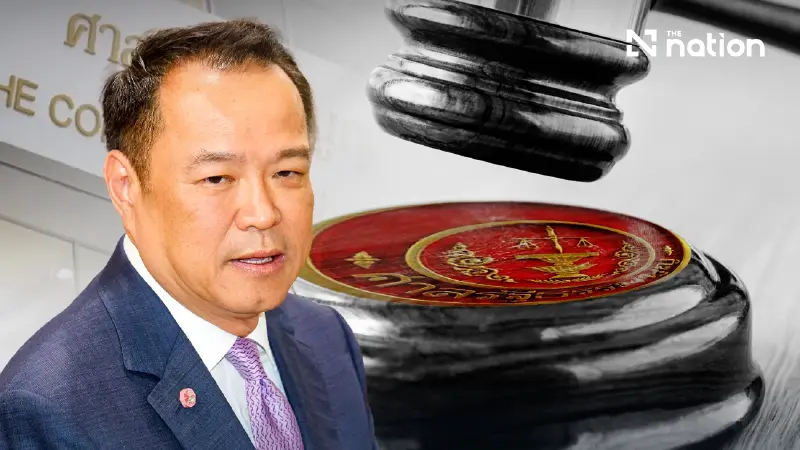


Thailand’s Constitutional Court is weighing two politically explosive cases that could test the Anutin government’s authority, investor confidence and the credibility of the country’s electoral process.
- The Anutin government is facing a Constitutional Court challenge over its use of an emergency decree to borrow 400 billion baht for the energy crisis, which critics argue unconstitutionally bypassed Parliament.
- A second constitutional case questions the legitimacy of the recent election, alleging that barcodes and QR codes on ballot papers could have compromised the secrecy of the vote.
- Together, these cases test the government's legitimacy by scrutinizing both its use of executive power and the credibility of the electoral process that brought it to office.
- The court is scheduled to rule on the emergency borrowing decree on July 9, a decision with significant political and economic consequences for the administration.
Although Prime Minister Anutin Charnvirakul’s Cabinet has only recently begun steering the country’s administrative machinery, two major Constitutional Court cases are already threatening to define the political climate in the second half of 2026.
One case questions whether the government lawfully used emergency powers to authorise 400 billion baht in borrowing. The other challenges whether barcode and QR-code technology used on ballot papers in the February 8 general election could have compromised the secrecy of the vote.
Taken together, the cases go beyond ordinary legal disputes. They strike at two foundations of government legitimacy: the Cabinet’s authority to act in an economic emergency, and the public’s confidence that an election remains free, secret and beyond manipulation.
For the Anutin administration, the danger is not only whether it wins or loses in court. The deeper risk is that both cases could reinforce a wider political narrative that the government is being tested on the legality of its power and the credibility of the process that brought it to office.
July 9 ruling puts borrowing decree under spotlight
The more immediate pressure point is the Constitutional Court’s scheduled oral statement, consultation and vote on the borrowing decree case on Thursday, July 9, 2026, at 9am.
The case was brought by 133 members of the House of Representatives, most of them from the opposition, through the House Speaker. They have asked the court to rule on the constitutionality of the Emergency Decree authorising the Ministry of Finance to borrow funds to address the impact of the energy crisis and support Thailand’s energy transition.
The decree allows borrowing of up to 400 billion baht, making it one of the most politically sensitive fiscal measures facing the new government.
After its meeting on June 24, the Constitutional Court found that the case involved a question of law and that sufficient evidence had already been submitted. It therefore ordered the inquiry to end and prepared to vote on the matter.
This means the case has now moved from legal argument to political consequence.

Emergency power or parliamentary shortcut?
At the heart of the dispute is Section 172 of the Constitution, which allows the Cabinet to issue an emergency decree only when there is an emergency and unavoidable urgent necessity. Such a decree must be aimed at maintaining economic security, preventing public disaster or protecting national security.
The opposition’s argument is straightforward: the energy crisis and fuel-price volatility may be serious, but they were not necessarily sudden or unforeseeable. Critics say the government could have pursued the borrowing plan through the normal parliamentary process by introducing a bill and allowing MPs to scrutinise the details.
From that perspective, the decree is not merely a financial instrument. It is being framed as a test of whether the Cabinet has used emergency powers to bypass Parliament.
The government’s defence rests on urgency. It argues that geopolitical conflict, new forms of warfare and volatile global energy prices have created conditions too unstable for Thailand to wait for a lengthy legislative process. It also insists that investment in future energy infrastructure, energy storage, smart grids and clean-energy systems is essential if Thailand is to remain competitive in a global economy increasingly shaped by net-zero commitments.
This is where the legal question becomes political. The court is not being asked to decide whether clean-energy investment is good or bad policy. It is being asked whether the government’s chosen legal route was constitutionally justified.
Economic stakes extend beyond energy
The borrowing decree is being watched closely by political parties, investors and the private sector because its impact would reach far beyond the energy sector.
If upheld, the decree would give the government room to push ahead with spending tied to energy security, transition infrastructure and broader economic support. It would strengthen the Cabinet’s ability to present itself as a government capable of taking quick action during external shocks.
It could also help reassure foreign investors looking for stable production bases, especially those seeking access to cleaner energy and more resilient infrastructure.
But if the court rules against the decree, the government would face immediate fiscal and political complications. Projects linked to the borrowing plan could be delayed or forced back into the normal budgetary process. Investor confidence could weaken, and the opposition would almost certainly intensify its attack on the government’s use of executive power.
A ruling against the decree would not automatically bring down the government. But it would damage the Cabinet’s authority, raise questions about its judgement, and force Prime Minister Anutin to explain why his administration chose an emergency route for such a large borrowing package.
Possible outcomes: green light, setback or narrower ruling
There are three broad ways the July 9 ruling could reshape the political landscape.
The first is that the court rules the decree constitutional. This would give the Anutin government a major legal and political victory. It would allow the administration to move ahead with the borrowing plan and claim that its response to the energy crisis was both urgent and lawful.
The second is that the court rules the decree unconstitutional. This would be a serious setback. It would disrupt the government’s economic programme, hand the opposition a powerful political weapon, and raise questions over the Cabinet’s responsibility for issuing a decree that failed the constitutional test.
The third possibility is a narrower or more nuanced outcome. The court may focus on specific elements of the decree, the degree of urgency, or the scope of borrowing. Such a ruling could still allow parts of the government’s agenda to survive, while forcing other parts to be revised, delayed or returned to Parliament.
For the government, even a partial setback would matter. The case is not only about money; it is about whether the Cabinet can persuade the court, Parliament and the public that it has not stretched emergency powers beyond their constitutional limit.

Ballot-code case opens second front
While the borrowing decree case carries immediate economic weight, the second case cuts even deeper into Thailand’s democratic foundations.
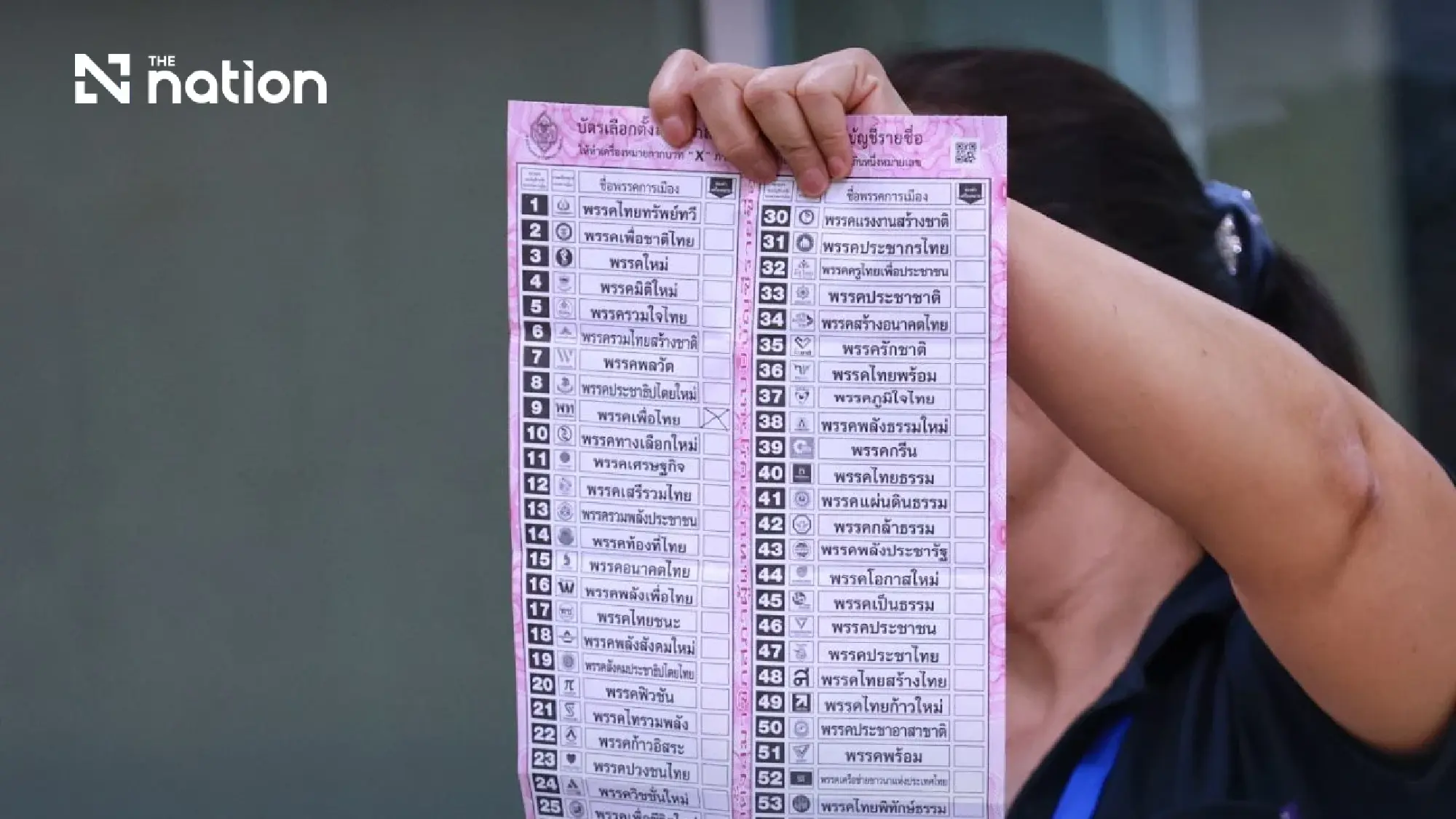
The case stems from 22 petitions submitted through the Ombudsman to the Constitutional Court. The petitioners are asking the court to rule on the conduct of the February 8, 2026 general election, after the Election Commission introduced barcodes and QR codes on ballot papers for members of the House of Representatives.
Unlike the borrowing decree case, the court has not yet issued a final ruling. On June 24, it ordered further expert testimony and instructed the court office to study the facts in detail.
That makes the ballot-code case a longer fuse, but potentially a more explosive one.
The secrecy of the ballot at stake
The petitioners’ concern is that unique codes on ballot papers could allow a computer system, election officials or those in power to trace a ballot back to an individual voter. If that were possible, they argue, it would violate the right to privacy and undermine the principle of secret voting.
The secrecy of the ballot is not a technical detail. It is one of the core guarantees that allows voters to make political choices without fear, pressure or surveillance.
The Election Commission’s defence is that the codes are technical tools, not tracking devices. It says the system was designed to prevent fake ballots, stop ballot rotation, and improve the speed and accuracy of vote counting. The EC insists the codes are not linked to voters’ personal identities.
This places the court in the position of having to weigh electoral innovation against democratic trust.
A modern election system may need better technology to prevent fraud and improve efficiency. But if voters believe that technology can identify how they voted, the damage to public confidence may be severe even before any actual misuse is proven.
A test for the Election Commission
If the Constitutional Court eventually finds that the ballot-code system could identify voters, the Election Commission would face a major crisis of credibility.
Such a ruling could trigger legal and political challenges to the legitimacy of the February election. It could also force a major rethink of how technology is used in future Thai elections, particularly where digital systems intersect with voter privacy.
On the other hand, if the court accepts that the codes were safe technical devices with no link to voter identity, the ruling could give Thailand a clearer benchmark for using digital tools in elections.
That outcome would strengthen the EC’s position and could open the way for wider use of technology in ballot management, vote counting and fraud prevention.
Either way, the case is likely to set an important precedent. It will help determine how far Thailand can modernise its electoral process without weakening the public’s belief that the ballot remains secret.
Two cases, one legitimacy problem
The two cases are different in legal substance but connected in political effect.
The borrowing decree case asks whether the Anutin Cabinet overreached in using emergency executive power. The ballot-code case asks whether the electoral process that produced the government met the standard of secrecy required in a democracy.
One case is about governing after taking office. The other is about the process of getting there.
That is why the combined effect is so politically sensitive. The government could survive either case in a narrow legal sense, but still suffer politically if the public begins to see a pattern of weakened accountability, reduced transparency or institutional mistrust.
For the opposition, the cases offer two powerful lines of attack: that the government is bypassing parliamentary scrutiny, and that the electoral system itself has unresolved questions.
For investors, the immediate concern is policy stability. A ruling against the borrowing decree could disrupt planned spending and delay energy-related investment. But the deeper concern is institutional predictability — whether Thailand’s legal and political system can settle major disputes without pushing the country into another round of instability.
Anutin’s tightrope
Prime Minister Anutin now faces a delicate balancing act.
If he pushes too hard in defending the decree, he risks appearing dismissive of constitutional limits and parliamentary scrutiny. If he retreats too quickly, he risks weakening his own economic agenda and inviting further political pressure.
At the same time, the ballot-code case is largely outside the government’s direct control, but its consequences could still affect the administration’s political standing. Any ruling that damages confidence in the election would inevitably cast a shadow over the government formed after that vote.
That is why July 9 is more than a legal date on the court calendar. It is the first major constitutional stress test for the Anutin 2 government.
A favourable ruling would give the administration breathing space and strengthen its claim that it can manage economic shocks decisively. An adverse ruling would not necessarily end the government, but it would weaken its authority, embolden the opposition and raise the political cost of every major decision that follows.
The ballot-code case, meanwhile, will continue to hover over the political system as a separate but related question of democratic confidence.
Together, the two cases leave the Anutin government facing a rare dual test: whether it can govern lawfully, and whether the system that gave it power can command public trust.
