
Thailand Accelerates Suvarnabhumi Airport Upgrades Ahead of Peak Season
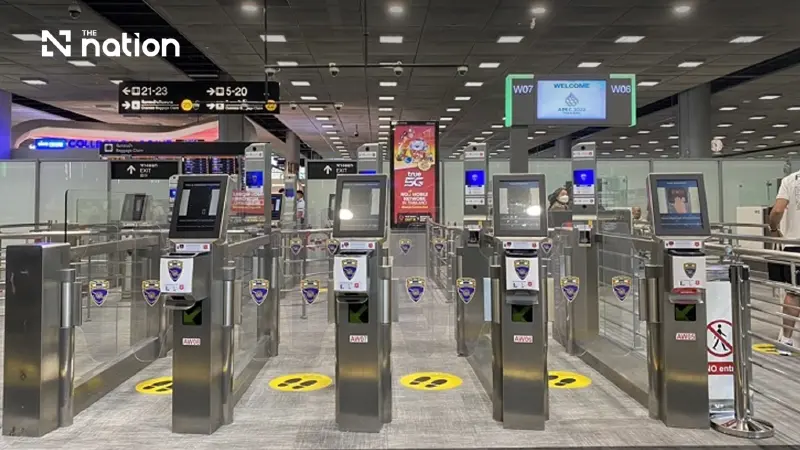


Bangkok targets peak-hour queues at its flagship hub with expanded automated passport gates, spatial restructuring, and warnings over unofficial arrival forms
- The government is expanding its automated passport control system (Auto Gates) to include passport holders from 31 additional nationalities to reduce congestion.
- Airport authorities will dynamically reconfigure immigration hall spaces and adjust staffing to better manage passenger flow during peak hours, when 5,000 to 6,000 passengers arrive per hour.
- An official advisory has been issued to warn travelers against fraudulent third-party websites that charge for the free Thailand Digital Arrival Card (TDAC).
Bangkok targets peak-hour queues at its flagship hub with expanded automated passport gates, spatial restructuring, and warnings over unofficial arrival forms.
The Thai government has launched a coordinated push to streamline international passenger processing at Bangkok’s Suvarnabhumi Airport, pledging to expand automated passport gates to 31 additional nationalities by the end of August 2026.
The initiative follows a high-level site inspection at the capital’s primary international hub on Monday led by Deputy Prime Minister and Commerce Minister Suphajee Suthumpun, Tourism Minister Surasak Phancharoenworakul, and senior transport officials.
The delegation met with airport executives and immigration authorities to tackle severe peak-hour bottlenecks and overhaul the arrival experience for international visitors.

Government officials emphasised that passenger flow through the airport directly impacts the broader national economy.
Beyond hotel and tour bookings, seamless arrivals drive spending across aviation, retail, dining, and local transport networks.
Suvarnabhumi Airport handles up to 190,000 passengers per day during peak tourist seasons, dropping to between 140,000 and 150,000 daily arrivals during off-peak months.

International inbound traffic averages roughly 70,000 passengers daily. However, processing capacity is severely tested during afternoon peak hours between 1:00 pm and 5:00 pm, when immigration halls face arrivals of 5,000 to 6,000 passengers per hour.
Automated Gate Expansion
To alleviate congestion, the Immigration Bureau has approved in principle an expansion of its automated passport control system (Auto Gates).
Once formal signatures are finalised later this month, passport holders from 31 additional countries will gain access to the automated lanes.
Selection criteria for the expanded list were calculated using entry rejection statistics, the Henley Passport Index, and national security parameters.
Officials estimate the expansion will make Auto Gates accessible to an additional 6.5 million short-term visitors annually, alongside approximately 900,000 long-term visa holders.
Once fully operational, automated gates are expected to process up to 53 percent of all inbound international passengers, leaving remaining travellers to be processed by immigration officers at manual counters.

The rollout will occur in phases, prioritised by equipment readiness, biometric database integration, and security checks.
Returning foreign visitors with existing records in the Thai immigration database will be eligible to use the automated gates immediately, while first-time arrivals must still complete initial biometric data capture at manned immigration desks.
In parallel with technology upgrades, airport managers and immigration staff will dynamically reconfigure hall space across all three entry zones.
Staffing allocations will be shifted to match flight arrival patterns, and central hall spaces will be utilised to prevent queue spillover during high-density arrival windows.
Crackdown on Digital Arrival Card Scams
The government also issued an urgent advisory regarding the Thailand Digital Arrival Card (TDAC). Authorities reported a rise in foreign tourists falling victim to third-party commercial websites via search engine results.
Many of these fraudulent or unofficial platforms charge unauthorised processing fees or pose severe identity theft risks.
The Ministry of Tourism and Sports, alongside airline partners, will step up pre-departure communications to ensure travelers complete the TDAC exclusively via official government channels.
Submitting the TDAC through the official portal remains entirely free of charge. Longer-term infrastructure upgrades are also underway, including expanded waiting lounges for early arrivals and improved transit zones to support Bangkok’s growth as a regional aviation hub.
