
Japanese companies report higher profits amid AI investment concerns


Rising material costs and possible US restrictions on data centre construction add uncertainty despite strong results from Japanese manufacturers.
- Demand for artificial intelligence (AI) infrastructure has driven strong first-half profits for many Japanese manufacturers, with companies like Panasonic and Advantest reporting record earnings.
- The profit surge is largely due to heavy investment from US tech companies in data centers, which leverages Japan's strengths in chipmaking equipment and essential electronic components.
- Despite the boom, executives express concern that potential new US regulations and political pressure to restrict data center construction could slow AI-related investment and weaken future growth.
Demand linked to artificial intelligence (AI) has helped Japanese manufacturers report strong first-half results, while a weaker yen has benefited carmakers and higher domestic interest rates have improved banks’ earnings.
Of 967 companies reviewed by SMBC Nikko Securities Inc., 690 reported an increase in ordinary profit for April–September, the first half of the current financial year. The review covered businesses in the Tokyo Stock Exchange’s TOPIX index with March year-ends that had announced their results by Thursday.
Full-year net profit is now expected to be higher than previously estimated at 369 companies. Another 74 reduced their expectations.
For major banking groups, higher domestic interest rates have widened lending margins and supported strong earnings after a prolonged period of rates close to zero. The same rise in rates has increased pressure on businesses carrying substantial debt.
At Nissan Motor Co., savings from cost reductions were cancelled out by higher interest payments. The group reported a net loss for the first half for the second year in a row.
A weaker yen, however, worked in favour of much of the car industry: five of Japan’s seven major manufacturers, including Toyota Motor Corp., reported either a return to profit or an increase in net profit.
Rising raw material costs amid prolonged turmoil in the Middle East are nevertheless adding uncertainty to the industry’s outlook. Honda Motor Co. reported a year-on-year increase of 170 billion yen in those costs against a backdrop of higher crude oil prices.
“We have no choice but to work hard to absorb the expenses while cooperating with our suppliers to reduce costs,” Honda executive vice president Noriya Kaihara said.
Japan’s strengths in chipmaking equipment and components essential to building AI infrastructure have helped its manufacturers benefit from US investment. In their intense competition to develop advanced AI models, American technology companies have invested heavily in building data centres to obtain computing capacity.
Major electronics maker Panasonic Holdings Corp. achieved its highest April–September group operating profit, with growth in sales of electricity storage systems and components for data centres. At chip-testing equipment maker Advantest Corp., group sales, operating profit and net profit all reached first-half records.
Panasonic president Yuki Kusumi was pleased with the performance: “We have received more AI-related demand than we had anticipated.”
“The AI-related semiconductor market is experiencing a period of high growth that could now be described as a ‘megacycle,’” Advantest group chief executive Douglas Lefever said.
Tighter US rules, if introduced, could slow data centre construction and weaken the growth prospects behind large AI investments. The Democratic Party campaigned to restrict data centre construction and performed well in the midterm elections, adding to concerns about whether the AI boom can be sustained.
Executives have voiced concern about future data centre construction and AI spending. The election results “could have an impact, but it is difficult to estimate how much investment would slow”, according to Minoru Kida, executive officer of Mitsubishi Chemical Group Corp.
“There is a possibility of a dip in the short term,” JX Advanced Metals Corp. president Yoichi Hayashi said.
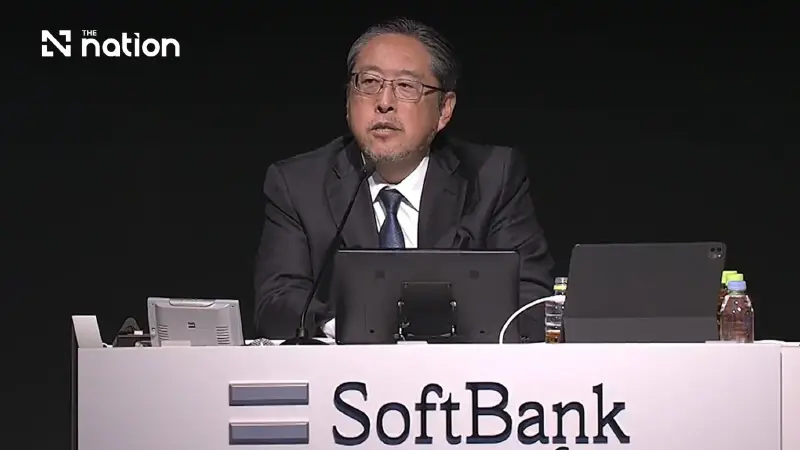
Japanese technology investor SoftBank Group Corp. has made substantial investments in AI, including a total of US$64.6 billion in US AI developer OpenAI.
The investments “will be a major plus in the medium to long term”, in the view of Yoshimitsu Goto, SoftBank Group’s senior vice president and chief financial officer.

[Copyright The Jiji Press, Ltd.]
