
Thai Hotels Association opposes proposed 1,000-baht departure tax
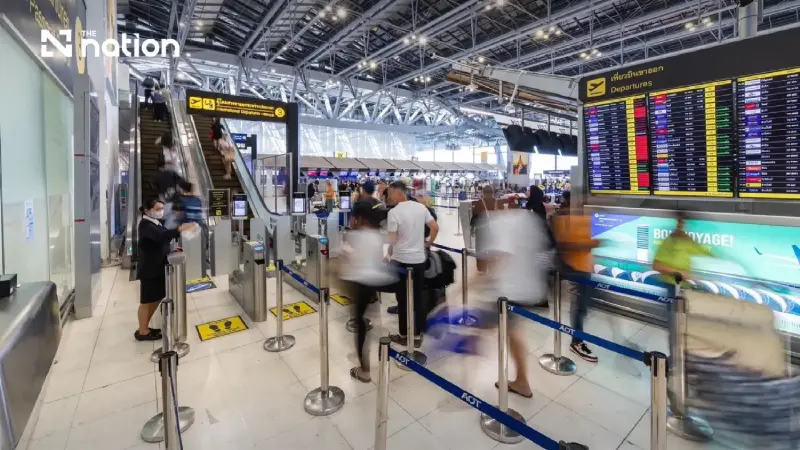


Thai Hotels Association warns new departure tax could raise foreign visitor costs to 2,570 baht
- The Thai Hotels Association (THA) argues the proposed 1,000-baht tax, combined with other potential fees, would significantly increase costs for visitors and make Thailand less competitive as a tourist destination.
- The association warns that higher travel costs could weaken demand for air travel, negatively impacting the entire tourism supply chain, including hotels, airlines, and local businesses.
- THA is concerned the tax would also discourage Thai residents from traveling abroad, potentially making international routes less viable for airlines and reducing flight availability for inbound tourists.
- The association has formally requested that the government withdraw the proposal or, at a minimum, conduct a comprehensive economic impact assessment before proceeding.
The Thai Hotels Association warns that a proposed departure tax, combined with other travel charges, could raise costs for foreign visitors and weaken Thailand’s tourism competitiveness.
The Thai Hotels Association (THA) has opposed a proposed 1,000-baht tax on passengers flying out of Thailand, warning that the additional cost could weaken travel demand, airline connectivity and the competitiveness of the country’s tourism industry.
Thienprasit Chaiyapatranun, president of the THA, said on Friday (October 9) that the association had submitted a letter to the Revenue Department’s director-general objecting to the principle of the draft Departure Tax Act.
The Revenue Department is holding a public consultation on the proposal from September 30 to October 29. Under the draft, travellers of all nationalities would initially face a 1,000-baht tax each time they leave Thailand by air, while the proposed legislation sets a ceiling of 5,000 baht per departure.
THA said the measure could increase travel costs and affect demand for air travel, with consequences extending throughout the tourism supply chain, including hotels, airlines, tour operators, restaurants, retailers and local businesses.
Foreign visitors could face combined charges of 2,570 baht
The association calculated that eligible foreign visitors could eventually face combined taxes and charges of as much as 2,570 baht per person per trip if all measures currently under consideration are implemented.
The figure comprises:
- 1,120 baht in international passenger service charges (PSC) at Airports of Thailand airports, which have been in effect since June 20, 2026
- A proposed 450-baht foreign tourist fee
- The proposed 1,000-baht departure tax
THA stressed that only the PSC is currently being collected. The foreign tourist fee and departure tax remain proposals and have not yet taken effect.
For a family of four, the combined amount could reach 10,280 baht, excluding accommodation, domestic transport and other travel expenses, as well as provincial administrative organisation hotel levies that may apply in some destinations.
The association warned that the additional burden could make Thailand less competitive against other destinations in the region.
THA warns of impact on two-way tourism
THA also raised concerns about what it described as two-way tourism, arguing that outbound and inbound travel demand are interconnected.
If the departure tax discouraged Thai residents from travelling overseas, overall passenger demand on some international routes could decline, making them less commercially viable for airlines.
Carriers could respond by reducing flight frequencies or delaying new routes, particularly where passenger volumes are already limited.
That could in turn reduce seat capacity for foreign visitors travelling to Thailand, increase fares or encourage tourists to choose destinations offering better connectivity and lower travel costs.
THA argued that the effects could therefore extend beyond outbound Thai travellers to foreign arrivals, hotel revenue and spending throughout the tourism economy.
Tourism sector remains vulnerable
The association also warned that the proposed tax would come at a time when tourism remains exposed to economic uncertainty, international conflicts and higher travel costs.
An additional 1,000-baht charge could influence travel decisions, particularly among short-haul visitors and price-sensitive travellers, who may choose competing destinations offering lower overall costs.
Such a shift could affect revenue and employment across hotels and related tourism businesses, THA said.
THA urges government to consider wider economic impact
The association called on policymakers to look beyond the direct tax revenue the measure could generate.
It said any assessment should consider potential effects on passenger numbers, route viability, tourism receipts, employment and tax revenue generated throughout the tourism supply chain.
Thailand’s proposed charges should also be compared with those imposed by competing destinations in the region to determine whether the expected revenue would outweigh potential economic damage.
Association calls for draft to be withdrawn
THA made three recommendations to the Revenue Department and Finance Ministry.
First, it urged the government to reconsider and halt the proposed Departure Tax Act in its current form because of the potential effects on international travel and Thailand’s tourism competitiveness.
If the government decides to proceed, THA called for publication of a comprehensive impact assessment and clear revenue projections covering Thai and foreign travellers, airlines, hotels and the wider economy before the proposal advances further.
The association also urged policymakers to consider alternatives that would avoid placing an excessive burden on travellers, including reviewing who would be liable for the tax, the proposed rate and the maximum ceiling.
THA said it supported efficient and sustainable fiscal policy, but argued that new taxation should take into account its impact on the wider economy and preserve Thailand’s competitiveness as an international tourism destination.
