
Global LNG market set to shift from shortage to oversupply by 2026
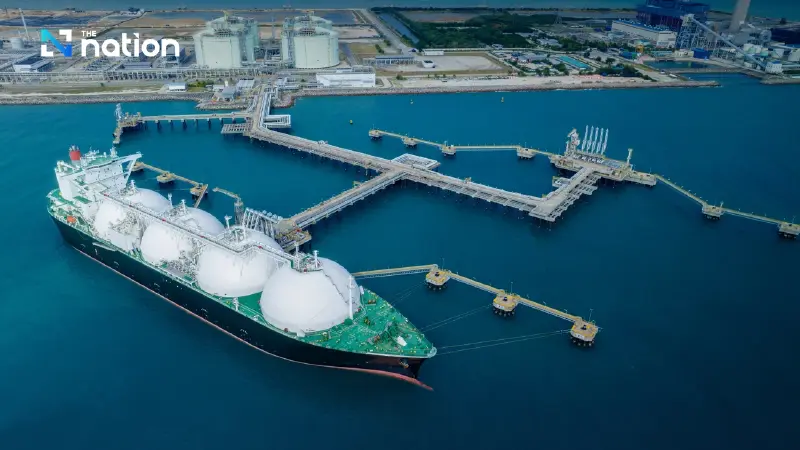


The global LNG market is shifting from shortage to its biggest oversupply in six years, reshaping energy trade and prices worldwide.
The global liquefied natural gas (LNG) market is approaching a turning point, Bloomberg reported, with years of scarcity since Russia’s invasion of Ukraine in 2022 expected to give way to a prolonged period of oversupply beginning in 2026.
According to the International Energy Agency (IEA), LNG output in 2026 will see the largest annual increase since 2019, even as demand growth slows in key markets such as China.
The shift is expected to have wide-ranging consequences for the global energy industry and consumers worldwide.
A major driver of the change is the rapid expansion of US production. Venture Global’s Louisiana facility has begun operations ahead of schedule, boosting first-half 2025 production by 19% year-on-year. ExxonMobil and QatarEnergy’s Golden Pass project is set to start exports late this year after a 12-month delay, while Cheniere Energy is expanding its Corpus Christi plant to add 10 million tonnes of capacity annually.
Qatar, meanwhile, is preparing its largest expansion since 1997 with the North Field East project, expected to begin exports in late 2026.

In total, new projects will add around 174 million tonnes a year, lifting global LNG supply to 594 million tonnes annually by 2030, a 42% increase compared with last year.
Supply surges as demand falters
While global LNG supply is set to expand sharply, demand growth is failing to keep pace, particularly in China, the world’s largest importer.
Beijing has reduced LNG purchases in 2025, boosted by higher domestic gas output and progress on the Power of Siberia 2 pipeline with Russia. Analysts at Goldman Sachs estimate the project could displace as much as 10% of global LNG demand.
In Europe, LNG remains critical to replacing Russian pipeline gas, but consumption growth is too modest to absorb the looming supply glut.
Meanwhile, traditional exporters such as Egypt and Indonesia are seeing output fall, forcing them to divert cargoes for domestic use instead of exports.
The clearest consequence is a sharp decline in LNG prices. Morgan Stanley forecasts European and Asian benchmark prices will dip below US$10 per million BTU in Q4 2026, down from an average of US$14 last winter. By 2027, BNP Paribas expects prices could fall as low as US$8 per million BTU.
BloombergNEF projects oversupply will persist from 2027 through 2030, keeping prices depressed for years. This marks a structural shift in global energy markets, one in which consumers, rather than producers, stand to benefit.

What does this mean for Thailand?
Thailand relies heavily on LNG, which accounts for around 70–80% of its total energy consumption. According to figures published by PTT Plc, the country produces 59% of its natural gas domestically while importing the remaining 40%, comprising 13% from Myanmar and 28% in the form of LNG.
This means any sustained fall in global LNG prices would have a positive effect on Thailand’s energy costs. However, as a senior reporter at Krungthep Turakij noted, the Electricity Generating Authority of Thailand (EGAT) is currently absorbing the fuel adjustment charge (FT) on behalf of consumers.
If energy prices decline as projected, the government faces two choices: it could either use the cost savings to repay EGAT for its subsidy burden, or pass the benefit directly to households and businesses through lower electricity bills. Both options remain under consideration.
