
Kenya's Jamhuri Day Spotlights East Africa's Gateway and New Horizons for Thailand
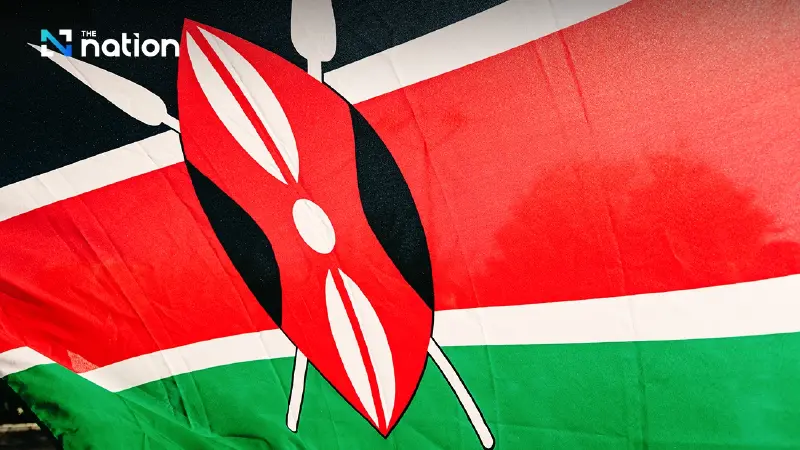


As Nairobi celebrates independence, Thailand eyes strategic partnerships in digital finance, green energy and regional trade
- Kenya is positioned as a strategic gateway to the East African Community (EAC), a regional market of over 300 million people, leveraging its key logistical, financial, and diplomatic hubs.
- Thailand is exploring new strategic partnerships with Kenya, focusing on opportunities for collaboration in digital finance, green energy, and expanding regional trade.
- While current trade is modest, there are significant opportunities for Thai businesses to use Kenya as a platform to access the East African market, particularly in consumer goods, automotive, and agribusiness.
As Nairobi celebrates independence, Thailand eyes strategic partnerships in digital finance, green energy and regional trade.
As Kenya marks Jamhuri Day on 12 December, the country celebrates not only its hard-won independence but also its status as a dynamic gateway to one of the world's fastest-growing regions—East Africa.
For Thailand, the occasion offers a timely opportunity to look more closely at a partner that combines strategic geography, vibrant culture and cutting-edge digital innovation.
Jamhuri Day—from jamhuri, the Swahili word for "republic"—is one of Kenya's most important national holidays, commemorating both independence from Britain in 1963 and the country's transition to a republic in 1964.
The day is marked with military parades, presidential speeches and cultural performances, but it also serves as a moment to take stock of Kenya's role in Africa and the wider world.

Kenya: The Front Door to a 330-Million-Strong Regional Market
Kenya has long positioned itself as the commercial and logistical hub of the East African Community (EAC), a bloc of eight countries—including Tanzania, Uganda, Rwanda, Burundi, South Sudan, the Democratic Republic of Congo and Somalia—with a combined population of around 331 million people and a GDP exceeding US$300 billion.
This scale makes the region an increasingly attractive target for Asian exporters looking beyond traditional markets.
Nairobi is the political and diplomatic nerve centre of this hub. It hosts the United Nations Office at Nairobi, one of only four major UN office sites globally and the organisation's official headquarters in Africa.
The same complex houses the global headquarters of the UN Environment Programme (UNEP) and UN-Habitat, underlining Kenya's prominence in environmental and urban-development diplomacy.
On the coast, the port of Mombasa—centred on the deep-water Kilindini Harbour—is the biggest seaport in East Africa and handles cargo for landlocked neighbours such as Uganda, Rwanda, Burundi and South Sudan.
Nairobi's significance as a financial and diplomatic hub, combined with Mombasa's status as the region's primary marine gateway, gives Kenya significant influence over East African economic flows.
This combination has important implications for Thai firms. Using Kenya as a base allows exporters to reach a regional market of more than 300 million people across the EAC, while infrastructure links—including standard gauge trains and roadways from Mombasa into the hinterland—continue to improve.

Culture, Wildlife and Soft Power: Kenya's Global Appeal
Kenya's influence is not only economic. Its soft power is built on a distinctive blend of wildlife, culture and sport that is instantly recognisable worldwide.
The country is home to some of Africa's most famous safari destinations, including the Maasai Mara and Amboseli, where wildlife viewing—especially the Great Migration of wildebeest and other animals between Kenya and Tanzania—draws hundreds of thousands of visitors each year.
Tourism is a core foreign-exchange earner: Kenya's government expects tourism revenues to rise to around 650 billion shillings (approximately US$5 billion) in 2025, up from 452.2 billion shillings the previous year.

Culturally, Kenya's soft power stretches from Swahili—spoken by more than 200 million people across East and Central Africa—to globally recognised Maasai beadwork, Afro-pop music and a cuisine built around staples such as ugali (maize porridge) and nyama choma (grilled meat).
Its long-distance runners, meanwhile, dominate world athletics, adding another dimension to the country's international image.
Kenya, an African nation whose cultural exports and tourism appeal are already well-established but still largely unknown to the Thai public, gives Thailand, which is vigorously developing its own soft power through the cuisine, fashion, and creative industries, a complimentary partner.

'Silicon Savannah': How Mobile Money Put Kenya on the Digital Map
Beyond wildlife and culture, Kenya has become a global reference point for digital finance and innovation.
The country's "Silicon Savannah"—centred on Nairobi—is home to some of Africa's most advanced fintech and start-up ecosystems.
Mobile money, led by services such as M-Pesa, is the most famous example.
Recent surveys show that mobile money usage in Kenya reached approximately 82.3 per cent of adults in 2024, with daily use more than doubling over three years as people increasingly rely on phones for everyday payments, savings and access to government and e-commerce services.
This penetration rate surpasses that of traditional banks, making Kenya a global case study in digital financial inclusion.
Kenya's example provides a separate but complimentary road map for Thailand, where mobile banking and PromptPay have drastically changed how individuals interact.
The two nations might share knowledge and investigate cooperation in areas like as regulatory sandboxes, public-private partnerships in fintech, and the use of mobile platforms to support rural communities, from collaborative pilot projects to university research collaborations.

Green Power and Climate Resilience
Kenya is also emerging as a leader in clean energy. According to the International Energy Agency, nearly 90 per cent of Kenya's electricity generation in 2023 came from renewable sources, including geothermal (approximately 47 per cent), hydropower, wind and solar.
The country aims for 100 per cent renewable electricity and universal access by 2030.
This green-energy push aligns closely with Thailand's efforts to decarbonise its power sector and attract investment into clean technologies.
Kenya's expertise in geothermal development and integrating variable renewables into the grid could be of particular interest to Thai policymakers and energy companies looking for new partners and models beyond the usual European and East Asian examples.

Thailand–Kenya Trade: Small but Growing, with Room to Expand
Although Kenya may feel distant to many Thais, economic links are already in place and slowly deepening.
According to UN COMTRADE data, Thailand exported around US$198 million worth of goods to Kenya in 2024, including vehicles, rubber, machinery, cereals and sugar, whilst importing roughly US$21–23 million from Kenya, mainly inorganic chemicals, vegetables, precious stones and smaller volumes of coffee and tea.
Earlier figures from Thailand's Commerce Ministry show that total two-way trade reached approximately US$256.16 million in 2022, underlining a steady but still modest relationship.
The balance is firmly in Thailand's favour, and both sides have acknowledged the need to narrow this gap.
Kenyan officials have called for more Thai investment and greater imports of Kenyan products, whilst Bangkok has identified the EAC as a potential partner for future trade agreements, including discussions on a possible free trade arrangement that could use Kenya as a platform into East Africa.
Key opportunities for Thai businesses include:
Consumer goods and food products: Rising demand in Kenya's urban middle class for packaged foods, household appliances and personal care items
Automotive and machinery: Continued growth in imports of vehicles, spare parts and industrial equipment from Thailand
Agribusiness and cold chains: Potential partnerships that combine Thai processing know-how with Kenyan agricultural exports and regional distribution networks
Tourism and aviation: Scope for closer cooperation between Thai and Kenyan tourism boards and airlines to promote two-way travel, particularly safaris for Thai tourists and beach or wellness tourism for Kenyans visiting Asia

A New African Partner for Thailand's Diversified Future
As Kenya celebrates Jamhuri Day, it does so as a confident, outward-looking republic that has turned its location on the Indian Ocean into a strategic advantage—linking African hinterlands to global markets, showcasing unique cultural assets and pioneering digital innovations that have captured the world's attention.
Kenya is more than simply another bilateral relationship for Thailand, which is looking to expand both its export markets and diplomatic alliances.
It serves as a gateway to further interaction with the African continent, a partner in digital banking and renewable energy, and an access point into the youthful and growing East African Community.
Recognising Kenya's role as East Africa's gateway—and understanding its culture, economy and ambitions—could be the first step in turning what is now a modest trade relationship into a broader strategic partnership in the years ahead.
