
Beijing Unveils 10-Point Strategy to Deepen Ties with Taiwan
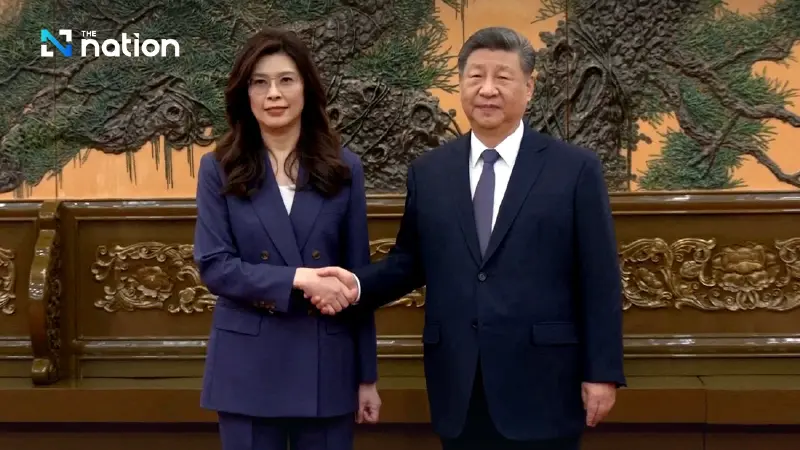


China signals a shift towards economic integration and infrastructure links as a high-profile Kuomintang delegation concludes a landmark mainland visit
- The strategy focuses on physical integration by sharing utilities (water, electricity, gas) with Taiwan's outlying islands and proposing sea bridges to the mainland.
- It includes expanding direct cross-strait flights and offering residents of Kinmen access to Xiamen's new international airport.
- Beijing is offering economic incentives, such as facilitating the import of Taiwanese agricultural and fishery products, and promoting youth exchange programs.
- All measures are explicitly conditional on Taiwan's political acceptance of the "1992 Consensus" and opposition to independence.
China signals a shift towards economic integration and infrastructure links as a high-profile Kuomintang delegation concludes a landmark mainland visit.
Beijing has announced a comprehensive 10-point policy package aimed at bolstering cross-strait relations, timed to coincide with a significant visit by Taiwan’s main opposition party.
The measures, unveiled on Sunday, suggest a strategic push by the Chinese government to deepen economic and social integration with the island.
According to Xinhua News Agency, the announcement followed a six-day mission to the mainland by a delegation from the Kuomintang (KMT), led by Party Chairperson Cheng Li-wen.
The visit, which spanned 7–12 April, marks a high point in communication between Beijing and the KMT, focused on what the Taiwan Affairs Office described as "peaceful development" and the "well-being of compatriots."
Infrastructure and Integration
A central pillar of the new policy involves the physical integration of Taiwan’s outlying territories with the mainland.
Beijing has pledged to share water, electricity, and gas resources from Fujian Province with the islands of Kinmen and Matsu.
Furthermore, the plan revives proposals for sea bridges to link these islands directly to the coastal mainland when conditions allow.
In the aviation sector, China intends to facilitate a full resumption of direct cross-strait flights.
The expansion would include routes to several major mainland hubs, including Xi’an, Kunming, and Harbin.
Additionally, Beijing has offered Kinmen residents the use of Xiamen’s newly developed international airport, further blurring the logistical boundaries between the two sides.
Political and Economic Incentives
The 10-point plan also targets the next generation, promising a "systematic platform" for youth exchanges to foster a sense of shared identity.
On the economic front, Beijing is dangling significant "carrots" for Taiwan’s primary industries.
New communication mechanisms are being established to facilitate the import of Taiwanese agricultural and fishery products, which have previously faced trade barriers.
However, these economic concessions remain tethered to strict political conditions. Beijing reiterated that such cooperation is contingent on the "1992 Consensus" and a firm opposition to "Taiwan Independence."
The consensus refers to the tacit agreement between the CPC and KMT that there is only "one China", with each side maintaining its own interpretation of what that means.
As the KMT delegation returns to Taipei, the move is likely to spark intense debate. While Beijing frames the measures as an olive branch for regional stability, observers in the international community view the package as a calculated attempt to exert "soft power" and influence Taiwan’s domestic political landscape ahead of future electoral cycles.
