
UN Warns of Economic Headwinds for Asia-Pacific Amid Conflict
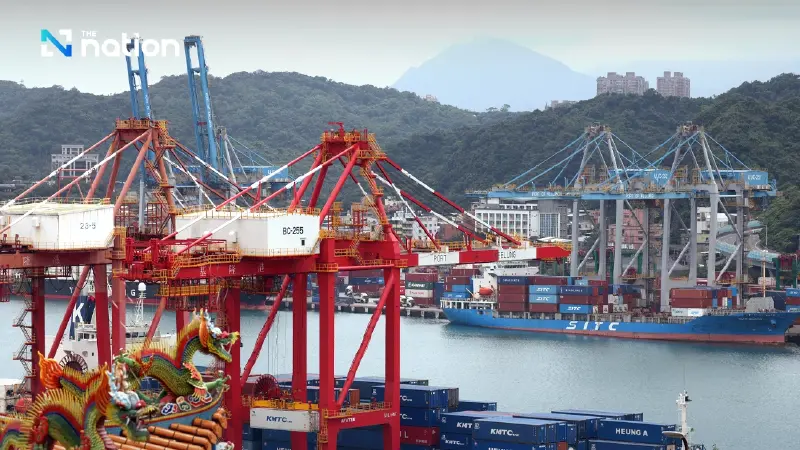


The latest UN ESCAP report warns that Middle Eastern tensions and volatile prices are squeezing growth, with regional inflation set to rise to 4.6% in 2026
- A UN report warns that conflict in the Middle East is causing economic headwinds for the Asia-Pacific region, slowing projected growth to 4.0% in 2026 and pushing inflation up to 4.6%.
- The economic pressure stems from disruptions to energy markets and global trade routes, which disproportionately affect vulnerable low-income households through rising food and fuel costs.
- The report highlights that high public debt and the potential for interest rate hikes are severely constraining the ability of governments to cushion their economies from these shocks.
- The UN identifies the region's dependence on fossil fuels as a key vulnerability and urges an accelerated, but carefully managed, transition to renewable energy to mitigate future geopolitical shocks.
The latest UN ESCAP report warns that Middle Eastern tensions and volatile prices are squeezing growth, with regional inflation set to rise to 4.6% in 2026.
The economic outlook for Asia and the Pacific is facing renewed pressure as the ongoing conflict in the Middle East disrupts energy markets and global trade routes, a new United Nations report has warned.
Released by the Economic and Social Commission for Asia and the Pacific (ESCAP), the Economic and Social Survey of Asia and the Pacific 2026 highlights a darkening landscape of high uncertainty and rising living costs.
According to ESCAP’s projections, developing economies in the region are expected to grow by an average of 4.0% in 2026, a decline from the 4.6% recorded in 2025.
While the region remains the world's fastest-growing developing bloc, this growth is being undermined by a sharp reversal in price stability. Inflation is forecast to climb to 4.6% this year, up significantly from 3.5% in 2025.
The report stresses that low-income households and low-skilled workers remain the most vulnerable to these shifts. With limited access to social protection, these groups are disproportionately affected by the rising costs of food and fuel.
“Policymakers are navigating rising global trade protectionism, economic policy uncertainty, and geo-economic fragmentation,” stated Armida Salsiah Alisjahbana, UN Under-Secretary-General and Executive Secretary of ESCAP.
She warned that the impact would be most severe for countries with limited fiscal room to provide policy support.
The Debt and Interest Rate Trap
A critical concern for the region is the fragility of public finances. High public debt vulnerabilities, coupled with the likely prospect of interest rate hikes to combat inflation, may severely constrain the ability of governments to cushion their economies against these latest shocks.
To sustain performance, the report suggests a strategic pivot. Rather than relying solely on exports, the UN advocates for a shift towards domestic and regional sources of demand. Key recommendations include:
Boosting productivity and expanding social protection.
Improving access to finance for underserved sectors.
Strengthening digital and physical connectivity to bolster regional trade.
Energy Transition: A Delicate Balance
The UN identifies the current energy crisis as a "wake-up call" for the region to accelerate the transition to homegrown renewable energy.
UN Secretary-General António Guterres noted that dependence on fossil fuels ensures that every geopolitical conflict "risks sending shockwaves through the global economy."
However, the report carries a strong caution: a poorly managed transition could inadvertently fuel inflation, weaken fiscal positions, and widen income inequality. The survey finds that economic policy is currently "weakly integrated" into most national transition strategies.

Strategic Policy Insights
To navigate the transition, the report suggests that governments must reflect country-specific conditions:
Subsidy Reform: A gradual reduction in fossil fuel subsidies is recommended to protect consumer purchasing power.
Private Capital: Countries with advanced financial markets should focus on mobilising private investment for green projects.
International Support: Least developed countries and small island states will require significant global assistance to ensure energy remains affordable.
The survey also introduces "political economy insights," suggesting that governments should time energy reforms when political popularity is high to ensure longevity.
Furthermore, it highlights that transparency in how carbon pricing revenues are used is essential to gaining public acceptance for low-carbon technologies.
