
US and China reach agreement on tariff reductions at Washington summit
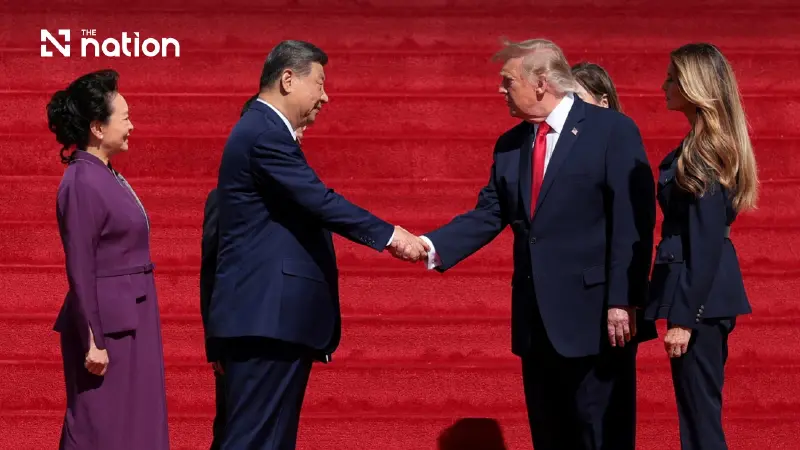


US farm goods, wood and cosmetics would face lower tariffs in China, while Chinese small appliances, toys and decorations would receive relief in the US.
- The agreement reduces tariffs on US$30 billion worth of non-sensitive goods traded in each direction.
- Lower US tariffs will apply to Chinese imports such as small appliances, toys, and decorations.
- In return, China will reduce tariffs on US exports, including agricultural goods, wood, and cosmetics.
- The deal was reached during a summit in Washington between US President Donald Trump and Chinese President Xi Jinping.
Non-sensitive goods worth US$30 billion in each direction would attract lower tariffs under agreements announced after Chinese President Xi Jinping's Washington summit with US President Donald Trump.
The meeting ended on Friday (September 25), with both governments also confirming a dialogue on artificial intelligence (AI).
Major public breakthroughs did not define the three-day Trump-Xi summit, which was principally a display of personal diplomacy.
On Saturday, Chinese state news agency Xinhua reported that Xi had returned to Beijing.
A separate US-China channel is to be created for communications about AI-related incidents, the White House and China's Foreign Ministry confirmed.
The technology dialogue will address both risks and benefits, with the next round of discussions scheduled for November.
Beijing valued Washington's use of “super intelligence”, China's Foreign Ministry noted in a separate statement.

According to the White House, Trump and Xi agreed to use that expression instead of “artificial intelligence”.
US-China exchanges should increase, and work towards consensus should reflect new developments in AI, China's Foreign Ministry stated.
Explaining the US-China tariff understanding, the White House said: “The two countries reached consensus on recommendations for more favorable tariff treatment for $30 billion of non-sensitive goods in each direction.”
Small appliances, toys and decorations imported from China would attract lower US tariffs.
The White House's Friday (September 25) statement also identified agricultural goods, wood and cosmetics among the US exports covered by the reductions.
November 10 had been the scheduled expiry date for the US-China trade truce, which was extended by two months before the latest tariff agreement.

US Treasury Secretary Scott Bessent explained on Wednesday that the extra time would allow the world's two largest economies to work towards a potentially bigger trade deal.
China's Foreign Ministry identified two further agreements: extending the outcomes of the earlier Kuala Lumpur talks and establishing a US-China trade council.
Chinese Foreign Minister Wang Yi assessed Xi's visit in a statement: “This historic visit enriched the constructive and stable China-US relationship, upheld the overall stability of bilateral ties, opened a new chapter in China-US relations, and will have a far-reaching impact on world peace and development.”
Trump and Xi each plan to attend meetings hosted by the other country.
Their governments agreed to support one another as hosts of the Asia-Pacific Economic Cooperation leaders' meeting and the Group of 20 summit.
International waterways should be free of transit tolls imposed by any country or entity, Trump and Xi agreed, according to both governments.
The leaders also agreed that Iran should honour its commitment not to develop nuclear weapons.
Source: Reuters
