
Japan launches 5-year Mars moon sample mission on October 20
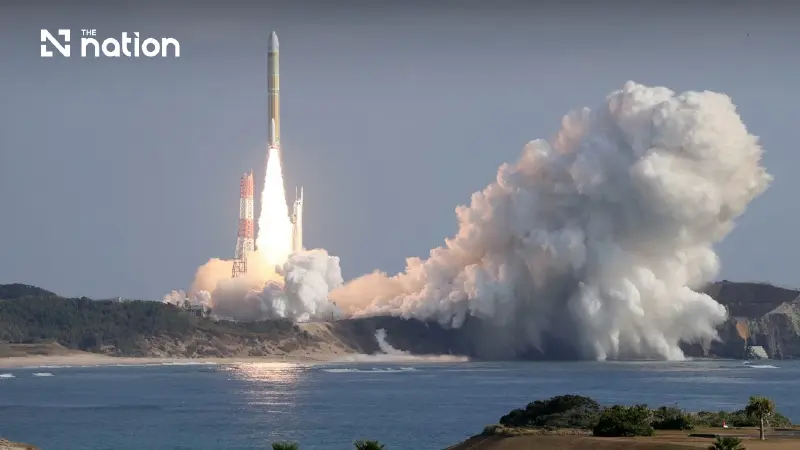


Japan’s MMX spacecraft aims to collect at least 10g from Phobos and return in 2031, potentially bringing the first samples from a moon of Mars
- Japan's JAXA space agency launched its Martian Moons eXploration (MMX) mission on October 20, 2026, to collect samples from a moon of Mars.
- The five-year mission's primary goal is to land on Phobos, collect at least 10 grams of rock and dust, and return the samples to Earth by 2031.
- A successful landing would be the first-ever touchdown on a Martian moon.
- Scientists hope the samples will determine Phobos's origin and potentially contain fragments from Mars that could reveal clues about its ancient environment and potential for past life.
Japan successfully launched its Martian Moons eXploration (MMX) spacecraft on Tuesday (October 20, 2026), beginning a five-year mission that aims to bring the first samples from a moon of Mars back to Earth.
The Japan Aerospace Exploration Agency (JAXA) said the spacecraft lifted off aboard an H3 rocket from Tanegashima Space Center in southern Japan at 4.41am Japan time. The rocket flew as planned, and the spacecraft separated successfully.
JAXA aims to collect at least 10 grams of rock and dust from Phobos, including material beneath its surface, and return the samples in 2031. A successful landing would mark the first touchdown on a Martian moon.

MMX targets a 2031 return to Earth
The MMX spacecraft is expected to take about one year to reach the vicinity of Mars in 2027, before spending approximately three years observing the planet and operating close to Phobos.
The mission carries Idefix, a small rover jointly developed by French and German space agencies. Idefix is intended to explore the surface before the main spacecraft lands, providing information to help reduce the risks of touchdown and sample collection.
The main spacecraft will then attempt soft landings to retrieve material for analysis on Earth.
Under the mission plan, MMX will leave the Mars system in 2030 and release its sample capsule for return to Earth in 2031. The capsule is intended to land in the Australian desert for recovery.

Phobos samples could settle a debate over the moon’s origins
JAXA scientists hope the samples will help establish whether Phobos began as an asteroid captured by Mars’s gravity or formed from debris thrown into space by a giant collision with the planet.
The composition of the returned material could help distinguish between those explanations and improve understanding of how the Mars system and the wider solar system evolved.

Martian fragments may preserve clues to ancient conditions
Scientists estimate that about 0.1% of the material on Phobos’s surface may have originated on Mars, reaching the moon after impacts blasted fragments off the planet.
Those fragments could preserve evidence of Mars’s ancient environment, including conditions when the planet was warmer and had liquid water. Researchers also hope to investigate whether any material contains potential traces of past life, including biological molecules.
JAXA also expects knowledge of Phobos’s surface and potential resources, alongside the mission’s exploration technology, to help prepare for future human missions to Mars.
