
Thailand, Laos and Myanmar plan shared haze monitoring system
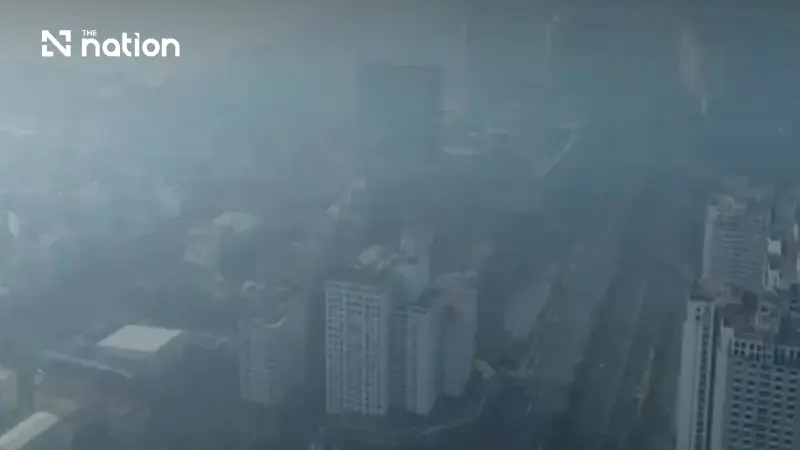


A joint working group will oversee the 2024–2030 strategy, which promotes sustainable farming, stronger law enforcement and better health warnings.
- Thailand, Laos, and Myanmar have launched a joint plan called the "CLEAR Sky Strategy" to combat seasonal haze and forest fires.
- A central part of the plan is to create a shared system for real-time monitoring of air quality and fine particulate matter (PM2.5).
- The countries will also collaborate on developing a common fire-risk map, promoting sustainable farming to reduce crop burning, and improving coordination between firefighting personnel.
- A joint working group will be established to oversee the strategy, which aims to reduce fire hotspots and strengthen law enforcement.
Shared fire-risk mapping and real-time pollution monitoring are part of a joint plan launched by Thailand, Laos and Myanmar to tackle seasonal haze and forest fires, a major environmental problem affecting much of the Mekong subregion.
Working with Thailand’s Ministry of Natural Resources and Environment and the Lao and Myanmar governments, the Thai Ministry of Foreign Affairs formally launched the Joint Plan of Action – CLEAR Sky Strategy (2024–2030).
Responsibility for overseeing implementation will rest with a joint working group bringing together the national focal points of all three countries.
It will meet at least once a year.
More sustainable land management is one of the programme’s goals.
Its agricultural measures will promote sustainable farming and technology transfer, alongside public awareness campaigns intended to reduce the burning of crop residues.
Reducing the number of fire hotspots is another objective.
The countries also intend to strengthen law enforcement and improve coordination between agencies responsible for the environment, agriculture, health and security.
Firefighting personnel will work more closely together, and the countries will develop a common fire-risk map.
To improve air-quality monitoring, a shared system will provide real-time readings on air quality and fine particulate matter (PM2.5).
The health response will include better public warnings, while research will examine the effects of haze on human health, economic activity and the environment.
The CLEAR name reflects the strategy’s five priorities, Continued Commitment, Leveraging Mechanisms, Experience Sharing, Air Quality Network and Response.
Support from the private sector, international partners and other members of the Association of Southeast Asian Nations (ASEAN) is also sought to address the underlying causes of seasonal transboundary haze pollution.
The programme builds on an agreement reached by the three countries in April 2023 and complements the Asean Agreement on Transboundary Haze Pollution.
Source: The Star
