
Spain mourns at least 68 dead in second high-speed train crash on October 28
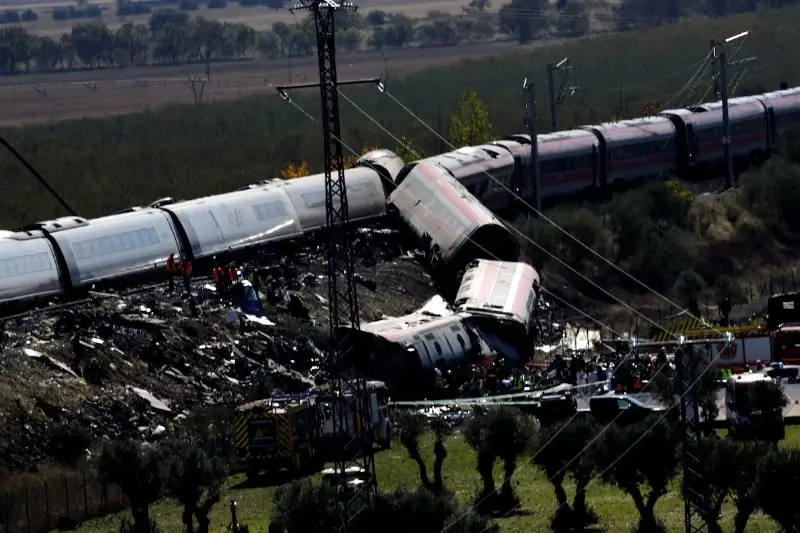


Spain’s transport minister says a Renfe train was wrongly allowed past a red signal before a collision that injured 80 people south of Madrid
- A high-speed Renfe train crashed into a stationary Iryo train south of Madrid on October 28, resulting in at least 68 deaths and 80 injuries.
- The collision was Spain's second fatal high-speed rail disaster of the year, following a crash in January that killed 46 people.
- According to the Transport Minister, the Renfe train was wrongly given authorization to proceed despite a red signal activated by a computer failure.
- The incident has prompted a promise from the Prime Minister to investigate the cause and has renewed scrutiny over Spain's railway safety and maintenance.
A Renfe high-speed train struck a stationary Iryo service in Castilla-La Mancha, south of Madrid, on October 28, 2026, killing at least 68 people in Spain’s second major high-speed rail disaster of the year.
Emiliano García-Page, president of the Castilla-La Mancha regional government, confirmed that the death toll had reached 68. Rescue teams continued searching as darkness fell, with uncertainty over whether moving the damaged carriages would reveal more victims.
Spain’s health minister, Mónica García, reported that 80 people had been injured, including 15 very seriously.
A regional government spokesperson put the time of the collision at about 9am local time, or 8am GMT. The spokesperson said 147 people were aboard the Iryo train and 397 were on the Renfe service, and that two Iryo carriages had derailed.
The October 28 collision was Europe’s deadliest railway accident since the 2013 derailment in Santiago de Compostela, Spain, which killed 80 people.

Renfe train wrongly cleared to proceed, minister says
Transport Minister Óscar Puente told reporters in Madrid that the Renfe service had been authorised to move despite an active red signal and a stationary train ahead.
Puente explained that a computer communications failure had triggered the red signal and automatically halted traffic. An erroneous decision was subsequently made to restart the Renfe train, according to the minister.
Renfe confirmed that its train had received permission to resume its journey before colliding with the Iryo service. The operator said the Iryo train had remained stationary “for reasons we don’t know”.
“The Renfe train continued on its way as instructed, and a collision occurred. The exact sequence of events, the traffic conditions and the circumstances of the impact will have to be established by the investigation,” Renfe said in a statement.
Iryo announced that it had activated emergency protocols. Neither Iryo nor state-owned infrastructure operator Adif responded to Reuters’ requests for comment.

Rescuers search wreckage as passengers recount escapes
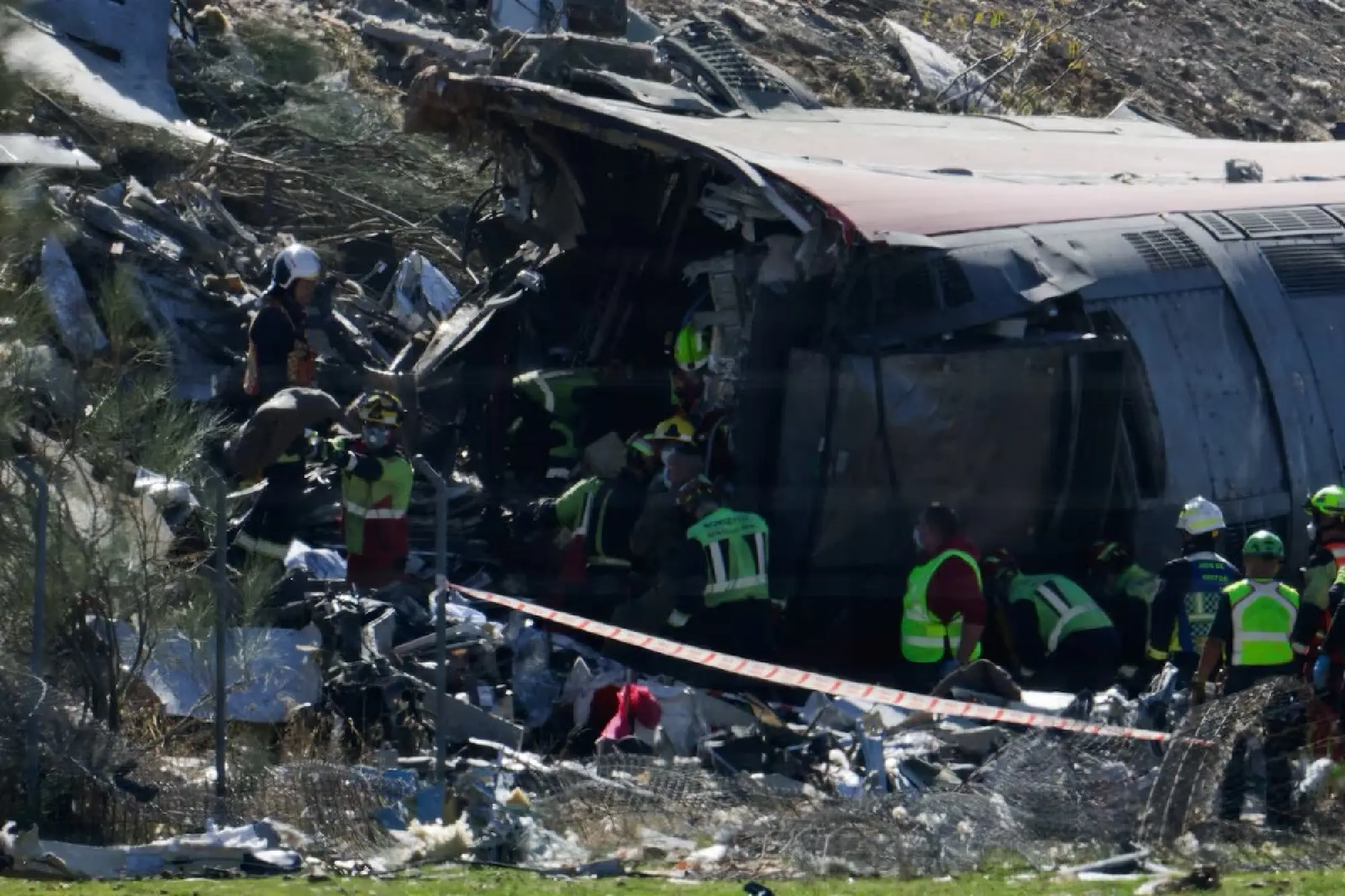
Emergency crews gathered on the elevated railway in rural Castilla-La Mancha, where ambulances, funeral service vehicles and helicopters stood beside one of the trains. At least three carriages had plunged down an embankment, leaving twisted metal and debris scattered below the track.
Passengers were evacuated along a nearby road, some with blood on their clothes and others wearing bandages.
Passenger Salvador Arriza, 62, described people struggling to escape his carriage.

“I was very close to the door, but (other passengers) were breaking the windows to be able to get out. Some people practically couldn’t move because they were trapped amongst the seats,” Arriza said.
Another passenger, Rafael Barcelo, considered himself fortunate to have left his seat for a coffee before the collision. Barcelo said there had been at least eight victims in his carriage.
“We were having breakfast, drinking a coffee when we felt a very strong impact and we were sent flying,” Barcelo said.
Relatives seeking information were directed to a school in Urda. A woman who identified herself as Ana struggled to hold back tears as she described having no news of her husband, Pepe. His name was not among those identified, although police had found the couple’s dog, Trece.

Sánchez promises investigation and action on safety failures
Prime Minister Pedro Sánchez pledged to investigate the crash and address any failings uncovered. Speaking in a televised address near the crash site, Sánchez described the collision as a “terrible tragedy” and said “all of Spain” was in mourning.
Sánchez indicated that the causes of the October collision and January’s fatal high-speed crash appeared to be unrelated.
“If we need to further strengthen safety in order to rebuild confidence in our high-speed rail system, we will do so, because what is unacceptable for a country like Spain is to suffer two high-speed rail accidents in the same year,” Sánchez said.
Spain’s opposition People’s Party cancelled all campaign events scheduled for October 28 ahead of elections in November.
Renfe opened a dedicated telephone line for victims’ families and suspended ticket sales on the Madrid–Andalusia high-speed corridor until December 13.

Second high-speed disaster renews scrutiny of maintenance
Spain’s January crash killed 46 people and involved high-speed trains operated by the same companies on the same line. A train derailed into the path of an oncoming service, triggering debate over investment in railway maintenance.
A preliminary Civil Guard report issued in February identified defects in the track, rail or a weld connecting two sections of track as the leading explanation for January’s accident. Investigators nevertheless kept seven other possibilities open.
Spain’s railway safety authority recorded an increase in accidents, including derailments and collisions, from 45 in 2016 to 57 in 2024 and 69 in 2025.
A Reuters analysis of Spanish competition authority data found that around 25 million passengers travelled on high-speed trains in the first half of 2026. That represented a decline of approximately 14% from the same period in 2025.
European Commission data shows that maintenance investment in Spain’s roughly 4,000km, or 2,485 miles, of high-speed railway has trailed that of other large European countries.
Spain spent an average of about €1.5 billion annually on its high-speed network between 2018 and 2022, more than any other European country. Most of the expenditure went towards new construction, with only about 16% allocated to maintenance, renewals and upgrades.
