
US Fed holds rates at 3.75%–4% after October 28 vote, scales back future meeting schedule


The Federal Reserve voted 10–2 to keep rates steady as inflation stayed elevated, with US stocks edging higher and analysts divided on the pause.
- The US Federal Reserve voted 10–2 to hold its benchmark interest rate at 3.75%–4% on October 28, choosing to await more inflation data before making further moves.
- Two members, Governor Lisa Cook and Cleveland Fed President Beth Hammack, dissented from the decision, preferring to raise rates by a quarter-percentage-point.
- Alongside the rate decision, the Fed announced it will reduce the number of its policy-setting meetings starting in 2027.
- Despite the pause, the committee upgraded its assessment of economic activity to "strong" and indicated that future rate increases are still possible to combat elevated inflation.
The US Federal Reserve voted 10–2 to hold its benchmark interest rate at 3.75%–4% in Washington on October 28, 2026, opting to await more inflation data while delivering a stronger assessment of the economy.
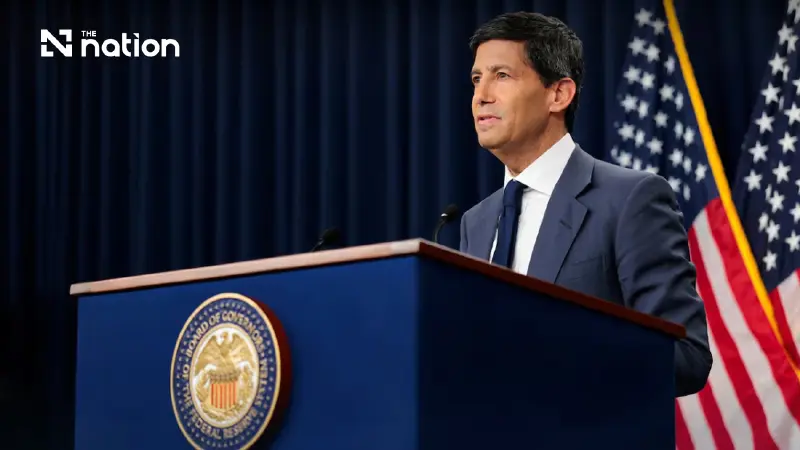
US shares edged higher after Fed chairman Kevin Warsh began his press conference. The S&P 500 and Nasdaq Composite were both up 0.2%, while the US dollar index was down 0.2%.
Treasury yields initially pulled back before the yield curve steepened during Warsh’s press conference. The two-year yield, which is particularly sensitive to Fed policy, fell 3.8 basis points to 4.7%. The 10-year yield rose five basis points to 5.042%, while the 30-year yield increased six basis points to 5.367%.
The Fed also announced that it would reduce the number of policy-setting meetings from 2027.
Fed upgrades growth outlook as Cook and Hammack seek a rise
The Federal Open Market Committee (FOMC) described economic activity as expanding at a “strong” pace, upgrading its assessment from “solid” at the September 15–16 meeting. Investment remained robust, while job gains were keeping pace with the workforce.
The Fed acknowledged that inflation “remains elevated”, with its revised statement leaving open the possibility of further rate increases depending on incoming information.
“The accumulation of more information will help the Committee determine the policy stance appropriate to ensure a timely return of inflation to the Committee’s 2% goal,” the FOMC statement read. “The Committee will deliver price stability.”
Fed Governor Lisa Cook and Cleveland Fed President Beth Hammack dissented, preferring a quarter-percentage-point increase. Cook is facing an effort by President Donald Trump to remove her from the central bank, while Hammack, a consistent advocate of tighter policy, also dissented in July in favour of a rise.
The October statement marked a change from September’s language, offering a suggestion of the forward guidance that Warsh has indicated he wants to avoid.
Analysts disagree on waiting until December
Tom Graff, chief investment officer at Facet in Phoenix, Maryland, expected the pause but argued that the Fed should have raised rates immediately, rather than setting up a likely December increase.
“I believe this was a mistake: the Fed should have hiked today,” Graff said.
Graff argued that Warsh’s rejection of forward guidance placed greater weight on his actions. Another chairman could have held rates while signalling determination through promises of future increases, but Warsh had relinquished that option.
With inflation showing no obvious sign of subsiding, Graff believed the recent diesel price surge had yet to pass fully into consumer prices. Graff saw little material difference between raising rates immediately and doing so in December, which he described as fully priced into markets.
“Hiking today would have bolstered Warsh’s credibility as an inflation fighter. By waiting, he risks coming off as hesitant, or worse, complacent,” Graff said.
Ronald Gestiehr, director of wealth management at Luttner Financial in Pittsburgh, Pennsylvania, supported the decision. Gestiehr described an economy that remained resilient but faced substantial inflation concerns linked to energy prices and developments in the Middle East.
Gestiehr warned that raising rates too far or too quickly could push the economy into recession.
“Raising rates does add pressure on individual consumers already hurt by inflation, especially considering lending rates,” Gestiehr said.
Kay Haigh, global head and chief investment officer of fixed income and liquidity solutions at Goldman Sachs Asset Management in New York, expected the Fed to resume increases in December.
Haigh viewed September’s strong consumer price index reading as evidence that upside inflation risks remained and that policymakers would seek additional protection against those risks. Although September’s dot plot of policymakers’ rate projections suggested only one further increase, Haigh argued that another energy price surge or stronger economic data could lead to additional tightening in 2027.
Karl Schamotta, chief market strategist at Corpay in Toronto, described the two dissenting votes as a modest surprise in favour of less aggressive policy, compared with expectations among many observers for three or four dissenters.
“Two dissents rather than the three or four many had expected is a dovish surprise at the margin, but an apparent upgrade in the Fed’s assessment of the economy itself should leave markets in no doubt that more tightening is coming,” Schamotta said.
Jamie Cox, managing partner at Harris Financial Group in Richmond, Virginia, drew a different conclusion about the scale of future increases.
“The Federal Reserve just told markets that its rate hike expectations might be overzealous for what it’s likely to deliver,” Cox said, interpreting the emphasis on incoming data as a reluctance to act unless necessary.
Bill Mann, chief investment strategist at Motley Fool Asset Management in Vienna, Virginia, had expected disagreement within the committee. Mann interpreted the demand for more information as a sign of substantial differences over how petroleum prices were affecting inflation.
“You can’t fix a geopolitical imbalance with a monetary action,” Mann said.
Mann also questioned the emphasis on the inflation target. “The 2% inflation goal seems a little performative. I don’t think that goal is what is most important for the Fed right now.”
Christopher Hodge, chief US economist at Natixis in New York, noted that the pause followed September’s increase despite stronger-than-expected inflation between the meetings. Hodge viewed the decision as consistent with earlier suggestions from New York Fed President John Williams and Fed Vice Chair Philip Jefferson that consecutive increases were not urgent.
Hodge nevertheless regarded a December rise as almost inevitable, given persistent inflation, continued growth and stable unemployment.
“If December is close to certain, the question must be asked, why delay the inevitable?” Hodge said.
Hodge recalled Warsh’s September description of the rate increase as removing a “dose of accommodation”. Hodge suggested that subsequent market volatility and weakness in some technology shares might have provided another tightening effect, while the committee waited for additional data.
Hodge expected Warsh to explain the pause by emphasising trends rather than individual data releases. Hodge considered that the most likely response, although one that would provide little additional insight, and argued that any departure from it would be informative.
Brian Jacobsen, chief economic strategist at Annex Wealth Management in Menomonee Falls, Wisconsin, found the stronger description of economic growth more surprising than a governor’s dissent.
“In the Fed’s hierarchy, from weakest to strongest, it goes contraction to modest to moderate to solid to strong,” Jacobsen said.
Jacobsen questioned the evidence behind the upgrade. The moving average of weekly payroll gains reported by ADP had risen between the July and September meetings but had subsequently weakened, Jacobsen noted, while the Atlanta Fed’s GDPNow growth estimate had cooled.
Jacobsen also viewed October’s policy language as less clear about the direction of rates. September’s description of removing accommodation had implied that rates remained too low, whereas the latest commitment to gather more information left the appropriate policy stance less certain.
2027 outlook puts Fed task forces and AI financing in focus
Karen Manna, fixed income investment strategist at Federated Hermes in Pittsburgh, argued that the pause had postponed the policy debate, with investors now looking towards December, incoming data and clearer indications of how the Fed would respond.
“By holding rates steady, the Fed has effectively deferred the debate rather than settled it,” Manna said.
Beyond December, Manna expected the work of the Fed’s task forces and the composition of the 2027 FOMC to influence the direction of policy over the coming years.
Chris Zaccarelli, chief investment officer at Northlight Asset Management in Charlotte, North Carolina, believed the Fed had left ample indications of a December increase. Although economic data could change before then, Zaccarelli considered it unlikely that policymakers would be diverted from raising rates at the next meeting.
Zaccarelli also suggested that the Fed probably would have increased rates in October had the meeting not fallen so close to the US midterm elections.
Looking towards 2027, Zaccarelli noted that futures markets were anticipating two further increases. That outlook appeared reasonable if conditions remained unchanged, but tariffs, the Iran war and other developments demonstrated how quickly assumptions could shift.
Zaccarelli expected higher rates eventually to create economic difficulties and affect the expansion of artificial intelligence (AI) infrastructure. A slowdown or recession within 12 months could prompt the Fed to reduce rates by the end of 2027, while continued resilience could instead lead to more than the two increases priced into markets.
Shawn Snyder, economic strategist at Potomac Fund Management in Bethesda, Maryland, questioned why the Fed had held rates while strengthening its growth assessment.
“If the economy is so strong and inflation remains stubborn, why not hike now?” Snyder asked.
Snyder considered a material improvement in the inflation outlook before December highly unlikely and suggested that Warsh might want to give the task forces more time to reach their conclusions.
For businesses financing AI infrastructure, Snyder expected little relief from the pause. Credit difficulties had so far been concentrated among weaker borrowers, but the enormous funding requirements of the AI expansion were increasingly coming into conflict with elevated borrowing costs.
“That could leave some of the smaller fish in the AI pond going belly-up, while the bigger, better-capitalized fish keep swimming along just fine,” Snyder said.
Investors weigh returns while consumers face debt risks
David Krakauer, vice president of portfolio management at Mercer Advisors in San Diego, California, argued that the Fed’s decision did not alter the case for remaining invested. Krakauer pointed to attractive equity earnings growth and meaningful inflation-adjusted yields from fixed income portfolios.
“A hold on rates, but not a dovish one,” Krakauer said, noting that Cook’s dissent was unexpected because many observers had anticipated Hammack and Dallas Fed President Lorie Logan would be the officials pushing hardest for tighter policy.
Krakauer highlighted the statement’s references to strong economic activity and productivity growth, resilient spending and robust capital investment. In Krakauer’s assessment, the Fed appeared confident that the economy could withstand higher rates, leaving the debate focused on when to increase them.
“Stay in your seat,” Krakauer said. “With less forward guidance from Warsh, the path may be bumpy, but investors are being paid to be patient.”
Snyder also favoured hard assets in the prevailing environment. Elevated inflation could make stocks and bonds move more closely together, increasing the potential diversification value of hard assets, according to the Potomac strategist.
Charlie Wise, head of global research and consulting at TransUnion in Chicago, described the decision as a balance between persistent inflation concerns and an economy and labour market that remained relatively resilient.
Despite inflation readings exceeding expectations and remaining well above the Fed’s target, Wise noted that policymakers were assessing the effects of September’s increase while monitoring stable employment conditions.
For consumers, Wise viewed the pause as a temporary reprieve from further increases in credit card borrowing costs, while stressing that the risk of higher rates remained. Future decisions would depend on economic conditions, with early indications pointing towards a possible December rise.
“As holiday spending ramps up, it’s important to stay within a budget and avoid charging more than you can repay over one to two months,” Wise said.
Wise warned that carrying larger balances could become costly if inflation persisted and interest rates remained elevated for longer.
