
Iran reports three tankers damaged in Hormuz on November 5


Tanker incidents continue as US Vice President JD Vance blames the Iran war for Republican election losses and Qatar pursues mediation.
- Iran's Revolutionary Guards reported that three tankers were damaged in the Strait of Hormuz on November 5.
- According to the report, two of the tankers struck naval mines and the third caught fire.
- The incidents occurred amid a high frequency of attacks on shipping, with the rate remaining close to a record pace set in October.
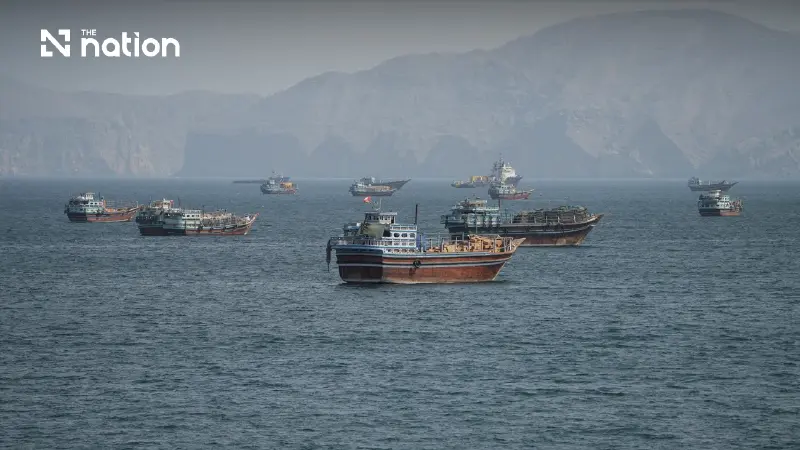
Iran reported that three more tankers had been damaged in the Strait of Hormuz on November 5, 2026, as shipping remained under threat despite growing political pressure in Washington over the Gulf war.
The reported incidents followed a US election defeat that cost President Donald Trump’s Republicans control of Congress. Vice President JD Vance blamed the war for the party’s losses, prompting renewed scrutiny of the conflict’s political and economic consequences.
Shipping incidents remain close to October’s record pace
Iran’s Revolutionary Guards reported that two tankers struck naval mines and another caught fire on November 5. The Guards generally do not acknowledge firing on merchant vessels, but maintain that passage through the strait is unsafe without Tehran’s permission.
The United Kingdom Maritime Trade Operations (UKMTO) reported incidents involving five or more vessels in the Gulf since November 1. The frequency remained close to October’s pace, when 35 vessels were hit, the highest monthly total recorded during the war.
UKMTO also reported that two unidentified projectiles struck a vessel late on November 4.
Vance’s criticism draws a response from Tehran
Vance attributed the Republican defeat to the Iran war in a lengthy social media post on November 4. A White House adviser described some officials and staff as viewing the statement as a departure from Trump’s foreign policy and a public acknowledgement of the war’s economic impact.
Trump defended his decision to launch the conflict when asked about Vance’s comments that day. The president repeated his argument that military action was important to prevent Iran from acquiring a nuclear weapon.
Iranian Parliament Speaker Mohammad Baqer Qalibaf, Vance’s counterpart at earlier peace talks, responded on November 5 by accusing the vice president of allowing Trump to double down like a “losing gambler” through plans for further US strikes.
Qalibaf argued that Vance should persuade Trump to end the conflict if he considered it a mistake. “Skip the TED talk. Why not say this to your boss?” Qalibaf asked.
Market hopes contrast with expectations of renewed strikes
Oil prices fell sharply in recent days as traders judged that the electoral setback could make Trump less inclined to resume attacks. Trump launched the military campaign alongside Israel in February under the name Operation Epic Fury.
Oil recovered slightly on November 5, but prices remained more than US$20 a barrel below the previous week’s levels.

Two sources nevertheless told Reuters they believed Trump remained likely to order a resumption of hostilities.
“He is planning to bomb Iran. Don’t listen to what he’s saying. He held off because of the midterms. We asked him to hold off until the midterms,” one source told Reuters.
The other source argued that Trump had nothing left to lose politically now that the midterm elections were over.
Qatar mediates over shipping, sanctions and nuclear talks
Iranian officials have been discussing proposals to end the fighting with Qatari mediators since the previous week. Neither Washington nor Tehran has announced a breakthrough on the disputes preventing an agreement.
Negotiations have centred on the future status of the Strait of Hormuz, the US blockade of Iranian ports, sanctions on Iran and restarting talks over Tehran’s nuclear programme.
Qatar reported on November 3 that both countries remained committed to mediation and were examining proposals intended to narrow their differences. Qatar also noted developments in discussions with both sides, although a senior Iranian official described their positions as still far apart that week.
Iranian Supreme Leader Ayatollah Mojtaba Khamenei maintained a firm stance on November 4, rejecting “even the slightest inclination towards submission” to the United States. Khamenei argued that Washington would remain hostile towards Iran regardless of which party held power.
