
Kindle Fire's easy answer to the iPad: affordability
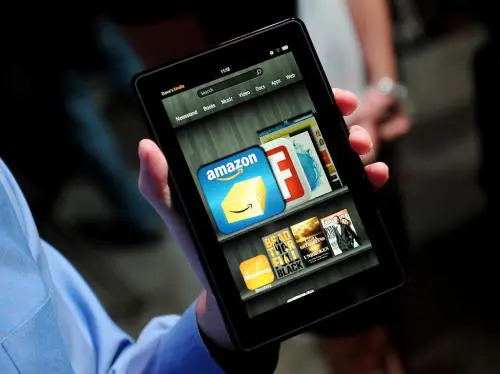


Consumers benefit as tablet sector is latest to see dominant product challenged by a quality, cheaper rival
It’s good news for customers, or so it seems. Amazon’s launch of Kindle Fire is very likely to spark a real computer tablet price war. The latest addition to the market is much cheaper than Apple’s iPad, and although the newcomer lacks a key element, a camera, it’s still attractive enough to sway people seeking their first computer tablet or a substitute for what they already own. The obvious plus side is that the public is getting more and more choices, a market situation that naturally will bring the prices down.
The catch is, you buy one product today and you’ll likely grit your teeth in anger after two weeks. Kindle and iPad lovers can testify to that. The race among new, more powerful and more sophisticated innovations has been so intense that big manufacturers hold blueprints of the next version in their hands the day they launch a gadget. Speculation has been strong that Kindle Fire 2 is only a few months away. Early adopters, who haven’t even laid hands on Kindle Fire, are already squirming at the prospect of seeing its value drop drastically in December of January.
But then again, Amazon has been telling its customers that, given that it’s quite possible you paid more for your sunglasses, buying a cheap gadget whose value declines quickly may not be such a big deal. Its Kindle 3, an exclusive e-reader, has proved vastly popular despite the fact that the iPad also contains a “Kindle app” and its own e-reading app. One of the big reasons is simple: Kindle 3 is cheap.
Kindle Fire has no camera, but it has Flash, is lighter, similarly slick on other technical fronts and much cheaper. Even if Apple refuses to be drawn into a price war, other competitors of the iPad will find it hard to keep their tags. Already, they are under pressure to compete with iPad in prices after failing on the specs front. With Kindle Fire in town, allowing its users to tap into Amazon’s enormous pool of content, the likes of Samsung’s Galaxy Tab or RIM’s Playbook will feel greater heat. The same will go for all e-readers in the market like Barnes and Noble’s Nook.
The TV industry is already experiencing a fierce price war. Big, flat screens with greater and greater sharpness have become cheaper and cheaper. Five years ago, the best you could get for Bt100,000 was an average-quality 40-inch not-so-slim “HD-ready” TV. Today, with that money, you can buy two ultra-slim 55-inch LED or even 3-D tellies. iPad is like Sony’s Bravia of a few years ago. The day will come when price differentiation – the concept of keeping a product’s price high to be seen as “different” from the others – is no longer bought by customers.
This could be the tablet industry’s turn. One dominant product can keep the prices high, but things are likely to change when a genuinely close rival comes along. Amazon detractors have taunted Kindle Fire by adding “sale” at the end of “Fire”. That might turn out to be true if a price war gets ugly or something else goes wrong. Consumers, however, have nothing to lose from that. For example, a tablet firesale could help the Thai government, which is suffering a big headache due to several extravagant election promises, one of which involves free computer tablets for underprivileged students.
As far as content goes, however, the fierce competition in the tablet market has not yet translated into something that really empowers content providers. The power to bargain for profit sharing remains largely in the hands of device manufacturers, a situation that has not, for example, liberated journalists from the shackles of print, production and delivery costs.
In the end, though, it is believed that an equilibrium will emerge to provide content providers with greater incentives to do away with their businesses’ costly, conventional means. In the meantime, customers will enjoy decreasing prices and growing choice. Hopefully, that is a good start.
