
After the East Asia buzz, what's next?


Play
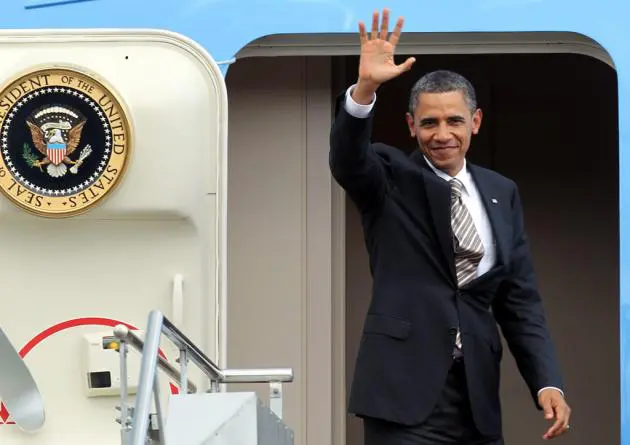
When US President Obama and Secretary Clinton flew to Honolulu and Bali and rubbed shoulders with Asians for 10 days away from Washington, news headlines and op-eds were abuzz with talk about the "Pacific century", re-engagement with Asia, a pan-Pacific
The US is back in Asia and here to stay, another analysis screamed. Optimists were jubilant about the new era of engagement and predicted that a new regional order was in the making with East Asia at the centre. Critics and cynics, meanwhile, dismissed the charm offensives as a kid glove that heralded the start of a containment policy towards China – a new chapter of US-China rivalry using Asia as theatre of confrontation.
Indeed, over the last couple of weeks, the focus was really back on Asia. Soft power and public diplomacy activities were rammed up ahead of the East Asian Summit (EAS) in Bali to lay the engagement groundwork.
In Indonesia, a Department of Defence-funded integrated maritime surveillance system has just been handed over to the Indonesian government, with the US committed to supporting the programme until 2014.
Many other programmes under the comprehensive partnership umbrella – the Global Health Initiative, food and security, trade and investment, and peacekeeping cooperation – received added or continued support.
In the Philippines, a “partnership for growth” programme was highlighted and both countries reaffirmed their 60-year alliance. The side-track of this visit, however, was the news that the US would back the Philippines in raising the South China Sea issue at the EAS, against the backdrop of Obama urging China to “behave like a grown-up economy”.
In Thailand, significant aid was given to assist in relief and recovery efforts following months of flooding. In Australia, a heightened security alliance involving increased US access to Australia’s military bases was reported to have irked China and put Indonesia on alert. Very importantly, Secretary Clinton’s announced visit to Burma next month spawned interviews about possible new diplomatic approaches, particularly with regard to sanctions and China. All in all, East Asia is indeed en vogue.
Much less talked about, however, is how long this attention and courtship will last. The US maintained it supported regional integration, especially an economic one, on top of the human rights and democracy mantra.
But this refocus on Asia is happening for pragmatic reasons and practical calculation, too. The Middle East is still roiling and the Israel-Palestinian peace process has been stalled. Obama’s two chief Middle East advisers, Senator George Mitchell and Dennis Ross, just left. Europe is now a black eye with defaults and debts. Latin America and Africa are going through a relatively quiet period.
Burma and China, on the other hand, are making daily news. The former, having made surprising political progress lately, will take on the Asean chairmanship in 2014 and the latter is indicating willingness to adjust its currency, if not trade practices more generally.
America’s domestic factors also play a role here. The financial crisis, plus the upcoming election, prompted the US to seek new sources of growth and recovery overseas. Talking tough on China or hobnobbing with Asian traders lend the appearance that American leaders are doing something to bring home the bacon – a crucial pre-election credit boost. A bit of apologetic self-reprimand – admitting that corporate America has been “a bit lazy” – cleverly softened the critical tones elsewhere by adding a pinch of self-awareness.
Amid this surge in attention to Asia, even much less talked about is how East Asia and Asean should respond to this button resetting. Asean – notorious for letting procedural matters and domestic concerns dominate substantive, collective issues in the past – should for example take this chance to hold America to its re-engagement commitment.
During the first year at the EAS, the US will predictably be more of a good listener and supporter-friend than a demanding enforcer of norms and values. So, a lot can be done on East Asian nations’ part to institutionalise the EAS club to their liking. If the US and other Pacific countries are already at the helm of new trade arrangements, like the Trans-Pacific Partnership (TPP), Asean members may wish to have a more cohesive say in political-strategic arenas to prevent the wider membership, beneficial as it is, from diluting its core and original raison d’être.
It is of course an exercise in conjectures to predict what will happen next after the Asian reset button has been pushed. Perhaps the handshake will stay warm until some countries make serious human rights blunders again. Indeed, it would be naïve to think the region would hold America’s attention for long before the latter reverts back to its Middle East obsession.
After all, experienced observers of foreign affairs will probably say that there is usually no grand strategy about any grand strategy, just incremental adjustments to opportunities and threats against a backdrop of factors. Rhetoric must be separated from action and assessed in its own right, especially pre-election talk.
What’s even more interesting to watch is if and how the new US administration, if the Republicans win, will carry on the re-engagement. How the Burmese chairmanship of Asean and the broad engagement with Asia’s regional architecture will be handled by Washington if the White House and its national security team fall under Republican control should be carefully followed.
East Asia shouldn’t be dismissive about constructive signs and symbols during this renewed engagement period, though. Overall, the messages and actions from the US are positive and should be welcomed and encouraged. Asean as a group will gain from being more, not less, coherent and unified when negotiating for cooperation benefits with the US and its now closest regional ally, Australia.
Being recognised as a more equal partner to the US may look nice, but that could also mean falling into the trap of expected norms and behaviours when national capacity still doesn’t make the grade. As China knows, being called a “grown-up” is no fun, if you’re also held to toe the line you didn’t draw.
When the Asia buzz is over or when the new POTUS comes in, will US foreign policy become business-as-usual – with the natural preoccupation with high-conflict, high-interest regions like the Middle East and North Asia? Now may be the time for East Asian nations to weigh in and influence shifts in US policy to smooth out past discomfort or increase their leverage.
Ultimately, it is East Asia itself, through collective groupings that need to be strengthened further, that holds the key to making this re-engagement meaningful, lasting and truly beneficial for their peoples.
Walaya Jariyadham was a fellow at the Asia Foundation and the American Political Science Association in Washington, DC.
The views expressed here are entirely her own.
