
Investors need to keep cash at hand for flood recovery


Play
We are currently experiencing the worst flooding in decades.
The crisis in several areas of the capital and its vicinity will not end soon – some Bangkokians are being told they will have to bear the floods until New Year.
Certainly, the flood crisis is raising concerns over liquidity for many people, who are having to keep cash at hand to fund temporary accommodation, home repairs, vehicle repairs, business restoration or additional liquidity.
The question is, how do we manage our money properly during or after this emergency situation? Given the circumstances, many of us will have to focus more on liquidity than returns.
You can increase your liquidity for at least three months by increasing the size of your saving accounts, where interest rates are as high as 3 per cent right now. You may also keep liquidity in money market funds which are daily redeemable, with cash normally available one or two days after the trade date.
Moreover, I recommend cashing in your risky assets – those with limited upside such as gold and Thai stocks – for cash deposits. Gold’s price on the global market is closing in on US$1,800 per ounce, whereas the target price is US$1,900. And as our year-end SET Index target is 1050-1100, this is a good time to sell Thai stocks, whose upside is limited. Thai stocks had outperformed Asian stocks for almost 24 months but began underperforming last month.
Although Thai companies’ earnings in Q3 were still good, a significant downward revision of Thai companies’ profit in Q4 is widely expected.
In addition, the Thai stock market’s price-to-earnings ratio (stock price versus profit) is undergoing a correction following damage done to the country’s economic growth by the deluge.
However, I would not recommend liquidation of risky assets with strong potential upside, such as China stocks. In October, China H-Shares were the No 1 global performer, with an 18-per-cent return.
Inflation pressure has released since China announced a drop in its inflation rate to 5.5 per cent in recent months. This signals there is no need for the Chinese government to ratchet up control on inflation by increasing the policy interest rate or increasing capital requirements. China stocks are also cheap, with a P/E ratio of 8x, meaning the stocks are undervalued. Forecasts place the upside opportunity of China stock within the next three-six months at as much as 30 per cent.
In conclusion, I would recommend that you increase your liquidity and keep more cash at hand for any emergencies and post-flood recovery measures, either by increasing the size of your saving accounts and money market funds or by selling stocks.
I wish all readers a safe and fast recovery from the devastation caused by the floods.
TISCO customers affected by flooding can call the bank’s call centre at (02) 633 6000, 24 hours a day, for information on programmes designed to help them.
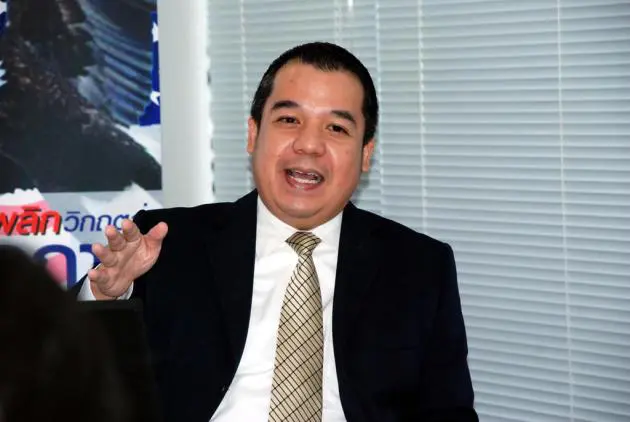
Picha Ratanatam is head of Wealth Management of TISCO Bank. He can be reached via www.TiscoWealth.com.
