
How will America pay for its return to the Asia-Pacific?


Play
The US has reiterated that it will step up defence and security commitments in the region, but does it have the resources to back up this assertion?
The US global security strategy is quite simple these days, especially in the Asia-Pacific theatre. Washington will issue strong statements – one after another – about its intention to remain the region’s pre-eminent power, in order to protect its national interests and, of course, those of the region. Then there will be rounds of interviews given by senior American military and civilian leaders, highlighting the importance of the region to the US’s vital strategic and security interests.
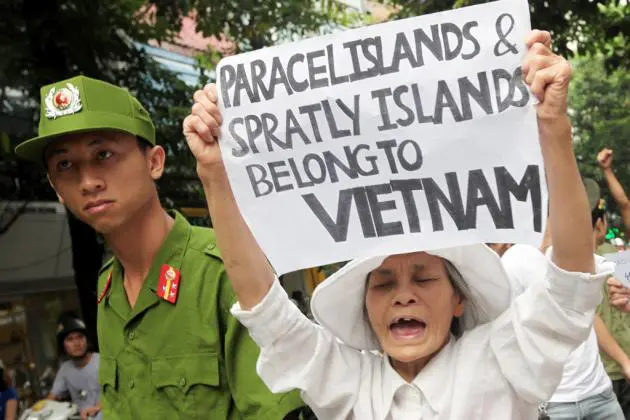
The Obama administration has recently announced a major trim-down of defence spending. This is perhaps understandable, as the presidential election is just around the corner. After a decade of two wars – in Iraq and Afghanistan – the US economy can no longer support such huge military spending. Now, with the pullout from Iraq complete, and the withdrawal soon from Afghanistan, American strategists have been saying that the US will pay more attention to the Asia-Pacific region. To back up these words with action, President Obama attended the East Asia Summit and backed Asean’s position on the issue of rising tensions in the South China Sea. There is also the possibility of normalised diplomatic and economic ties with Burma and a more assertive position on maritime security in the South China Sea, focusing on the freedom and security of navigation.
Renewed security interests with key allies in the region are another central theme for the US. Washington has plans to dispatch 2,500 Marines to Darwin in northern Australia to bolster the Australian defence capacity in that area, and has also pledged to defend the Philippines, as the country is a US defence treaty ally, in case there is a conflict with China over maritime territorial claims.
All these messages are very clear – that the US will remain in the region. But there is one thing that could hinder this strategy: Washington does not have the money to back up its commitment. While strong verbal pledges are essential, they may not carry any real weight these days. President Obama has reiterated that the US is in the region for the long haul. But he has not detailed how it will be able to carry out all of the commitments made.
The US has increasingly used the word “rotation” as an indicator of its renewed interest in the Asia-Pacific region. Rotation of forces for the US is a good idea, as it would be more economical. The US has a unique arrangement with the Philippines, especially the special forces operating in the southern Philippines. Japan and South Korea, the two richest Asian nations, continue to bankroll American troops and logistic facilities in their territories. The US troops already stationed there will not go anywhere until there are serious objections inside these countries. Comments by Admiral Robert Willard the other day, that there will not be any new US bases in Southeast Asia, did not surprise anyone. Let’s be frank, the US cannot afford this anyway. The state of the domestic economy dictates that the US curtail defence spending overseas.
This is a good time for the countries in the region to work out a new security environment, in which all the major powers in the region can participate to ensure that there is equilibrium. From now on, the region will no longer be a place where only one major power plays a dominant role. Now there will be multiple players in the security landscape; and the region has to be ready.
