
Burma gets set to join the rest of the world


Play
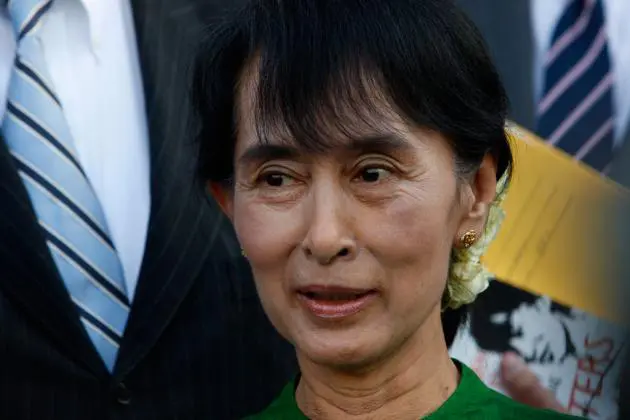
Next month, Burma will hold its first parliamentary by-elections in many decades, in which Aung San Suu Kyi, its world-renowned opposition leader, will be the top contender.
The long-awaited event will mark one of the major changes in Burma’s politics since the 1960s. The elections will be followed by Burma’s hosting of the Southeast Asian Games in 2013.
Following that event, Burma will become chair of the 10-member Asean grouping in 2014. The following year, it will join the Asean Economic Community (AEC) as one of four new members, including Laos, Cambodia and Vietnam.
By 2015, Burma is expected to hold another general election, which will mark another milestone in its post-Second World War development.
Historically, Burma is Thailand’s most important neighbour and rival. Both are predominantly Buddhist countries with comparable land areas and populations. The countries share a natural border of about 2,400 kilometres.
Among the four new members of Asean, Burma probably has the most natural resources, especially in terms of minerals, fisheries and oil and gas.
Over the past few decades, China has been been Burma’s biggest trading partner, followed by Thailand. China alone accounts for as much as 70 per cent of Burma’s US$30-billion in annual imports, while Thailand accounts for around 10 per cent of the total, with 70 per cent of the bilateral trade conducted via the two countries’ four border checkpoints. Mae Sot, Ranong and Mae Sai are the top three Thai border towns that trade directly with counterparts in Burma.
The bilateral trade and investment relations are entering a new stage, as both countries are set to capitalise on the opportunities of the AEC, which combines the ten Asean countries – with a total population of nearly 600 million – into a single integrated market and production centre via tax incentives, zero tarrifs and other measures.
For Thailand and Burma, one of the most important mega-infrastructure investment schemes is the Dawei development project, which is situated only 160 kilometres from the Thai province of Kanchanaburi.
The first stage of this scheme will see investment of $8 billion as Thai investors, led by Italian-Thai Development plc, plan to build a deep-sea port in the Burmese town of Dawei, which has been recently designated as Burma’s first special economic zone.
The deep-sea port will be followed by construction of a petrochemical complex, steel plants and other upstream, middle and downstream industries. It will also serve as a new channel for Thai goods to reach global markets via the Andaman Sea and Indian Ocean.
The Dawei port will be just 500-600 kilometres from Thailand’s Laem Chabang deep-sea port in Chonburi province. Via cross-border highways, the two ports can serve as a “land-bridge” for both Thailand and Burma, thus reducing transportation times for export shipments.
The Dawei industrial complex is also seen as an extension of Thailand’s Mab Ta Phut industrial complex, which has reached its maximum capacity.
Japanese, Chinese, Indian and other foreign investors are also keen on investing in the Dawei complex, despite a recent decision by Burma to change the fuel type of a planned power generation scheme, which is pivotal to the rest of Dawei’s development projects.
For Burma, the Dawei development schemes will be mutually beneficial, as they will link the country to the global economic system after decades of isolation and Western sanctions.
