
Back in the fold


Play
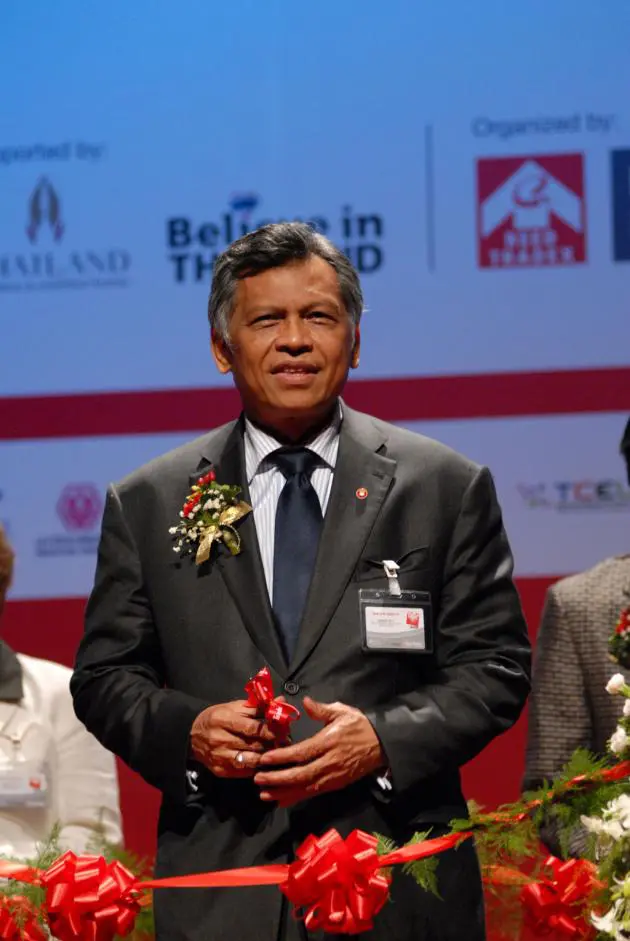
Asean Secretary-General Dr Surin Pitsuwan welcomes new developments in Burma and says the country offers great potential for future investment.
Dr Surin Pitsuwan, the secretary-general of the Association of Southeast Asian Nations (Asean) is bullish on Burma’s prospects as the once-isolated country rejoins the global community.
“There are a lot of opportunities for both Burma and Thailand as the former opens up its economy to the rest of the world.
“As the next-door neighbour, we share the longest land border with Burma. We also have convenient road and air connectivity, so there is enormous potential and tremendous opportunities, with a lot of them coming from or via Thailand,” he says.
As a cornerstone of its new open-door policy, Burma will hold its first parliamentary by-elections in many years on April 1, in which opposition leader Aung San Suu Kyi will be the top candidate for a seat in the country’s parliament.
The United States and European Union have pledged to lift their economic sanctions against Burma once the country shows that it has returned to democracy.
Regarding the April 1 by-elections, Surin says: “There will be a total of 48 House seats open for competition. The most interesting part of this is the participation of Aung San Suu Kyi . Her constitutency is close to Rangoon , the commercial capital of Burma.
“Within the Rangoon region, people seem to be very enthusiastic about the elections, but Suu Kyi is taking her campaign nationwide, as the 48 seats under contention are from around the country.
“I think it’s a good sign for Burma and certainly for Asean because reconciliation here will open up many opportunities for Asean as a group to interact with the rest of the world.
“For a long time, Burma has been an issue with the international community, especially with our dialogue partners, most of which are the world’s major powers [who imposed sanctions on Burma to pressure the country to change].
“From now on, that issue will be behind us. We also hope that reconciliation with the minority ethnic groups within Burma will also be achieved.
“This will bring the country to peace, and with peace there will be development and prosperity. This will be an opportunity for all Asean countries, including Thailand, to help, to cooperate and interact with Burma.
“We also look forward to burma holding the Asean chairmanship in 2014. We have told Burma that it will be a year full of opportunities to showcase its achievements and to confirm to the international community that Burma is ready to carry on a constructive relationship with the rest of the world,” he says.
Burma has a population of 58 million, slightly less than Thailand’s 60-million-plus, but the neighbouring country’s land area is slightly larger. It is one of the four new members of Asean – collectively called CLBV (standing for Cambodia, Laos, Burma and Vietnam).
Burma and the three other new member countries will join the Asean Economic Community in 2015 when all ten member countries will become a single market of 580 million consumers, as well as a single production base, with zero tariffs on most imports.
In addition, AEC integration will lead to the liberalisation of the services sector in member countries, and easier cross-border investment, as well as funding. There will also be a freer flow of skilled labour in eight professions including engineers, doctors, nurses, accountants, architects, surveyors and dentists.
