
Govt will soon feel the shock of the rising cost of living


Play
The opposition Democrat Party has started to rock the government's boat by claiming that more and more people are suffering from rising food and energy prices.
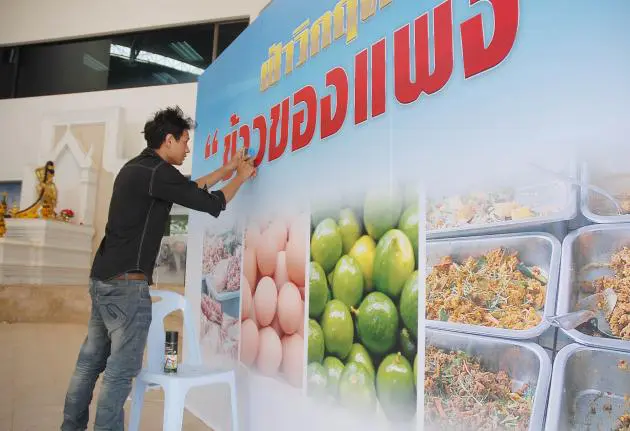
According to Apirak Kosayothin, the deputy leader of the Democrats, the prices of pork, chicken eggs, lemon and rice have all gone up recently, affecting the livelihood of low-income people.
In addition, producers of other necessity goods are in the process of seeking government approval to raise their retail prices due to the higher costs of raw materials.
As a result, the Commerce Ministry should consider taking action to curb the price increase of animal feeds so that chicken eggs, pork and poultry do not become even more expensive.
Early this year, the government announced its policy to float the country’s oil and gas prices after ending a four-month-long oil tax break late last year.
The ruling Pheu Thai Party won the last general election in July 2011 partly on its short-lived oil tax cut campaign. Now, diesel, gasoline, gasohol and natural gas prices have all been floated to reflect the world market prices as the government can no longer continue its costly subsidies. For example, the price of natural gas, both NVG and LPG, has risen every month since the start of this year.
In addition, the price of petrol has approached Bt40 per litre while diesel has gone up from less than Bt30 per litre to nearly Bt32 per litre as the government plans to re-instate the collection of a Bt5-per-litre excise tax in the coming months.
For raw food items, prices have risen by 5 per cent this year, while ready-to-eat meals at streetside food stalls have jumped from Bt20-Bt30 per dish last year to Bt30-Bt40 per dish this year as higher oil and gas costs have led to higher prices of food and other necessities.
According to the latest Abac poll, 64 per cent of respondents said they are now more worried about what to eat than any political conflict that might result from the government’s attempt to amend the Constitution.
In other words, the seven-month-old Yingluck government is facing increased pressure from a vast number of voters for more effective action to tackle the cost-of-living issue.
So far, the government seems to be running out of fresh ideas to handle this crucial problem.
On oil and gas prices, it will be difficult to pursue any additional subsidy programme due to fast-growing liabilities on the government’s balance sheet.
Prime Minister Yingluck Shinawatra even resorted to ordering government units to cut energy consumption by 10 per cent as part of the national energy saving campaign.
Besides this, the government will also urge the general public to promote energy-saving measures as there is no policy to further subsidise oil and gas prices. For example, the policy on diesel oil prices remains unchanged despite upward pressures caused by world crude oil prices.
At this stage, the Bank of Thailand says the country’s inflation rate is not yet affected by the higher oil price, even though it is now US$120 per barrel. However, the new minimum wage, which will be increased by 40 per cent in one go to Bt300 per day on April 1, may lead to higher inflation and may not be consistent with expected higher workers’ productivity.
If inflation is rising faster than the benefits of such a hefty wage hike, an economic catastrophe is ahead of us.
