
Central bank in danger from government meddling


Play
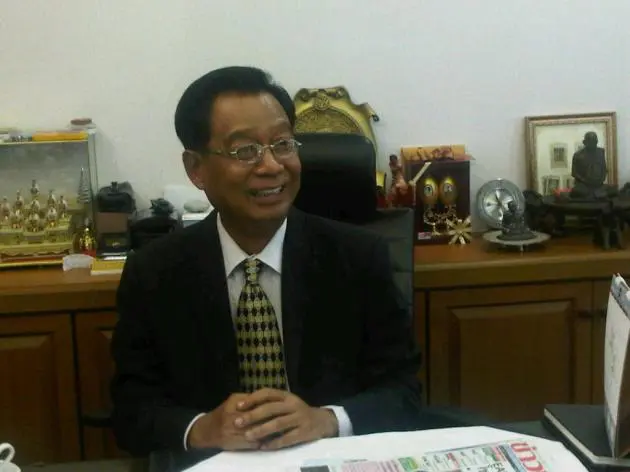
The Bank of Thailand will be at further risk of losing its independent clout if Dr Virabongsa Ramangkura were to be appointed as its chairman.
On Wednesday, Dr Virabongsa announced his intention to stand for the central bank’s chairmanship following the end of MR Chatu Mongol Sonakul’s three-year tenure this month.
Dr Virabongsa, a former finance minister and now head of Prime Minister Yingluck Shinawatra’s advisory team, is almost certain to get appointed as chairman of the BOT because it appears that the government wants to have complete control over the institution.
This spells bad news for Dr Prasarn Trairatvorakul, the current BOT governor. Dr Virabongsa has walked away from his usually conservative economic thinking by embracing a pro-growth and big-ticket spending strategy. He would like the central bank to cut interest rates substantially to boost growth, and he has openly expressed his disagreement with the central bank’s foreign exchange management policy.
In short, Dr Virabongsa has almost nothing in common with Dr Prasarn’s conduct of macro-ecnomic management. Even more so, Dr Prasarn is not enjoying a good working relationship with Kittiratt Na Ranong, the deputy prime minister and finance minister. Kittiratt has signalled to Dr Prasarn several times to cut the interest rate and make the baht cheaper in order to boost Thai exports, but to no avail. Dr Prasarn has steadily tried to maintain the current course amid the ongoing global economic turbulence and domestic political divide, although the Thai rate actually is negative on an inflation-adjusted basis.
Dr Prasarn will have a tough time running the central bank, with Kittiratt and Dr Virabongsa towering over the institution. They look at results. If the central bank’s regulations stand in the way, the government will not hesitate to simply change the rules to get its own way.
So far Kittiratt and the government have won major battles against the BOT. First, they have succeeded in transferring the Bt1.4 trillion debt burden (from the 1997 financial meltdown) of the Financial Institutions Development Fund from the account of the Finance Ministry to the account of the BOT. This has left more room for the Finance Ministry to increase its spending and thus the nation’s debt level.
Second, Kittiratt and the government have introduced legislation that will require the central bank to set aside Bt300 billion in soft loans to help out SMEs hard hit by the floods in the fourth quarter of last year.
Both measures have raised serious questions about Thailand’s fiscal and monetary prudence.
More critical is Dr Virabongsa’s view that the government should dig into the country’s current account surplus to finance massive infrastructure projects such as high-speed trains, international airports, deep-sea ports and new industrial parks.
Dr Virabongsa was one of the sharp critics of the central bank’s management of baht policy in 1997. He insisted that the central bank should have done its utmost to protect its foreign reserves. But now he is telling the government to make use of the current account surplus.
“Policy-makers must abandon old ideas. Thailand could lag behind others if we keep worrying about a reccurrence of the 1997 financial crisis,” he said. “The situation is different. Now, we’re sitting on huge amounts of cash, with US$100 billion in the current account surplus.”
The current account surplus is retained in the central bank in the form of foreign exchange reserves, which back the baht’s credibility and finance the country’s international trade transactions.
If and when Dr Virabongsa steps onto the central bank’s turf as chairman, several critical changes are likely to happen. Dr Virabongsa and Kittiratt will sing in a pro-growth chorus, whereas Dr Prasarn will find himself isolated.
First, the central bank will face further pressure to cut the rate to stimulate economic growth.
Second, the bank will be under more pressure to keep the baht weaker to promote growth and boost exports.
Third, the government will attempt to dig into the central bank’s foreign exchange reserves and spend the money on big-ticket infrastructure projects and populist policies.
Fourth, the central bank’s board will have the power to appoint key personnel up to the governor.
Finally, the central bank will lose its independence as it becomes a subjugated branch of the government.
