
Can we pull off the balancing act?


Play
Thailand
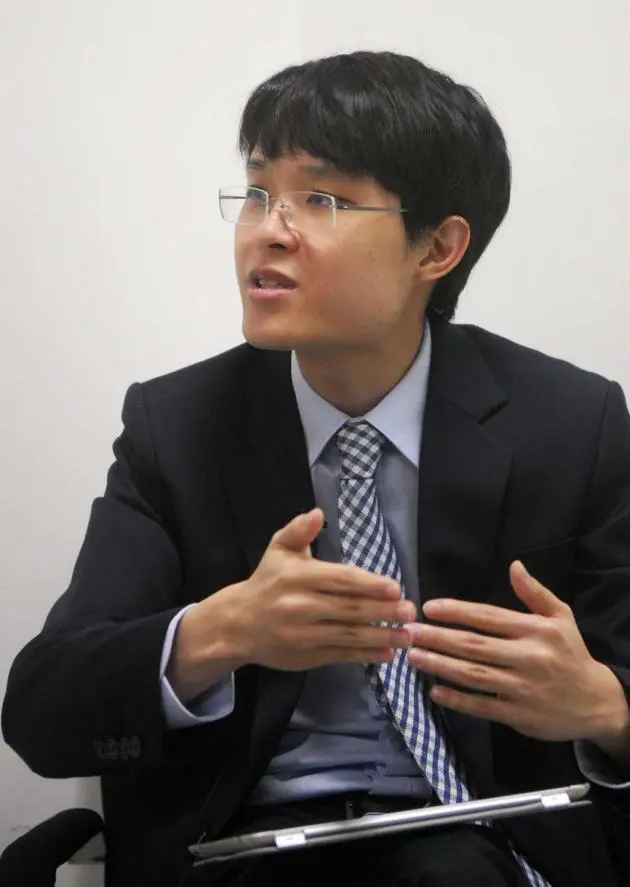
Arm Tungnirun, director of the Thai-Chinese Strategic Research Centre under the National Research Council of Thailand, says Thailand is in a tricky position as far as its bilateral relations with China and the US are concerned.
“We have to manage the expectations of both the US and China carefully. For the Chinese, Thailand is seen as a gateway to the energy and other resources of countries in Southeast Asia such as Brunei, Malaysia and Indonesia.
“We’re located at the centre of Asean. Due to this strategic location, both the US and China look at Thailand as a strategic ally.
“In a way, we could say that we’re being sandwiched by the two superpowers, and right now the US has a new policy towards China of ‘engagement and containment’.
“During the Cold War era, the US’s main policy towards the former Soviet Union was containment, but now it’s both containment and engagement as far as China is concerned.
“This means that the US not only wants to contain China (which has gained enormous power in Southeast Asia in the past few decades due to its rapid economic expansion), but also wants to cooperate with the Chinese.
“In this context, China is both friend and foe for the US. As a friend, it’s not really a close friend as the US doesn’t want China to be too powerful and pose a bigger threat to its interests in this region and around the world.
“For Thailand, we need to set a long-term strategy to deal with this situation. One problem is that we have faced domestic political instability in the past five years. We have changed government too often and our foreign affairs policy keeps changing.”
“So it’s hard to pull of the [necessary] balancing act in the midst of the two superpowers.
“One thing we have to be careful to ensure is that we’re not too close to either the US or China, but remain good friends with both so as to meet our long-term interests.
“This is our strength. If we look at other Asean countries, not one apart from Thailand enjoy good relations with both the US and China. For the US, we were a major ally during the Cold War period, and for the Chinese we have solid relations at both personal and official levels.
“Other Asean countries, such as the Philippines and Vietnam, don’t have good relations with China, due to conflict over who owns islands in the South China Sea.
“However, Thailand happens to be the coordinator for Asean-China relations from this year. The role rotates every three years. Vietnam was the previous coordinator.
“So we have seen that the Chinese are eager to have Thailand as a mediator in these conflicts as we have good ties with the US [which is backing the Philippines and Vietnam in their South China Sea territorial claims] as well as with both the Philippines and Vietnam themselves.”
“We need more clarity in formulating our foreign policy, and we may try to play a more active role in this conflict by inviting all parties concerned to sit down and talk. It may be tough, but we don’t have to aim for a resolution to this issue, only to help devise a plan acceptable to all.”
“Regarding the Asean Economic Community-plus three, namely China, Japan and South Korea, I think the Chinese thought previously that each individual Asean country was too small for major-project investment. But the AEC as a single market of 10 countries and nearly 600 million consumers is now more attractive.”
“As we move towards [the AEC’s launch in] 2015, we can expect more Chinese investment projects in Asean and in Thailand, where China is already the next major foreign investor after the US.”
