
Changes for the better


Play
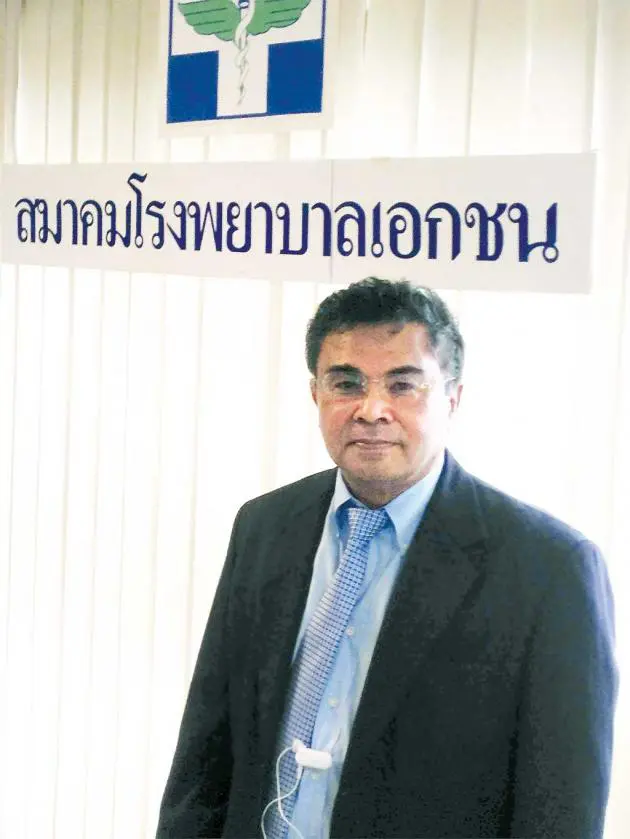
Dr Euachart Kanchanapitak, an adviser to the Medical Association of Thailand, says adjustments will be made to health service provision as the AEC takes effect from 2015
Dr Euachart Kanchanapitak, adviser to and former president of the Medical Association of Thailand, says there will likely be delays to the plan to facilitate a freer movement of medical doctors in the region, under the Asean Economic Community (AEC), which is due to become effective in 2015.
Doctors are one of the seven professions designated for freer cross-border movement in the AEC. Other professions include of dentists, nurses, accountants, engineers, architects, and surveyors.
According to Euachart, cross-border licensing of doctors within the AEC will take several more years to complete due to complicated and time-consuming procedures in each country.
“The medical councils and medical associations in each of the member countries are quite defensive, as they don’t want their doctors to go outside the home country.
“At one meeting, we talked about the feasibility of starting with a one-year temporary licensing system for specialist doctors. For example, heart surgeons from Thailand may get temporary licenses to work in some of the AEC countries and vice versa.
“For the longer-term, we need to unify medical education, examination and licensing systems in the AEC. It may take another five years before Thai and Asean doctors can work across national borders with greater ease.
“For private hospital operators in Thailand, the potential benefits from the AEC may include the possibility of hiring more foreign nurses here, as we have a domestic shortage. The Philippines and Vietnam have a lot of nurses who may want to work here.
“In addition, more and more private hospitals in Thailand will be combined for economies of scale, to stay competitive, while capital-rich countries will likely buy these hospital chains if the prices are right.
“The Medical Association of Thailand has about 200 member hospitals, with a total of about 40,000 beds, which is one-third of the country’s total number of hospital beds. The biggest private operator is Bangkok Dusit, which has almost 30 hospitals for high- and middle-income groups.
“We can also expect an influx of cheaper capital from Singapore and Brunei for assets in the hospital industry. One concern is that this will lead to an oligopoly of medical services [due to the reduced number of hospital operators]. This is not good for patients, as prices will be more expensive.
“However, Thailand’s status as a medical hub is another issue. It has nothing to do directly with the AEC, as we cater to higher-income groups of international medical tourists.
“We’re now classified as a first-class medical centre for patients from rich countries in the Middle East and other developed areas such as Europe and the US, where people do not want to wait too long for some elective operations.
“In Thailand, they can get high-quality services at one-third the prices in their home countries. In addition, wealthy people in Myanmar, Laos and other Asian countries also come here for medical services.
“They are in a different market from those in the AEC, which aims at promoting freer movement of middle-class people and also migrant workers.
“My suggestion for the government is that we have nearly three million migrant workers from Myanmar. They should be required to register with the Thai social security system, like migrant workers have to do in Europe.”
