
Broadening our horizons


Play
Former Thai trade representative Dr Panpree Pahitranukorn sees a bright future for Thailand as new links are forged with India and the Asia-Pacific region
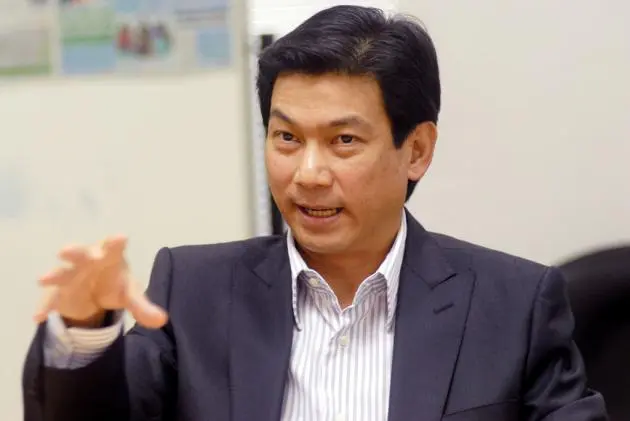
Dr Panpree Pahitranukorn, a former Thai trade representative, played a key role in negotiating the first Thai-India free trade agreement back in 2004, boosting the bilateral trade volume from an annual US$1 billion to over $9 billion this year.
“We included 82 items in the first Thai-India FTA. In fact, it was the first FTA that India made with another Asian country,” he says. “Over the past few years, the bilateral trade has been in Thailand’s favour. In addition, other countries such as Japan have invested more in Thailand in order to gain access to the Indian market.
“Now, both countries are negotiating the second FTA, which will be a comprehensive economic cooperation agreement,” he adds.
Prime Minister Yingluck Shinawatra will visit India next week to finalise the comprehensive economic cooperation agreement with India, which will include more than 1,000 products as well as the freer flow of skilled labour between the two countries.
During the visit, Yingluck will also join other Asean leaders who have been invited to attend the India-Asean Summit hosted by Prime Minister Manmohan Singh in New Delhi.
According to Panpree, Thailand is a key member of the 10-country Asean grouping, and is strategically situated between two Asian giants, namely, India and China.
“India has a population of 1.1 billion while China’s population is 1.3 billion. Together, it’s over one-quarter of the world’s population.
“Over the past decade, India’s economy has been growing at a high rate, although slightly less than that of China. Now, India is Asia’s third biggest economy after China and Japan. India has also been reforming its economy to take up new challenges.
“In the near future, India will become a huge market due to the sheer size of its population, even though a large number of its people are still very poor.
“In terms of Thailand’s location, we’re situated in the centre of mainland Indochina, so we have a strong potential to gain from the links between India, and Myanmar into Thailand via the three-nation highway.
“Besides positioning, Thailand is a logistics hub for Asean, which will soon be linked to India by road. Thailand also has the potential to be the aviation hub for airlines serving this region.
“Myanmar’s Dawei deep-sea port and industrial complex scheme is another mega-infrastructure project that will benefit Myanmar, Thailand and India. For example, the westbound shipping route will be shortened significantly when the new Dawei port is linked with Thailand’s Laem Chabang port and India’s Chennai. Cargoes will no longer have to go down through the Strait of Malacca and via Singapore, saving transportation time and expenses.
“Another important international trade and economic bloc is the Trans-Pacific Partnership [TPP], which now has 11 member countries led by the US. Some Asean countries are already in the bloc, namely Singapore, Malaysia, Vietnam and Brunei.
“We have expressed an intention to join the TPP, and Indonesia is expected to follow suit next year. Mexico, Canada and Chile are among the other TPP members, but China is not yet in. The TPP is the highest level of free trade agreement, so intellectual property and related issues are crucial, so countries that do not have strict and effective laws may face opposition if they want to join the bloc.
“For the US, the TPP is one of its offensives after losing ground on the economic front in the Asia-Pacific region to China over the past few decades. This is a vast region where economic growth rates are much higher than those of the US and Europe.
“Hence, the TPP serves as a new vehicle for the US to rebuild its economic and security ties in the region,” he said.
