
Without clear payback plan, Bt2-trillion loan will backfire


Play
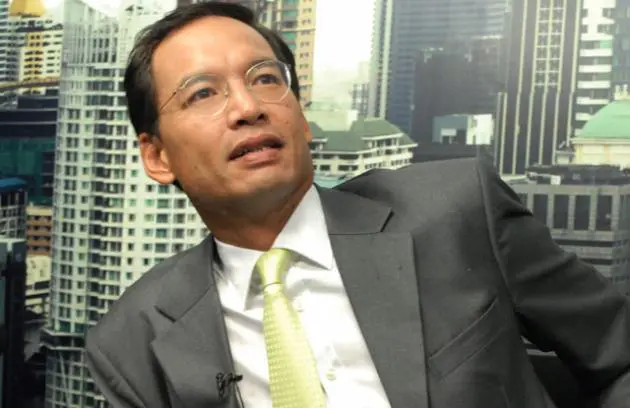
Korn Chatikavanij, the former finance minister and the Democrat Party's deputy leader, posted on Facebook after the Bt2-trillion infrastructure loan bill passed its first reading in the House on Friday:
“Minister Kittiratt [Na-Ranong]: You have betrayed the role as finance minister, who is supposed to maintain fiscal discipline, by proposing the loan bill despite the fact that you could have used the normal budget procedure.”
That was probably the strongest statement from the opposition throughout the debate on the issue. Kittiratt has insisted that the normal budgetary process was circumvented because the government wants to borrow rather than run budget deficits to finance the long-term projects.
The minister’s official reason was to avoid sending the wrong signal that the move is to stimulate the economy. “Budget deficits or fiscal policies are exercised when the government wants to boost the economy. But our objective is to invest in new infrastructure projects, after years of not having built the necessary basic infrastructure.”
The debate isn’t about whether we need to build new rail, road, water- and air-transport systems so that Thailand can become Asean’s communications hub. In fact, public opinion in general has demonstrated support for these projects. The government’s arguments are, in fact, quite convincing when it proposes the infrastructure scheme as another pillar in its strategy to “rebalance” the economy, close the income gap and raise living standards for the public.
Not even the opposition Democrat Party is trying to derail the projects. Instead, it has zeroed in on how the schemes will be financed and how the introduction of the bill might even violate the Constitution and undermine economic stability.
Under Article 169 of the charter, state spending has to conform to laws such as provisions on budget allocations and reserves. Since the government is not following the normal budgetary procedures, critics have raised serious doubts about how it can ensure that MPs will not meddle in the spending plans.
In other words, the bigger the project, the higher the suspicion of taxpayers over the possibility of money being siphoned off to politicians and bureaucrats’ own pockets.
The government can now proceed to borrow Bt2 trillion over the next seven years, with repayment to be made over the next 50 years. Interest could top Bt3 trillion, bringing the total debt to Bt5 trillion, prompting opposition leader Abhisit Vejjajiva to suggest that the total repayment burden might be spill over into “the next life”.
The weak link in the whole presentation is that the government has yet to produce an environmental-impact assessment (EIA) for some of the expensive projects in the package. It has produced no concrete plans to make the whole process transparent enough to soothe public fears of massive corruption, which has always been considered part and parcel of spending on major projects, past, present and future.
Another unanswered question is why the bill doesn’t include plans for private investment, which could significantly reduce state spending and, in fact, ensure a higher degree of efficiency and accountability. The official reason given by Transport Minister Chadchart Sittipunt is that the initial risk is high and private investors will be brought in at a later stage, when the chances of failure are reduced.
That explanation obviously isn’t going to convince a sceptical public that the government is better at risk management than the private sector.
It might not be fair, but conspiracy theorists are suggesting that a kickback of 10 per cent from the whole scheme could enable anyone commanding the Bt2-trillion package to “buy” all 500 MPs in the House at Bt100 million each. And they would still have enough money to campaign in the next general election – Bt100 million each. They could return to power for three full terms at least. That, of course, is an extreme scenario. But the way such mega-deals are being rammed through the House inevitably conjures up such a frightening picture.
It is therefore imperative that the government comes up with a definite plan to explain where the revenue to pay back the Bt2-trillion loan will come from over the next 50 years. Without that payback schedule and a watertight anti-corruption plan, the overwhelming majority that passed the bill last week will not amount to a meaningful mandate at all.
