
Peace talks were doomed from the very beginning


Play
The govt should admit the latest peace initiative with southern separatists was flawed from the outset, and start anew with credible representatives
The February 28 signing ceremony of a “peace agreement” between the Thai government and a group of self-proclaimed leaders of the separatist Barisan Revolusi Nasional-Coordinate (BRN-C) was presented to the public as the start of a confidence-building process between the state and the Malay-Muslim separatist movement in the deep South. But it didn’t take long for this event to become a political circus that later evolved into a spitting contest between the two sides.
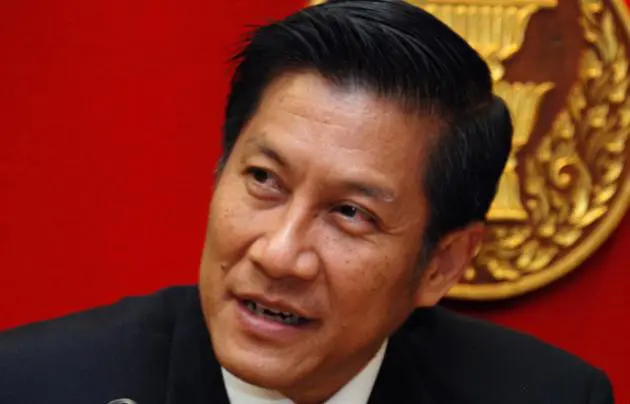
Today, three months later, after demands and counter-demands have been tossed back and forth, the two sides have backed themselves into a tight corner. It has become harder by the day for National Security Council secretary-general Paradon Pattanatabut, the Thai team leader, to spin the issue in such a way that will not chip away at his credibility, not to mention the public’s faith in this process.
Like others on his team, Paradon made a big leap of faith at the signing ceremony with his counterpart, Hasan Taib. The thinking was that the initiative would draw other separatist groups, as well as insurgents active in the field, into the confidence-building process, which could lead to formal negotiations and a final peace settlement.
But reality proves otherwise as roadside bombs and gunfights continue every day.
At first Paradon maintained that the violence had nothing to do with the talks. He insisted that Hasan Taib, who calls himself the “liaison officer” for the BRN-C, has the backing of the entire separatist movement to speak on its behalf.
But doubts soon emerged when it became clear that Hasan was unable to demonstrate any influence over the insurgents’ activities. It’s strange how the Thai side didn’t ask Hasan to prove this point before February 28.
To make life more difficult for Paradon, Hasan’s team, over the past three months, has issued three videotaped statements making several demands. These include releasing all imprisoned insurgents and dropping all pending charges against any other suspects held in custody.
The latest statement dismissed the allegation that insurgents were behind the May 1 shooting in Pattani’s Rusamilae district that ended in the death of six Buddhist residents.
Needless to say, this whole affair has become a public-relations disaster for Paradon and the government of Yingluck Shinawatra, which initially billed the February 28 signing as a spectacular event. Yes, it was spectacular because it was the first time that a Thai government had gone public about its willingness to enter into peace talks with Patani Malay separatists.
But the public-image disaster is Thailand’s doing. Because the Thai side did not provide an accurate picture to the public about what it was entering into – that Hasan might or might not have much influence with the current generation of militants – the public was led to believe that things would get better and violence would gradually disappear.
Today, Paradon’s three-month-old public-relations exercise has hit a brick wall and the public has lost faith in him and “Team Thailand”.
To make matters worse, the Army chief, General Prayuth Chan-ocha, has suggested building a wall between Thailand and Malaysia, ostensibly to obstruct the movements of insurgents and explosive materials. Needless to say, this ridiculous suggestion has alienated the local Patani-Malay population even further. It’s not too late to go back to the drawing board and rethink this whole thing again. Perhaps we should start with finding a new “liaison” who can actually coordinate things with the various separatist groups and the anonymous active insurgents. The Thai side can also improve its performance by developing a unified position under an identifiable process that is responsible for the peace negotiations.
