
Policy externalities of the US fiscal standoff


Play
There are a few governments in today's world that many of us would agree are being governed by leaders that turn their countries into proverbial "banana republics."
The shutdown of the US federal government because its legislative branch was unable to pass a budget appropriation bill at the end of the fiscal year (September 30) after more than six months of partisan gamesmanship since the Obama administration submitted its budget in February, reveals a US Congress with a banana-republic mindset.
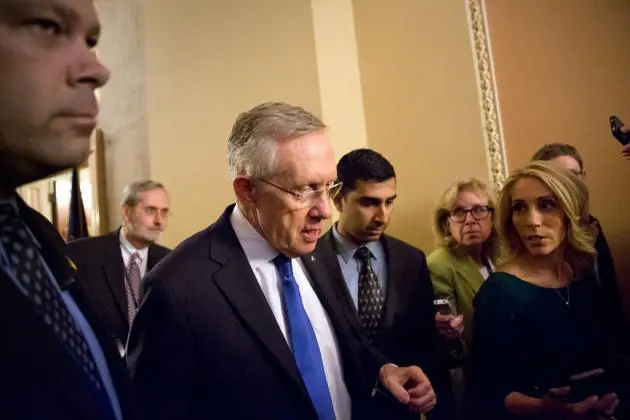
To his credit, the majority Democratic Senate leader, Harry Reid, admitted that much. Still, some Republicans in Congress, cheered on by some Wall Street Journal editorials and unfettered laissez-faire leaning ideologues and commentators, are proud of their obstructive achievements. They play down the adverse impacts consequent to the shutdown and the approaching need to raise the debt ceiling on US national debt.
The news from Washington last weekend indicated that negotiations between President Obama and a group of House Republican leaders has shifted from insistence on repealing, defunding or delaying the implementation of the Patient Protection and Affordable Care Act (PPACA, aka “Obamacare”) to the core fiscal issues of budget deficits and national debt, even while the Republicans continue to demand a tax exemption for medical devices, a revenue-enhancing provision of the PPACA (US$30 billion over 10 years), as a face-saving, albeit relatively small, modification of the PPACA. As of Sunday night, the budget negotiation was in the hands of the Senate, and no deal had been struck.
The US is now in its third week of shutdown and there is a possibility of the US technically defaulting on its national debt if Congress does not extend the borrowing authorities and increase the debt limit.
Why would this be a concern to the global economy? With a few exceptions, such as trade negotiations, money laundering, tracking the funding to terrorist organisations, and international economic cooperation, economic policies are generally formulated for achieving domestic goals and objectives.
But given the importance of the US economy, most economists, financial analysts and business leaders believe that there are what might be called significant policy externalities or spillovers – consequences of one country’s policy that extend beyond policy-makers’ target environment, affecting other economies and the global economic and financial system.
Policy externalities have always existed, especially in the financial sector; but they used to be small. As the world economy became increasingly interconnected and much more financially integrated through trade, capital movements, technologies and knowledge, this has changed.
Policy spillovers can potentially manifest as large and abrupt changes in capital flows, asset prices, credit worthiness and availability, and interest and exchange rates. All of these have powerful macro-economic effects on stability, output growth and employment.
Finance ministers and central bankers who were in Washington this past weekend attending the annual meeting of the World Bank Group (WBG) and the International Monetary Fund (IMF) were clearly concerned about adverse policy externalities of the US fiscal policy and the possibility of its debt default. The chair of the IMF’s policy-steering body, Tharman Shanmugaratnam, finance minister of Singapore, summed it up this way: “If we don’t get clear resolution on the US fiscal and debt issue, it is going to be hard to see how that confidence is going to come back anywhere…. The spillovers that come about from large country policies were uniformly acknowledged … [in addition to] the eventual normalisation of monetary policy.”
These inevitable policy spillovers were seen as additional near-term risks on top of the slowdown of economic activities in emerging-market economies. According to the latest IMF World Economic Outlook (October), the forecast growth rate in these countries has been revised downward by 0.5 per cent, from 5 to 4.5 per cent. In the view of the IMF, the US budget sequestration and pace of the fiscal adjustment is excessive, too large and too arbitrary. This, together with the government shutdown and possible default of government debt, would put the US in recession and have global consequences. In addition to these policy spillovers, there are concerns about the value of the dollar as the world’s go-to currency.
The fundamental challenge facing US policy-makers today is to balance the pace of budget deficit reduction and debt levels in a manner that ensures stability with sufficient support of short-term economic growth and employment.
Finance ministers and central bankers at the WBG/IMF annual meeting were optimistic that the US will use its “wisdom” to resolve the fiscal standoff and to mitigate its negative policy externalities. Let’s hope they are right.
Kiertisak Toh is a member of the economic faculty at Radford University, Virginia and a senior fellow at the Centre for International Development, Sanford School of Public Policy, Duke University, North Carolina. He can be reached at [email protected].
