
A man of all reasons


Play
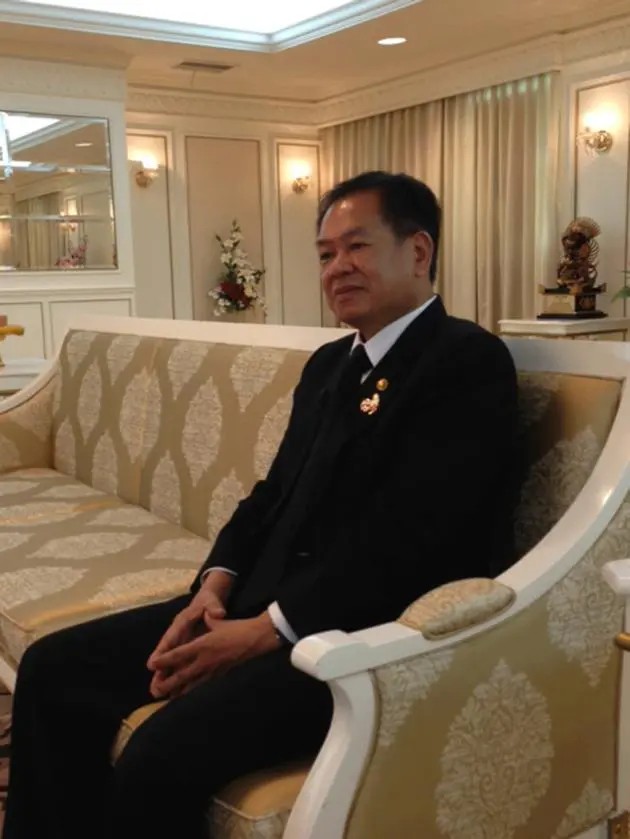
New attorney general Athapol Yaisawang talks about why he made the decision to indict opposition leader Abhisit Vejjajiva and MP Suthep Thaugsuban
When Athapol Yaisawang assumed his new post as attorney general last month, the first decision he took was to indict former premier Abhisit Vejjajiva and former deputy prime minister Suthep Thaugsuban in connection with the crackdown on the 2010 political upheaval in Bangkok.
The reason for what might appear to be a hasty indictment was simple: it needed to be done before the ruling Pheu Thai Party tried to push for the speedy passage of an amnesty bill during the second and third readings at the end of last week.
Reactions were however mixed. The Democrats, of which Abhisit is the leader, felt that the Office of the Attorney General was trying to force them into voting for the amnesty law.
For their part, Pheu Thai Party supporters immediately underlined the major cases in which Athapol has been involved, including those investigated by the now disbanded Assets Examination Committee (AEC) and the dissolution cases against the Thai Rak Thai Party and the Democrat Party. The Constitution Court finally dissolved the Thai Rak Thai while the Democrats survived.
The extreme reactions were a surprise to the newly appointed top prosecutor.
“I had no idea that my first job as attorney general would provoke such feelings of love and hate,” Athapol says. “I was just focusing on my duty and I made the decision fast, openly, professionally and with integrity”.
He admits that he did not need long to study the 11,242 papers that make up the 61 files compiled by the Department of Special Investigation (DSI) in its case against Abhisit and Suthep.
“There was no pressure on me. It was an easy decision to make because I have faith in the law. I always instruct fellow prosecutors to open cases based on facts, evidence and matters of law,” he says.
The announcement of the decision last Monday, he adds, was earlier than he had originally scheduled. “I’d planned to announce the decision to indict to the public on October 31. Then someone told me that was Halloween. If I’d had done it then, some people may have thought I had evil intentions,” he laughs.
He insists, though, that his decision is not related to the government's blanket amnesty.
“I’m not interested in politics and I don’t follow the political news. Politicians cannot tell me what to do,” he says.
Abhisit and Suthep have since announced that they intend suing the attorney general for an unlawful indictment. If the pair go ahead with their suit, it will be the first time in his 38-year career as a prosecutor that he has been sued by a defendant.
“I have never been sued, not has my justice even been doubted. In this case, I am certain my decision is correct. Had I chosen to remain silent, I wouldn’t be facing these verbal attacks. When I give orders, I do not expect any praise. People who agree with me stay quiet while those who disagree counterattack. The prosecutor must always adhere to professional ethics and be courageous in his decision no matter what the effects are,” he says.
Athapol doesn’t even regard the case of former premier and his former deputy PM as a major decision in his long career, explaining that the case which remains uppermost in his thoughts is his decision to file dissolution petitions against Thai Rak Thai and the Democrats in 2007. At that time, he was spokesman for the Attorney General's office and in charge of the dissolution cases.
“I have never told anyone but at the time, I paid homage to the sacred spirits. If the prosecutors had not filed a petition for the dissolution of both parties, I would have resigned. I did not think of winning the case or losing. I only knew that the prosecutors had all facts and evidences to back up their allegations,” he says. “The spirits obviously wanted me to be attorney general so obviously the prosecutors made the right decision!”
He has also decided to appoint an investigative committee to review former attorney general Chulasingh Vasantasingh’s decision to drop the charges against former premier Thaksin Shinawatra of allegedly inciting terrorist acts during red-shirt protests in 2010, a verdict that has drawn considerable criticism from the public.
“This is not a personal conflict,” he says. “I had a good relationship with Chulasingh as a fellow prosecutor but in the interests of integrity and to respond to the demands of those who have criticised his decision, a review must be made.”
Athapol, who also lectures on legal affairs at 11 universities, was unanimously endorsed by the Senate for the post, the first time, he says, that that a nomination has received such blanket approval. His profile, he adds, probably won him the votes.
“My history is nothing special. My dad was a taxi driver and my mum was a merchant. But all four of their children graduated from Thammasat University,” he says. “More importantly, I have no support from any political parties. Therefore, I owe no one.”
With mandatory retirement coming up in two years, he insists he will not extend his career as a senior prosecutor and adds that he has vowed to work righteously and always with integrity.
“I would like to create history,” he concludes with a laugh.
